
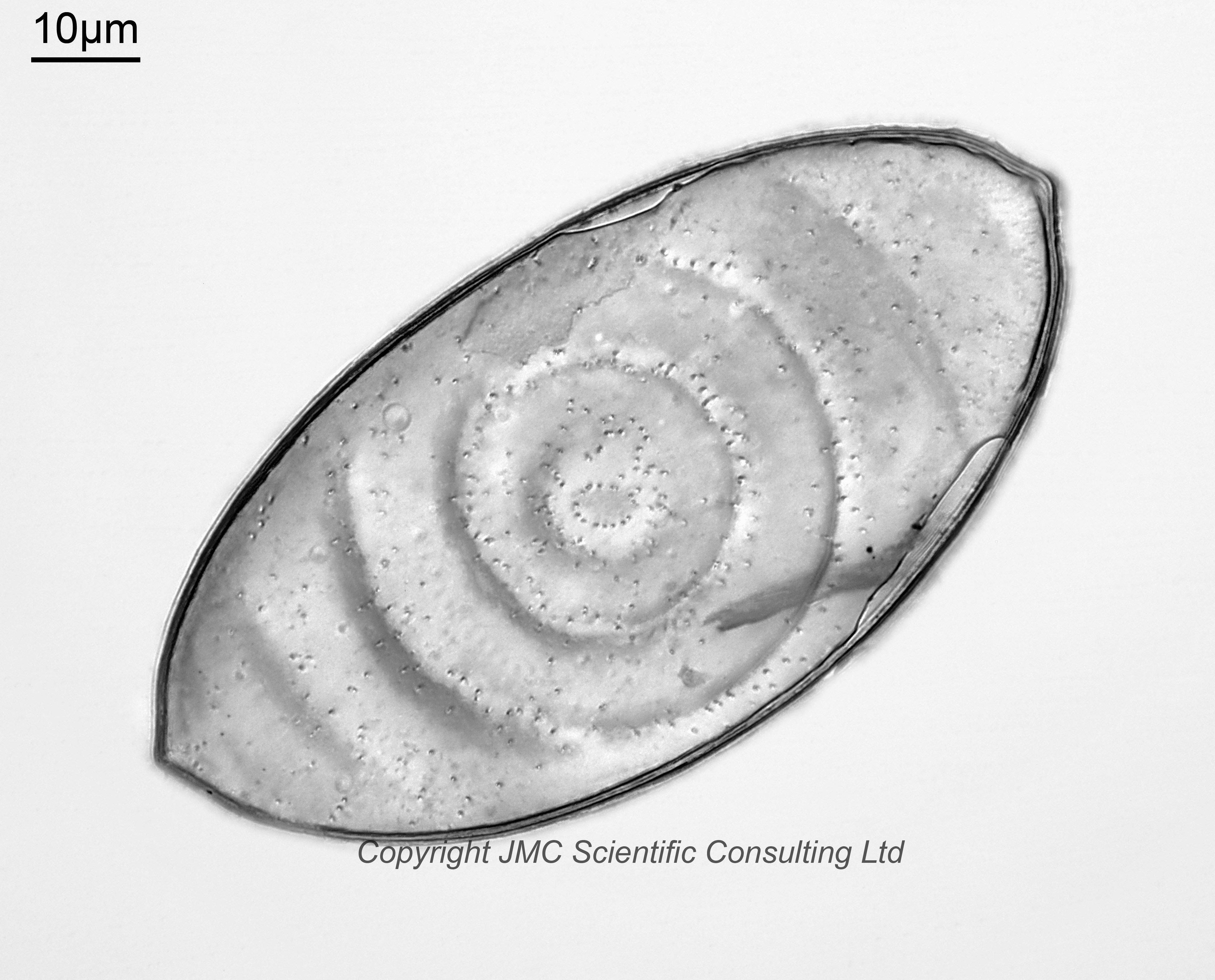
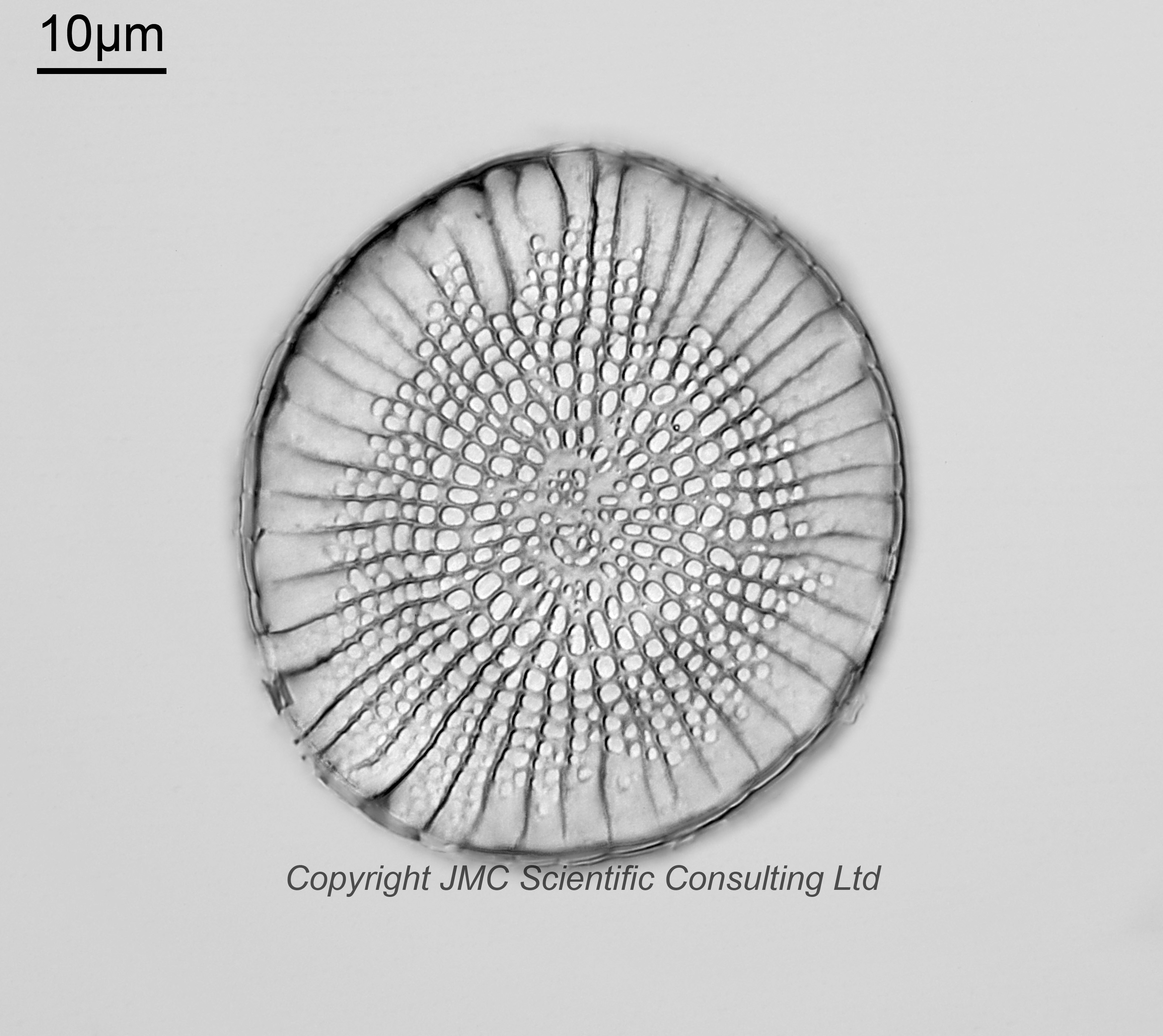
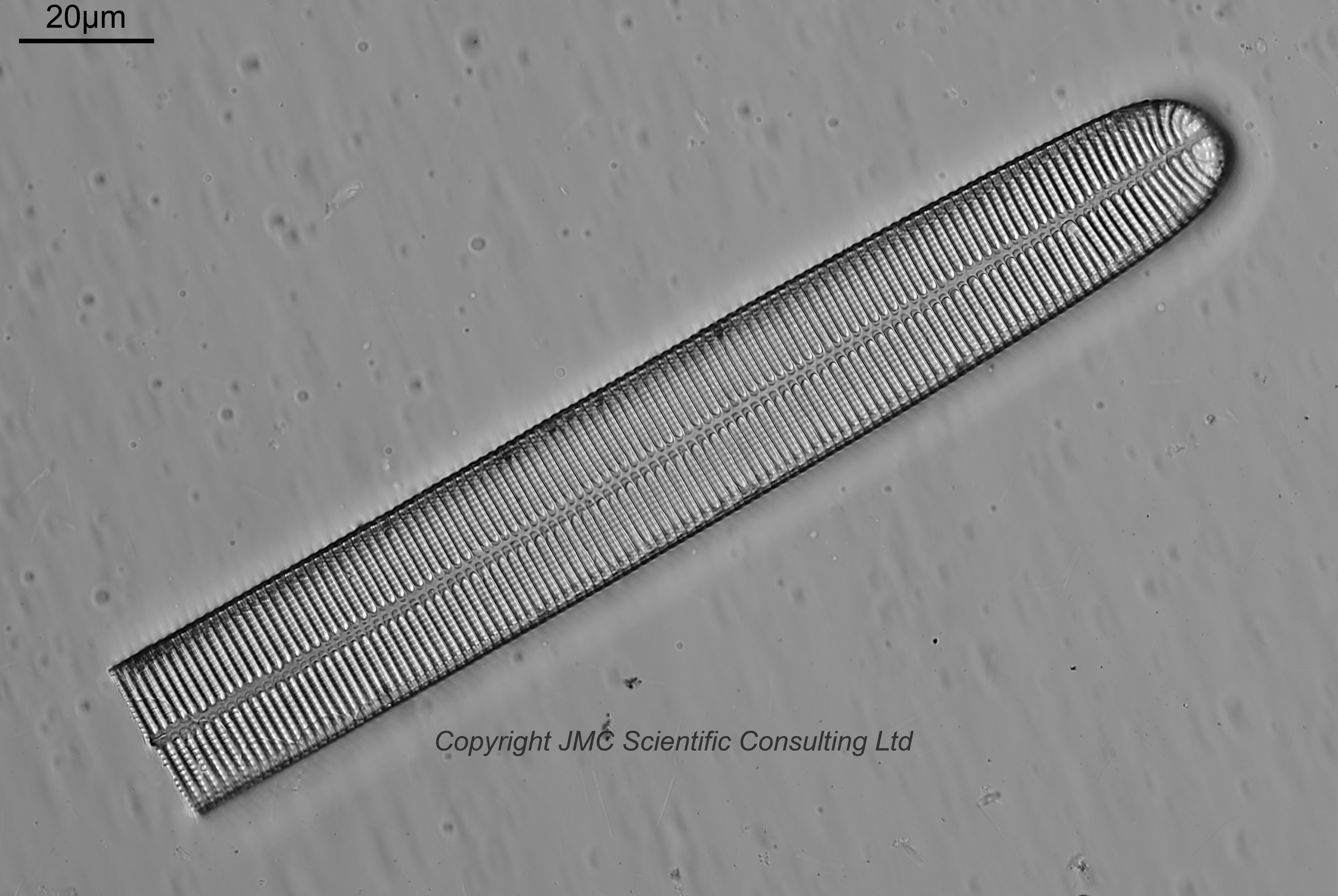
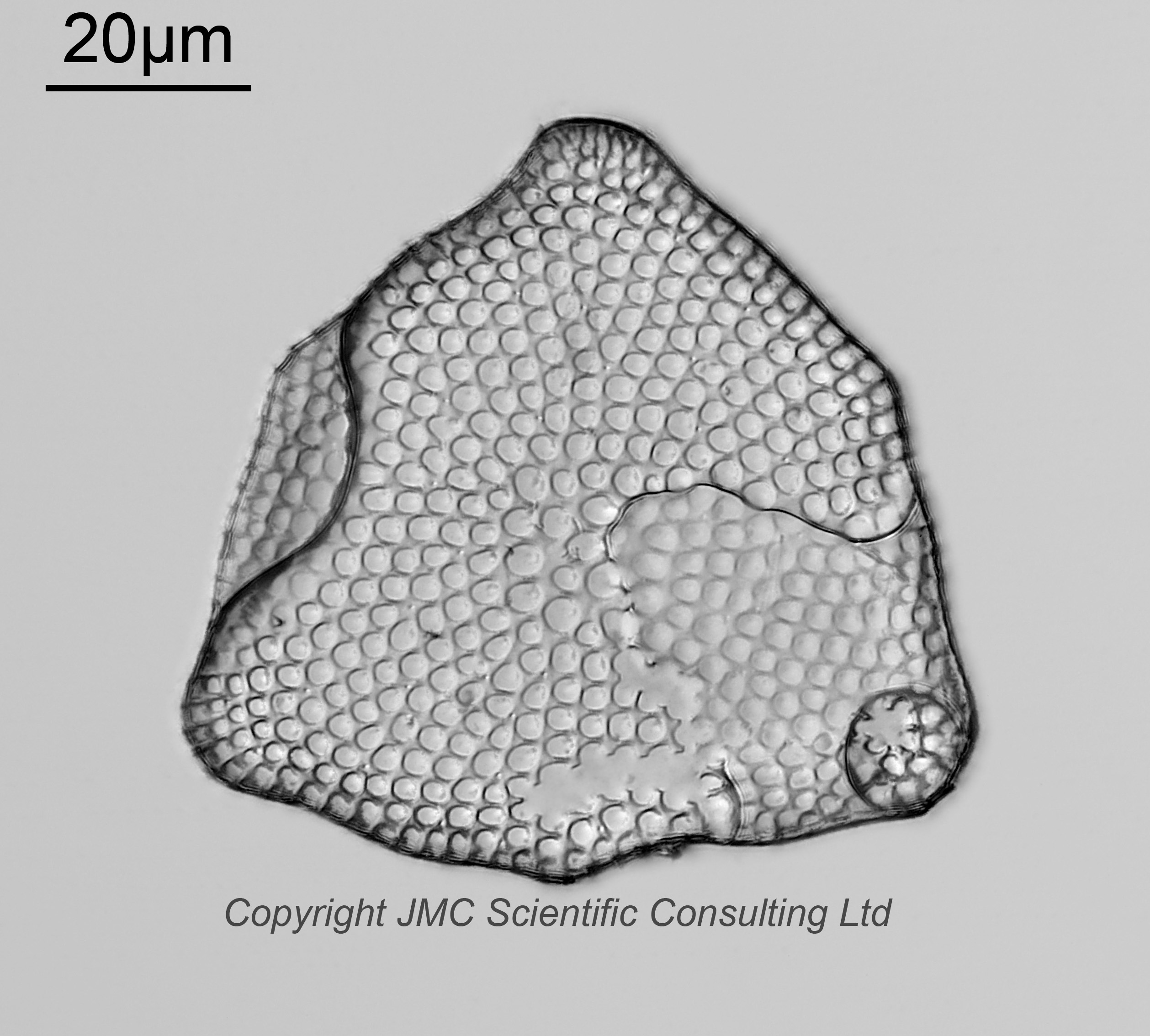
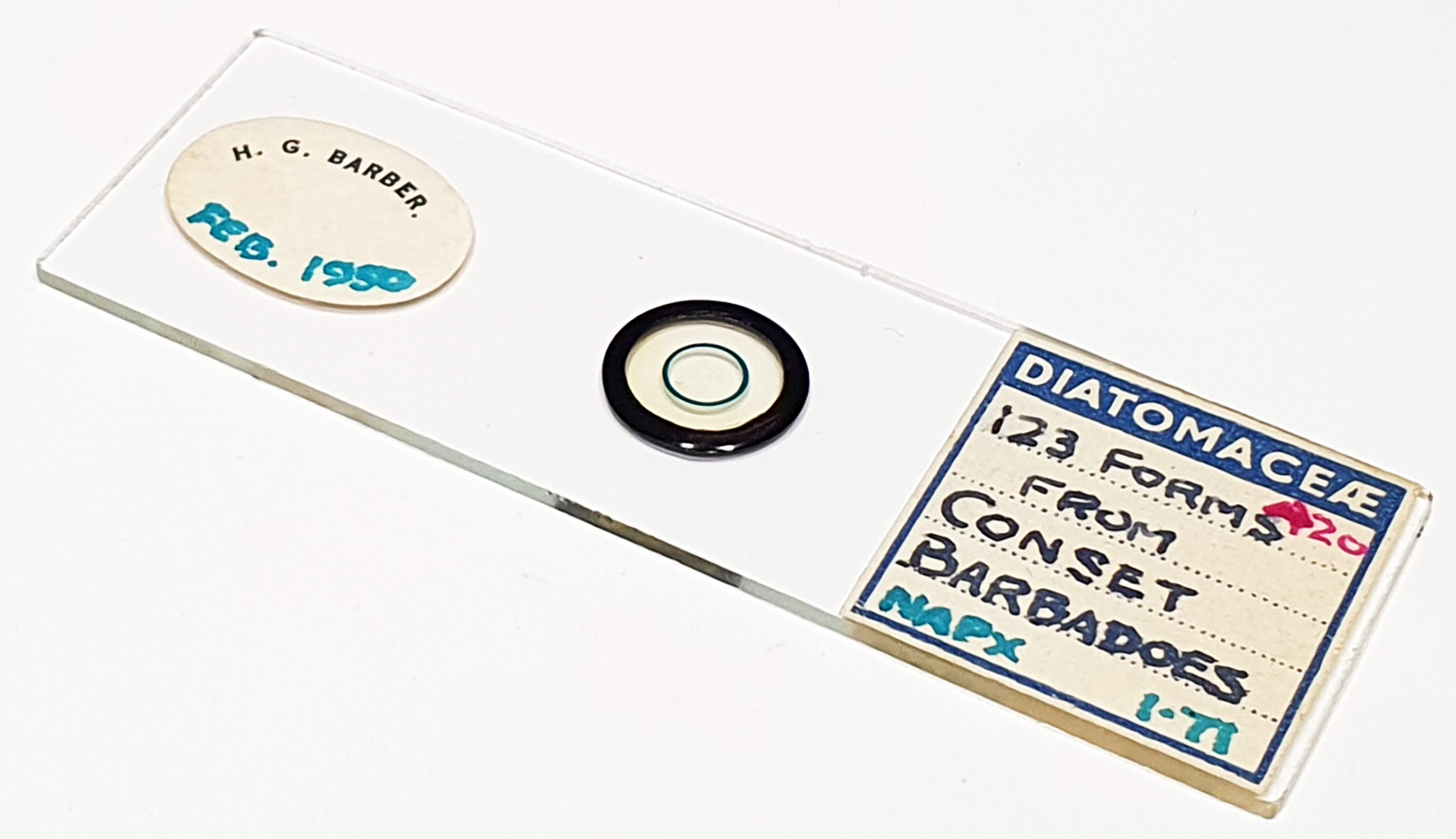
An arrangement with 123 forms from Conset, Barbadoes (Barbados). Prepared by Horace George Barber. Mounted in Naphrax and dated February 1950. An amazing arrangement which unfortunately has some significant issues with the fixative/mountant which has lead to some diatom movement, and others being very hard to image. Olympus BHB microscope using 450nm LED, either brightfield or oblique. Stacking done in Zerene using Pmax. I have a lot of questions about my naming of these, hence plenty of question marks after the names.
Araniscus lewisianus. I’ve also seen the name Coscinodiscus lewisianus var. similis. Brightfield lighting. Fairly sure on the name for this.
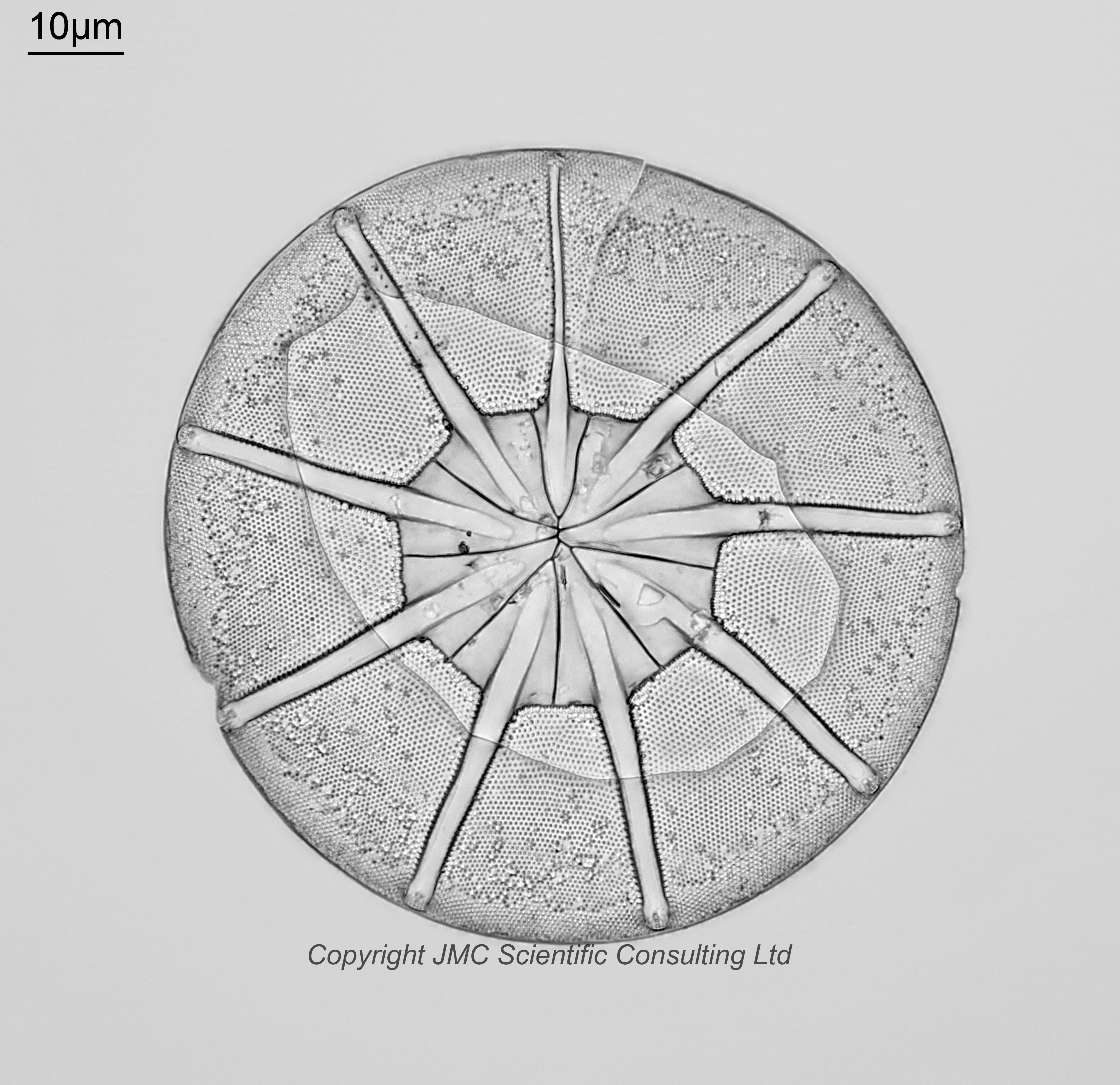
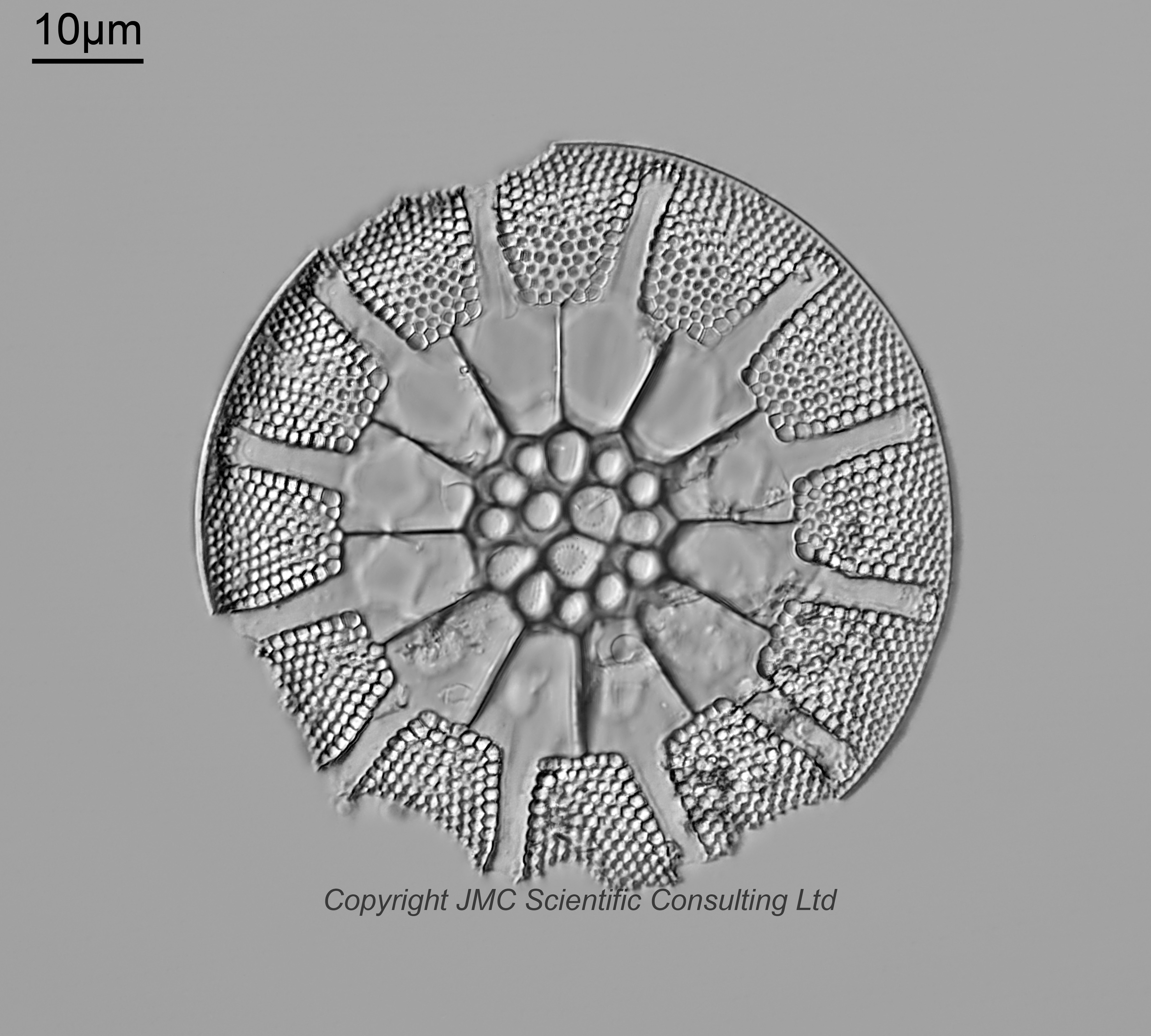
Asterolampra / Asteromphalus sp. (A. rotula ? ). Brightfield lighting. A bit like Asterolampra punctifera, but this one has one thinner portion at the 12 o’clock position. Also has some similarities to Asteromphalus humboldtii. However after a bit of research, I think this is likely Asteromlampra rotula Greville 1860. Original description: Greville, R.K. (1860). A monograph of the genus Asterolampra, including Asteromphalus and Spatangidium. Transactions of the Microscopical Society, New Series, London, 8: 102-124, pls III, IV
Page 111, Plate 3, Figure 5.
Asterolampra marylandica. Brightfield lighting. Fairly sure on the naming for this one.
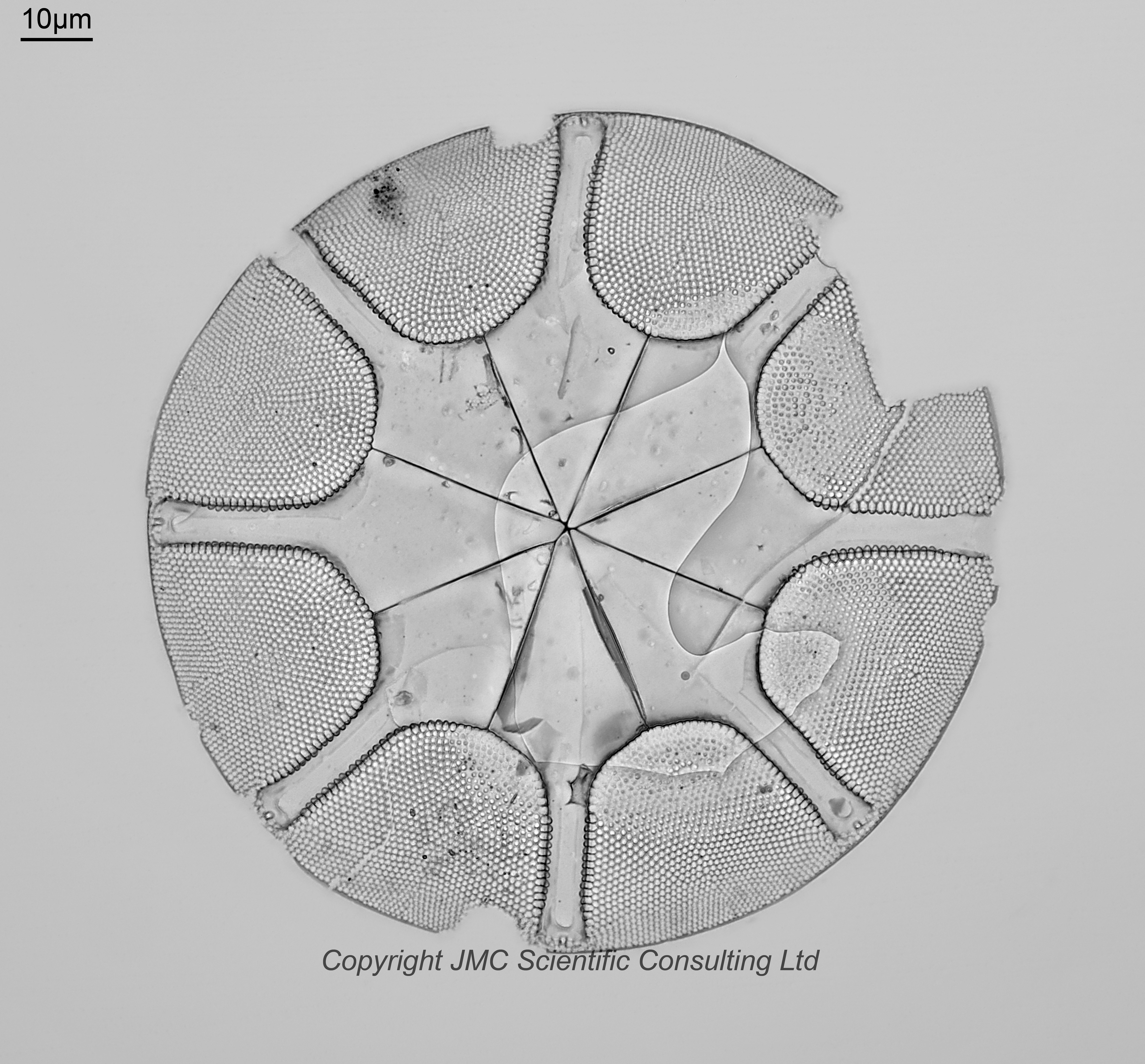
Asterolampra sp. Oblique lighting. The mount/fixative issues has resulted in some quiet severe artifacts to this one.
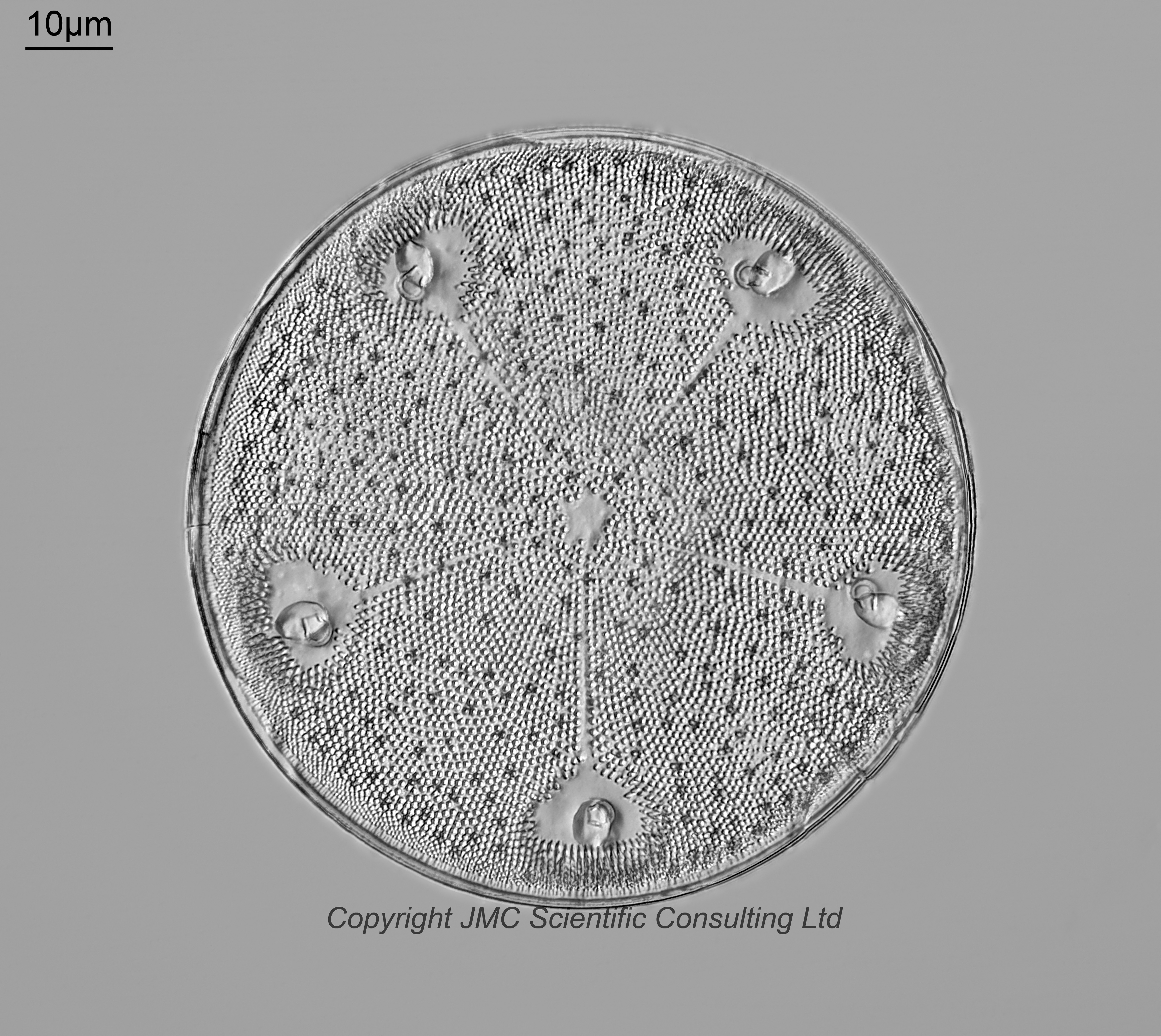
Aulacodiscus sp. ? Oblique lighting. A nice example and looks to be intact. Viewed from the underneath. Some very obvious dark spots across it, but so far I have not found a match for it. EDIT – based on a new image from a different slide, I suspect this is a 5 process version of Aulacodiscus barbadensis. See here for more discussion on that.
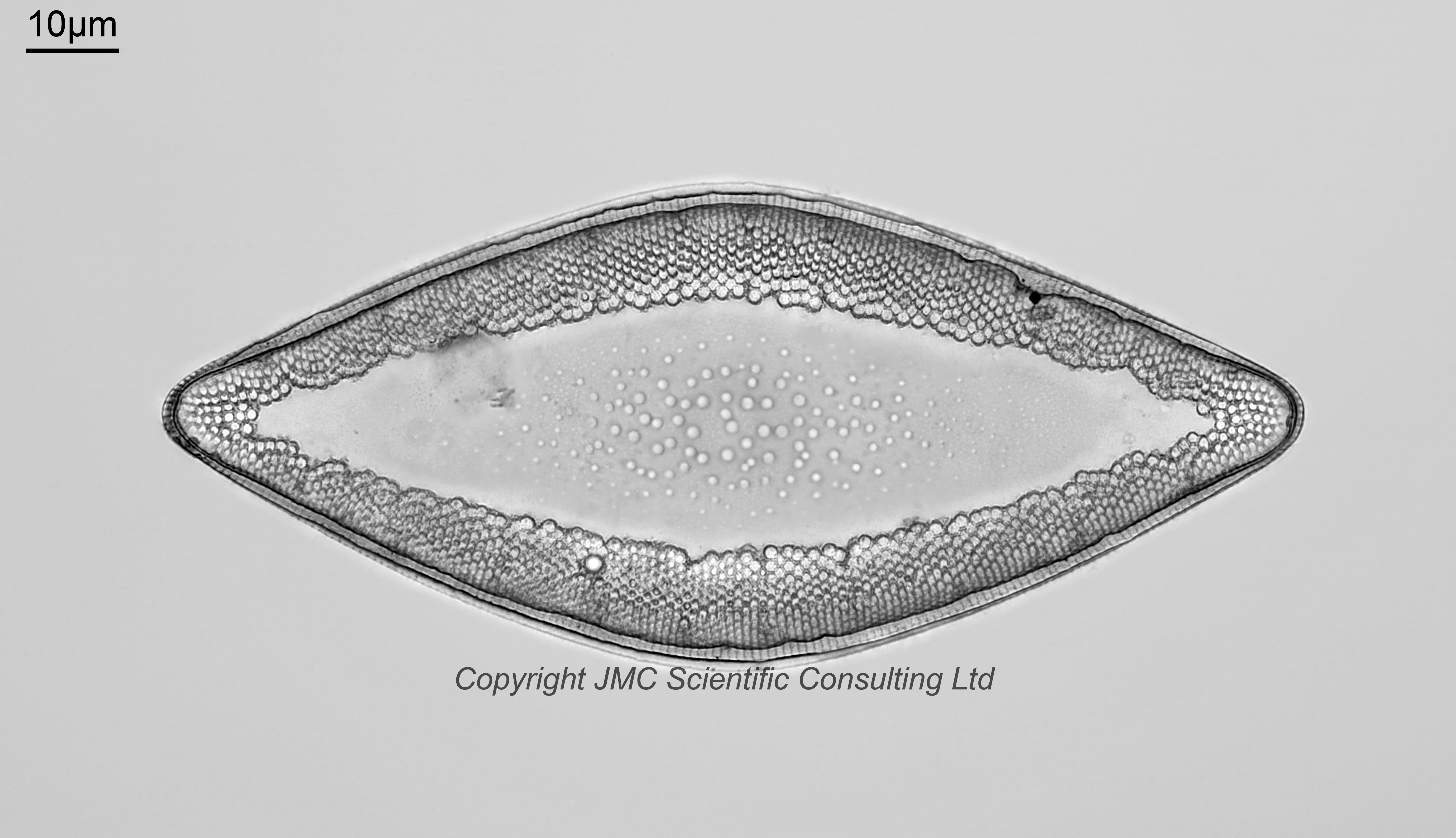
Cestodiscus sp. (C. fusiformis ?). Brightfield lighting. Viewed from underneath/inside. I am sharing 2 examples of Cestodiscus from the slide. I think this one could be C. fusiformis.
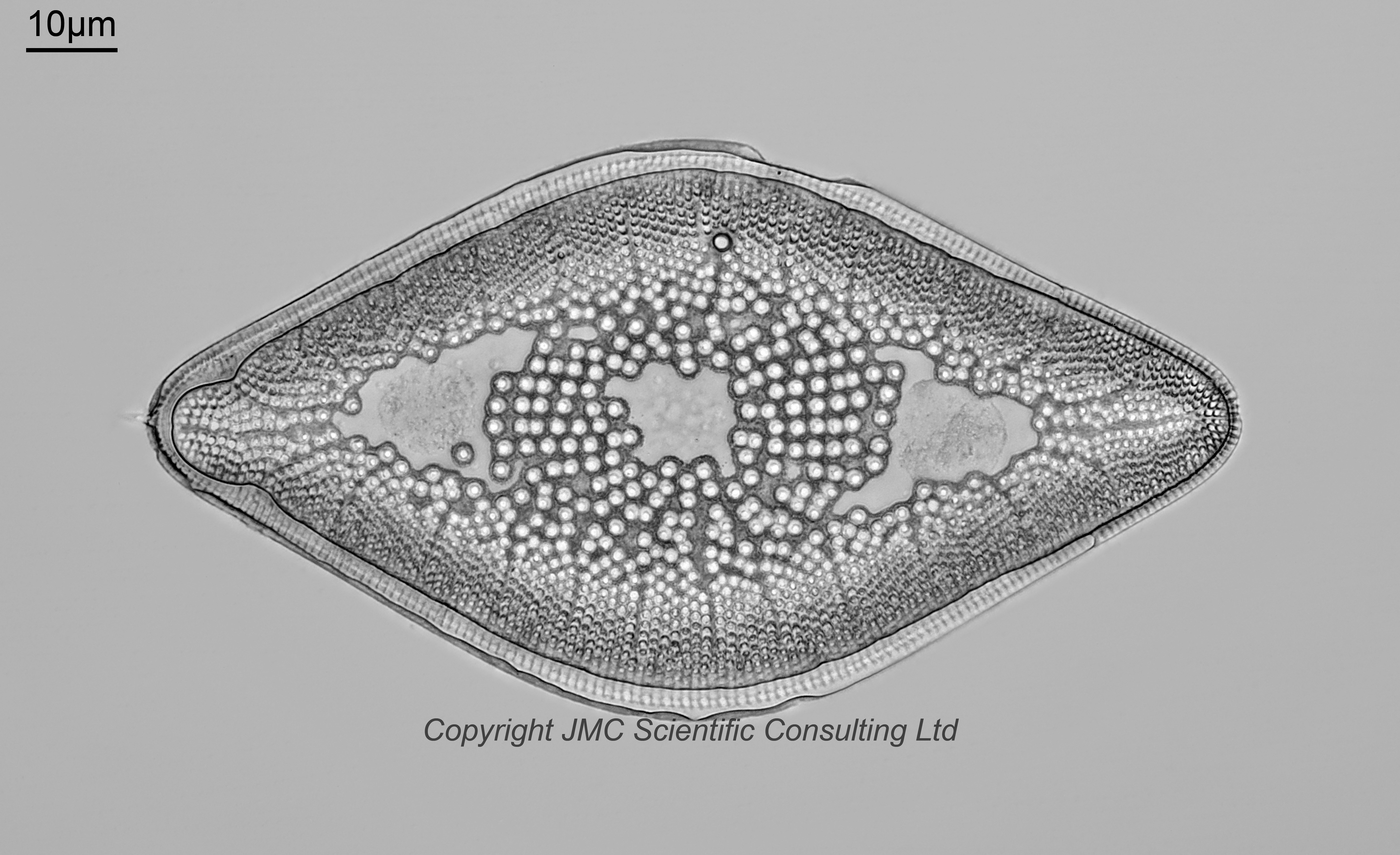
Cestodiscus sp. (C. peplum ?). Brightfield lighting. Viewed from underneath/inside. I think this one could be C. peplum.
Goniothecium rogersii. Oblique lighting. Viewed from underneath/inside. Fairly sure on this one.
Unknown (Stictodiscus sp.?). Oblique lighting. Viewed from the underside. This one is very unusual, and even going with a Stictodiscus species is a bit of a stretch. Looking through Schmidt’s Atlas, I did come across something on Plate 131, Figure 4, which says “according to Grunow, similar to Stictodiscus Kittonianus Grev.”. Publication details for Stictodiscus kittonianus Greville 1861: 79; pl. X: fig. 2-3. Published in: Greville, R.K. (1861). Descriptions of new and rare Diatoms. Series IV. Transactions of the Microscopical Society, New Series, London 9: 79-87, pl. X. There are similarities to S. kittonianus, but I am not 100% convinced. Perhaps an abnormal form?
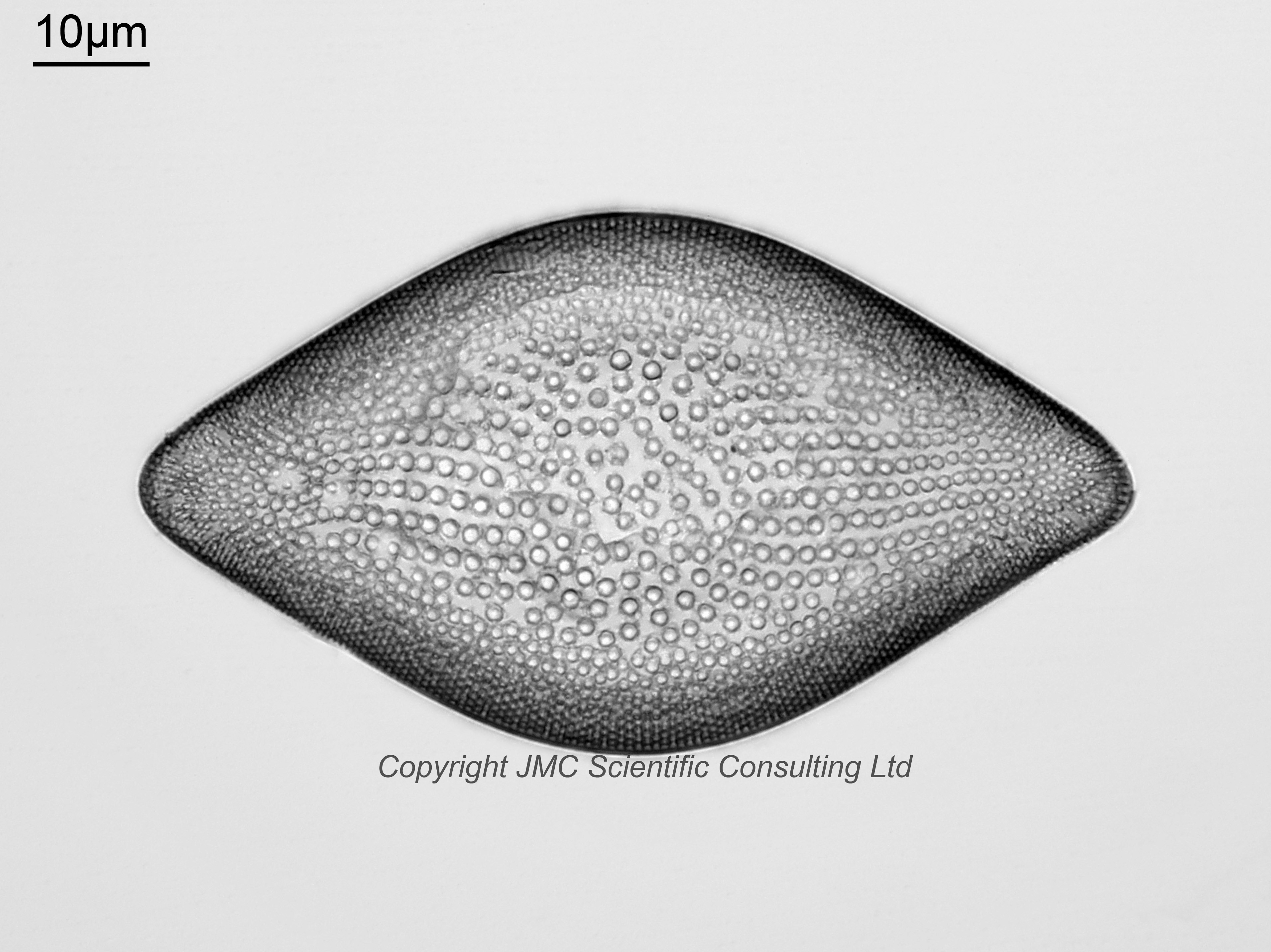
Synedra sp. Oblique lighting, single unstacked image.
Triceratium groningensis (?). Triceratium groningensis Reinhold (1937). See Fenner, J., 1978. Cenozoic diatom biostratigraphy of the equatorial and southern Atlantic Ocean. In Perch-Nielsen, K., Supko, P.R., et al., Init. Repts. DSDP, 39 (Suppl., Pt. 2): Washington (U.S. Govt. Printing Office), 491–624. Page 545, Plate 28, Figures 1,2. Original description: Reinhold, T. (1937). Fossil Diatoms of the Neogene of Java and their Zonal Distribution. Verhandelingen van het Geologisch-Mijnbouwkindig Genootschap voor nederland Kolonien, Geol. Serie, 12: 43-133; 21 pls. Page 126, Plate 20, Figure 9. As with lots on here, this is quite a tentative assignment, however the match with the ones in Fenner 1978 is pretty good. EDIT 31/1/26, I recently saw a slide with a diatom which looked very much like this which was described as ‘Coscinodiscus angulosus‘ from Conset, Barbados, and labeled ‘Very Rare’. Coscinodiscus angulosus Barker & Meakin, 1946. Original description: Barker, J.W. & Meakin, S.H. (1946). New and rare diatoms. Journal of the Quekett Microscopical Club, Series 4,, 2(2): 76-79, pls 15, 16. Page 76, Plate 15, Figure 3. Visual comparison of the plate with this image is a very good match, so I would consider this to be another name for it.
Overall, despite the damage to the mountant/fixative on the slide, there are plenty of nice diatoms to image.