This page shows two strews from locations in the USA, both by unknown makers. Olympus BHB microscope using 450nm LED light.
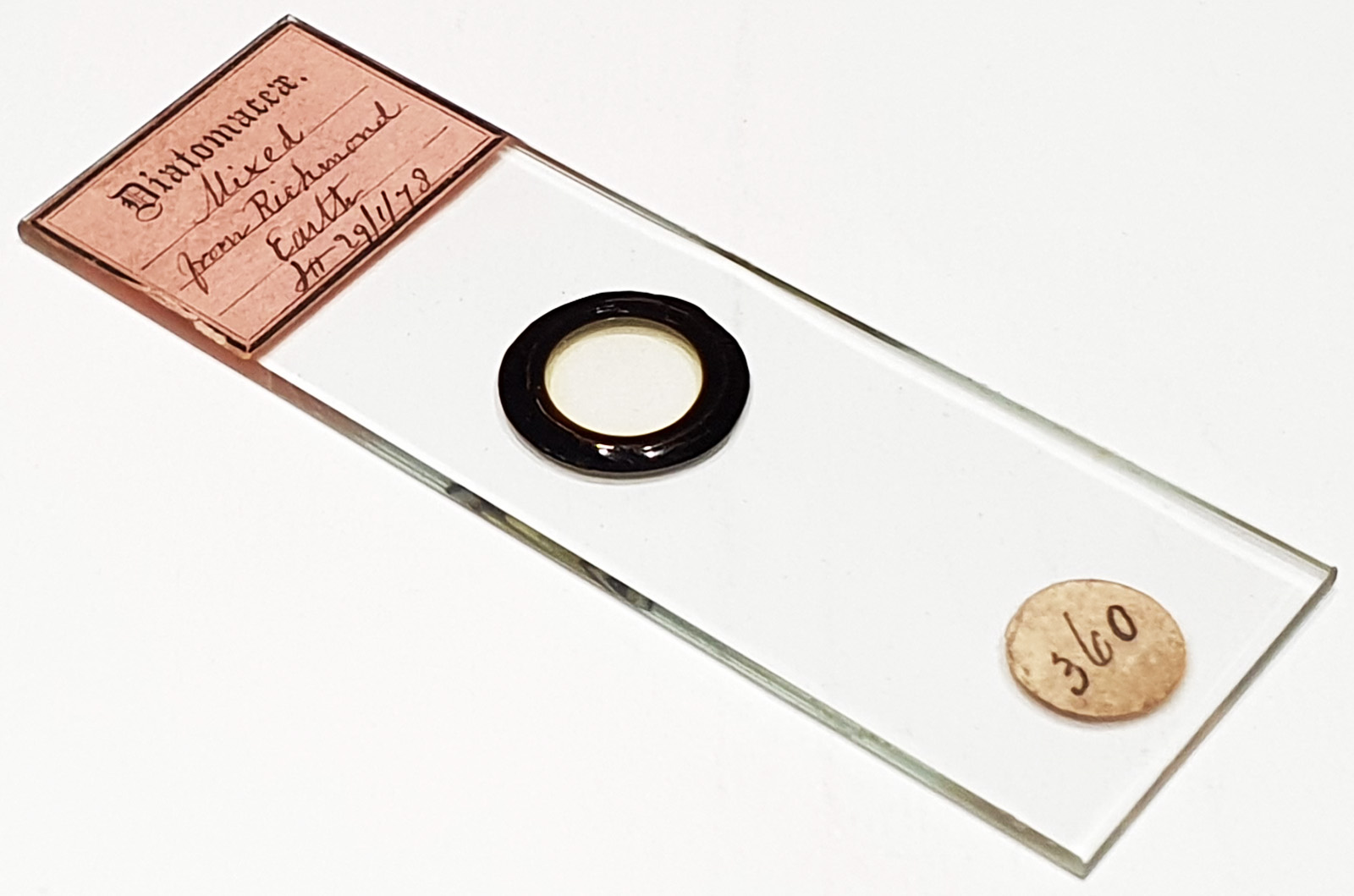
The first is labelled ‘Richmond earth’, and dated 29/1/[18]78.
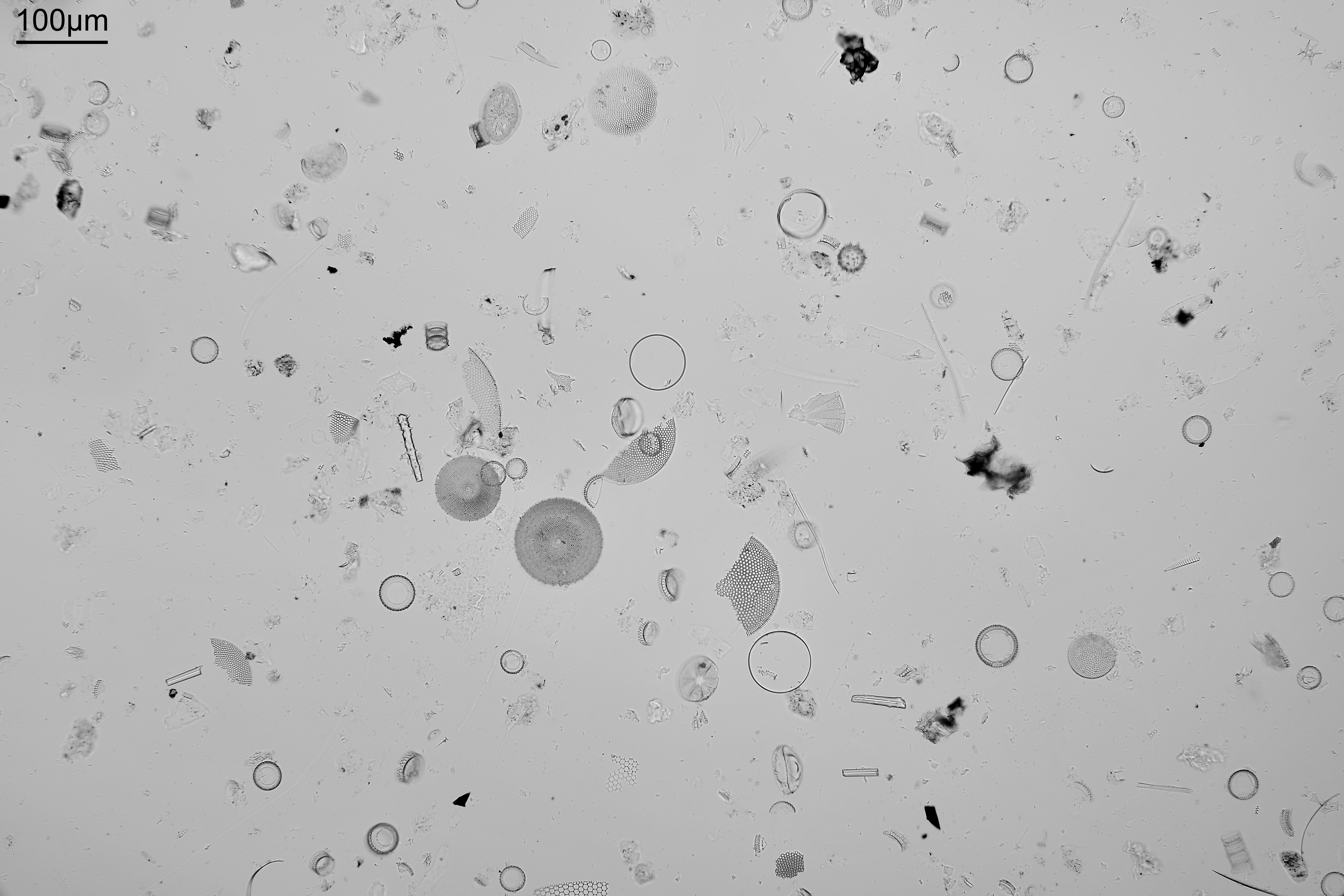
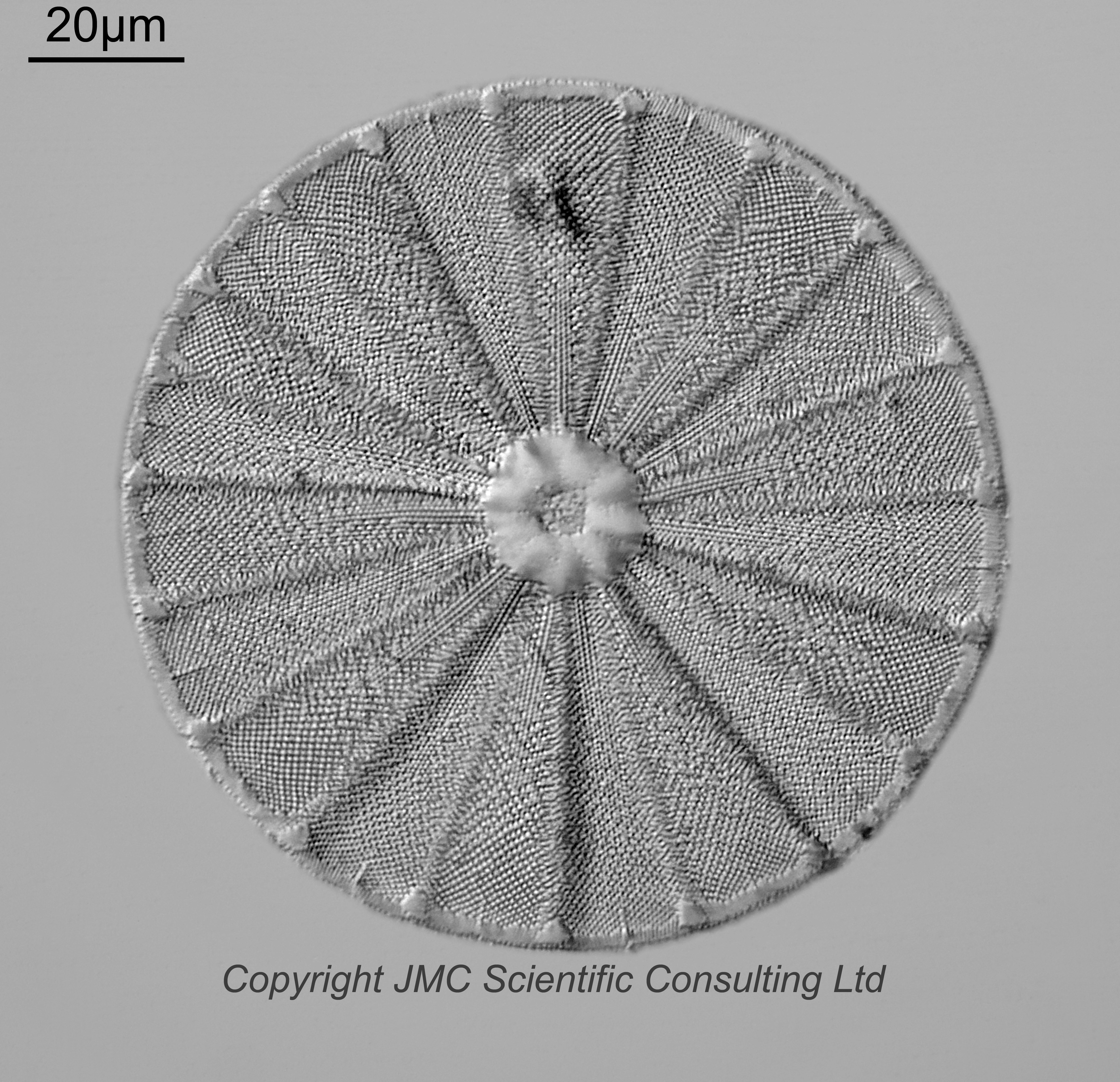

As well as the arrangement I selected a few for imaging using a 50x Leitz Fluoreszenz NA 1.00 objective, water immersion. Olympus Aplanat Achromat condenser, water immersion, oblique lighting. 2.5x Nikon CF PL photoeyepiece. Monochrome converted Nikon d850 camera. Images stacked in Zerene (Pmax). I couldn’t get close enough with either the 40x or 63x Leitz Pl Apo objectives, hence the use of the 50x with its long working distance. This has however limited the resolution.
A chrysophyte cyst (or stomatocyst) is a microscopic, siliceous resting stage produced by golden-brown algae (Chrysophyceae and Synurophyceae) in freshwater habitats. These asexual, often spherical cysts serve as survival mechanisms, allowing the algae to endure harsh environmental conditions. For some nice example SEM images of these types of cysts – although probably a different species – see Siver, P.A. Remarkably preserved cysts of the extinct synurophyte, Mallomonas ampla, uncovered from a 48 Ma freshwater Eocene lake. Sci Rep 10, 5204 (2020) https://doi.org/10.1038/s41598-020-61993-1. Also see Tynan, Eugene J. “The Archaeomonadaceae of the Calvert Formation (Miocene) of Maryland.” Micropaleontology, vol. 6, no. 1, 1960, pp. 33–39. JSTOR, https://doi.org/10.2307/1484315 for examples of cysts from the Calvert formation in Maryland. This one may be Archaeosphaeridium ornatum Deflandre, 1932. Original description: Deflandre, G. (1932). Note sur les Archæomonadacées. Bulletin de la Société Botanique de France, 79(3): 346-355, 38 figures.
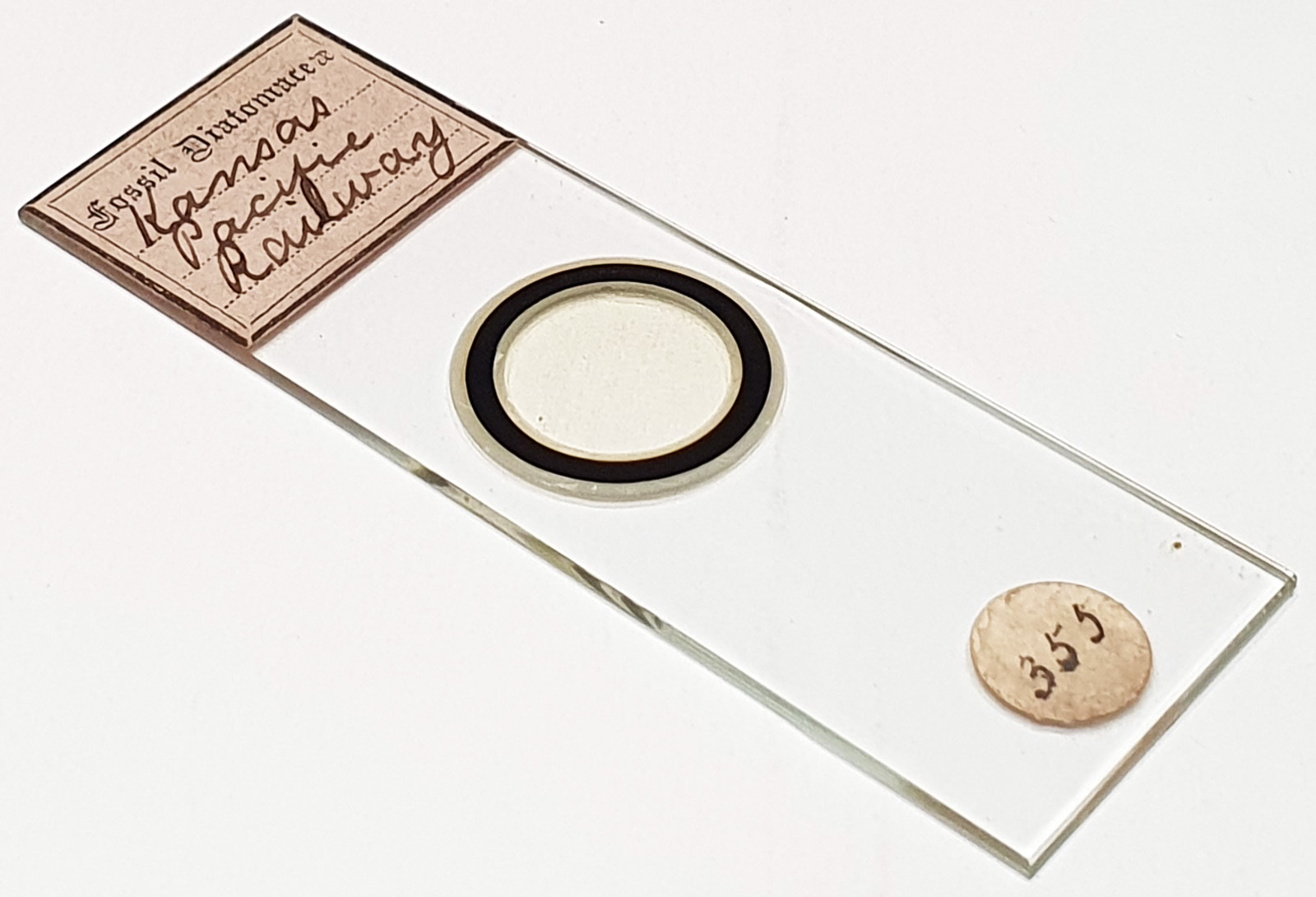
The second slide is labelled ‘Kansas Pacific Railway’, which would date it to 1863-1880, and I presume this was material collected during the making of the railway.
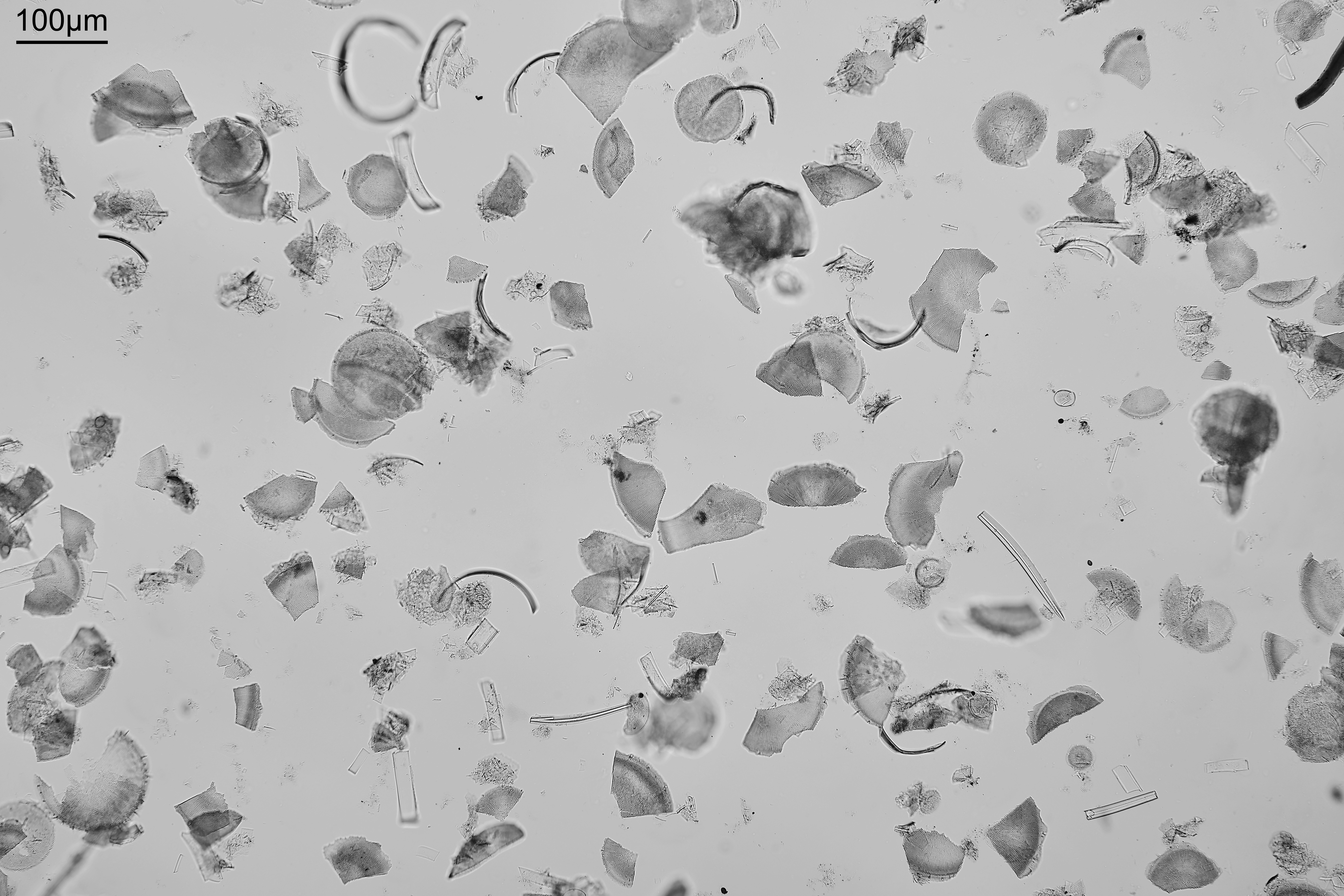
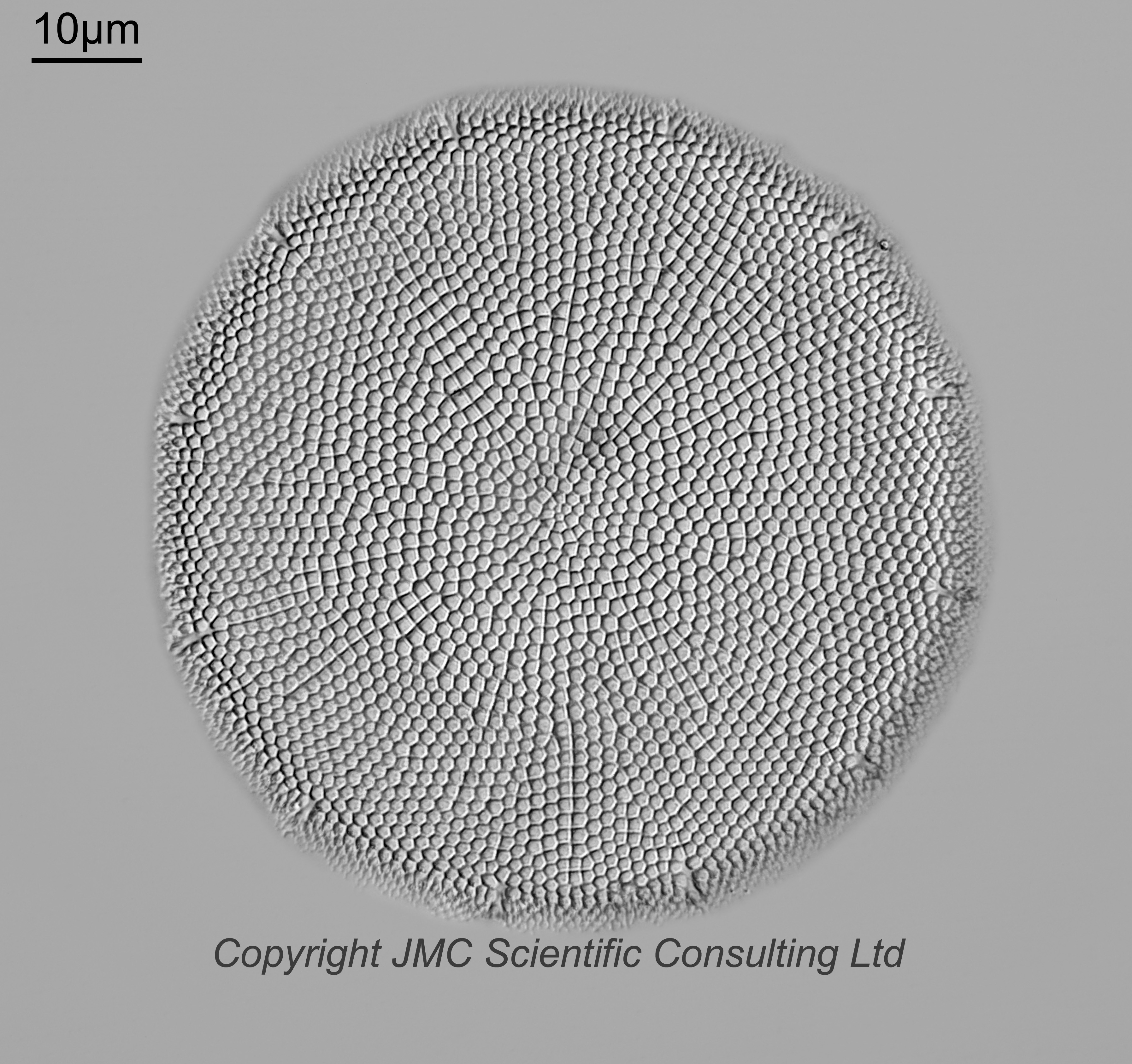
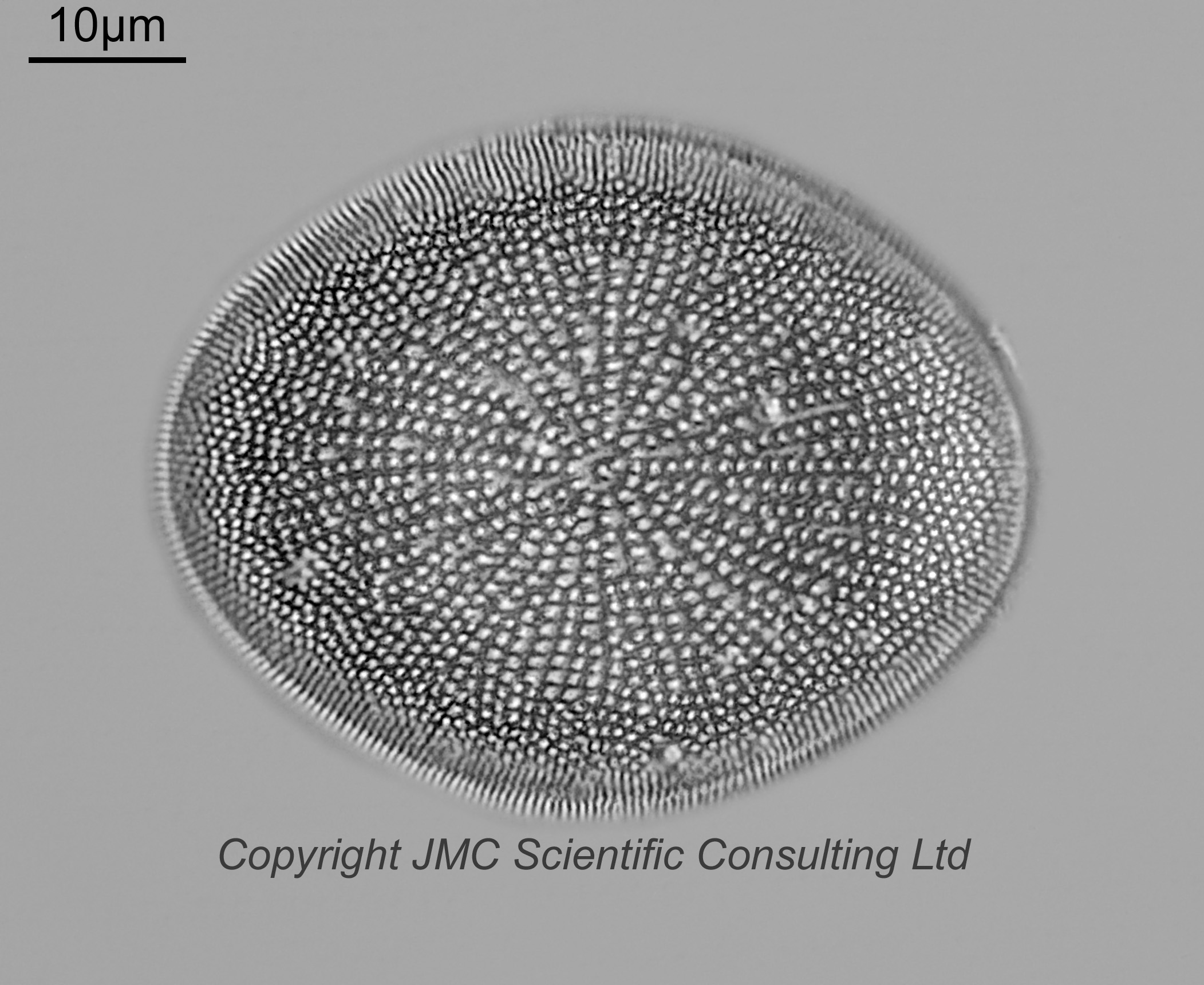
As well as the arrangement I selected one for imaging using a 63x Leitz Pl Apo NA 1.4 objective, oil immersion. Olympus Aplanat Achromat condenser, oil immersion, oblique lighting. 2.5x Nikon CF PL photoeyepiece. Monochrome converted Nikon d850 camera. 46 images stacked in Zerene (Pmax).
As for the ID of this one, I am not sure. I was initially thinking a Coscinodiscus sp., but someone who knows more than I do has said it may be an Azpeitia sp.