I am going to use this page to show some images of different strews made by Richard Gosden. Olympus BHB microscope using 450nm LED light. I’ll give a wide field image of each one, and then if there are nice examples to image at higher resolution I will also show those, along with some attempts at naming.
First, from a location labelled as Szurdoc-Puspoki, Hungary. Szurdokpüspöki, Hungary, is famous in geological circles for its massive, historically significant diatomaceous earth (diatomite) mine. Located in the Nógrád County region at the foot of the Mátra Mountains, this locality represents one of Europe’s premier fossil deposits for ancient diatoms. The diatomite deposits in the Gyöngyöspata-Szurdokpüspöki basin were formed roughly 14 to 15 million years ago during the Miocene epoch (specifically the Badenian to Sarmatian stages).
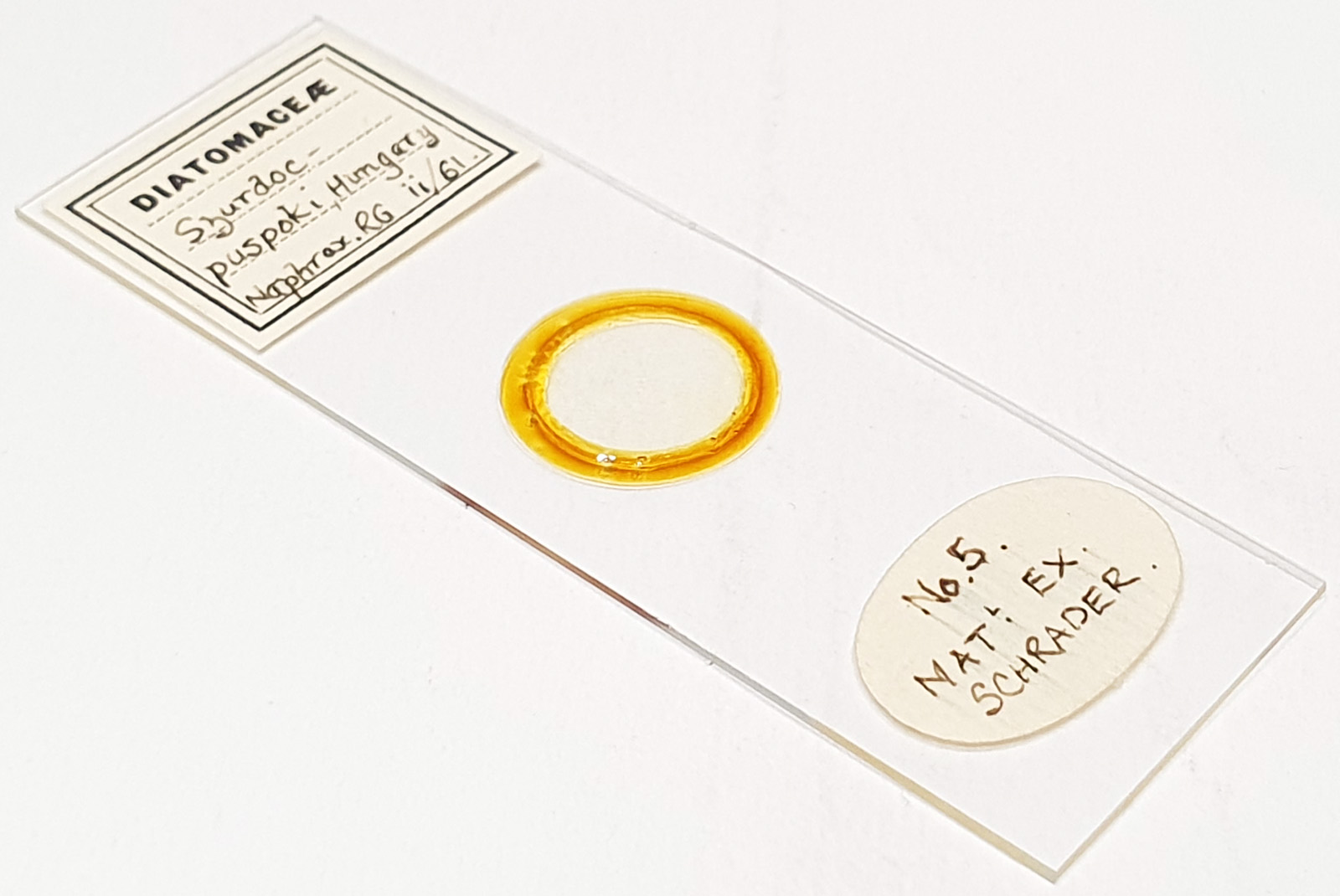
Mounted in Naphrax and dated February 1961. Material ex. Schrader.
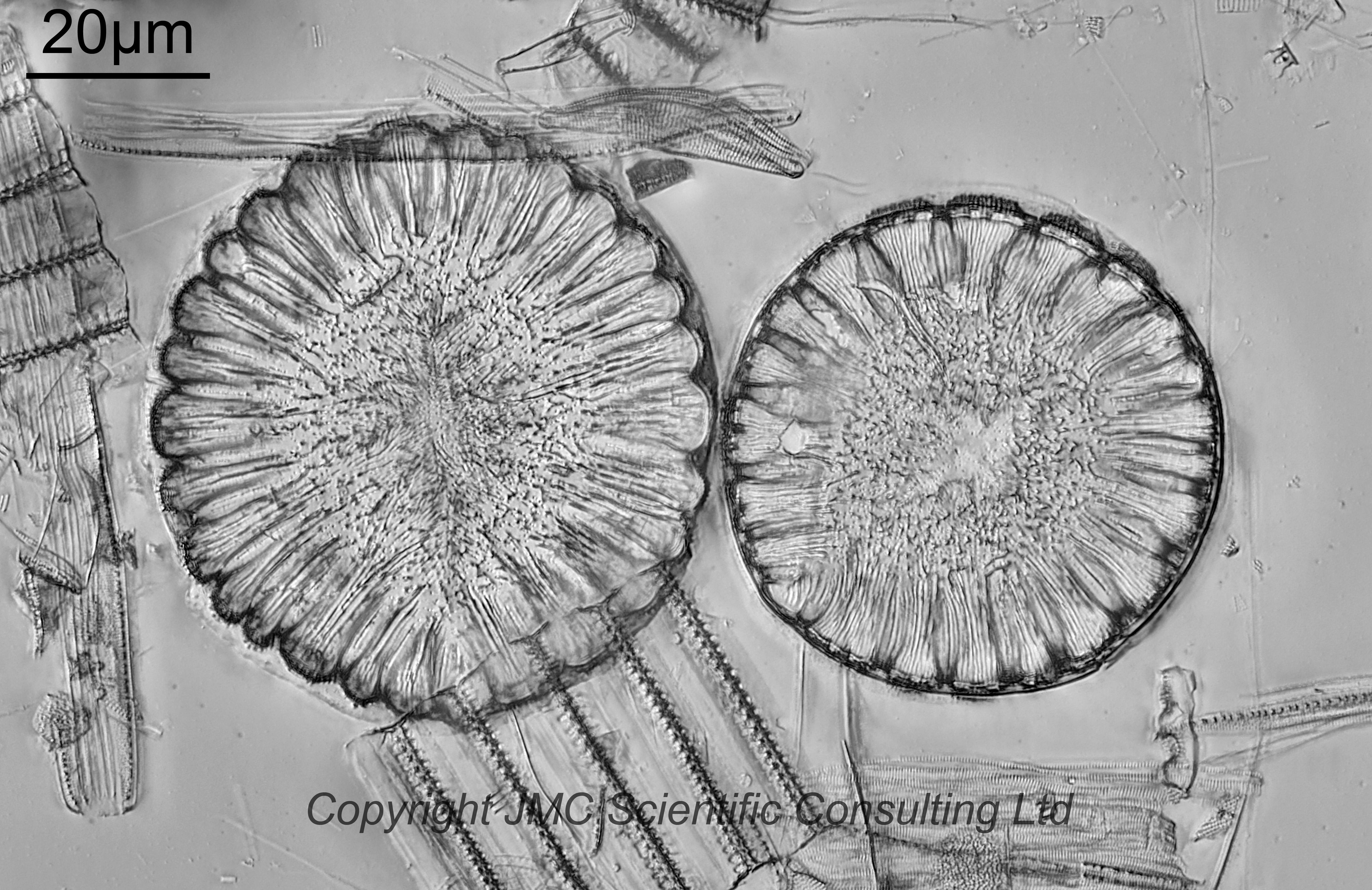
For image image of what I think is Surirella rotunda I used the 63x Leitz Pl Apo 1.4 objective, oil immersion. Olympus Aplanat Achromat condenser, oil immersion, oblique lighting. 2.5x Nikon CF PL photoeyepiece. Monochrome converted Nikon d850 camera. 24 images stacked in Zerene (Pmax).
Surirella rotunda Pantocsek, 1886. Published in: Pantocsek, J. (1886). Beiträge zur Kenntnis der Fossilen Bacillarien Ungarns. I. Theil Marine Bacillarien. pp. 1-74, 30 pls. Nagy-Tapolcsány: Buchdrucherei von Julius Platzko. Page 40, Plate 18, Figure 157. Also see Pant 1889, Plate 1, Figure 4 or S. rotunda forma minor Pant 1889, Plate 1, Figure 13. Maybe forma minor on the right? Both are present at Szurdok.
Next is from Ernstbrunn, Ziegelei (written as Fiegelei on the label). Ernstbrunn, Ziegelei refers to the historical brickmaking heritage, former brickworks (Ziegelei or Ziegelofen), and related landmarks in the market town of Ernstbrunn, located in the Korneuburg district of Lower Austria.
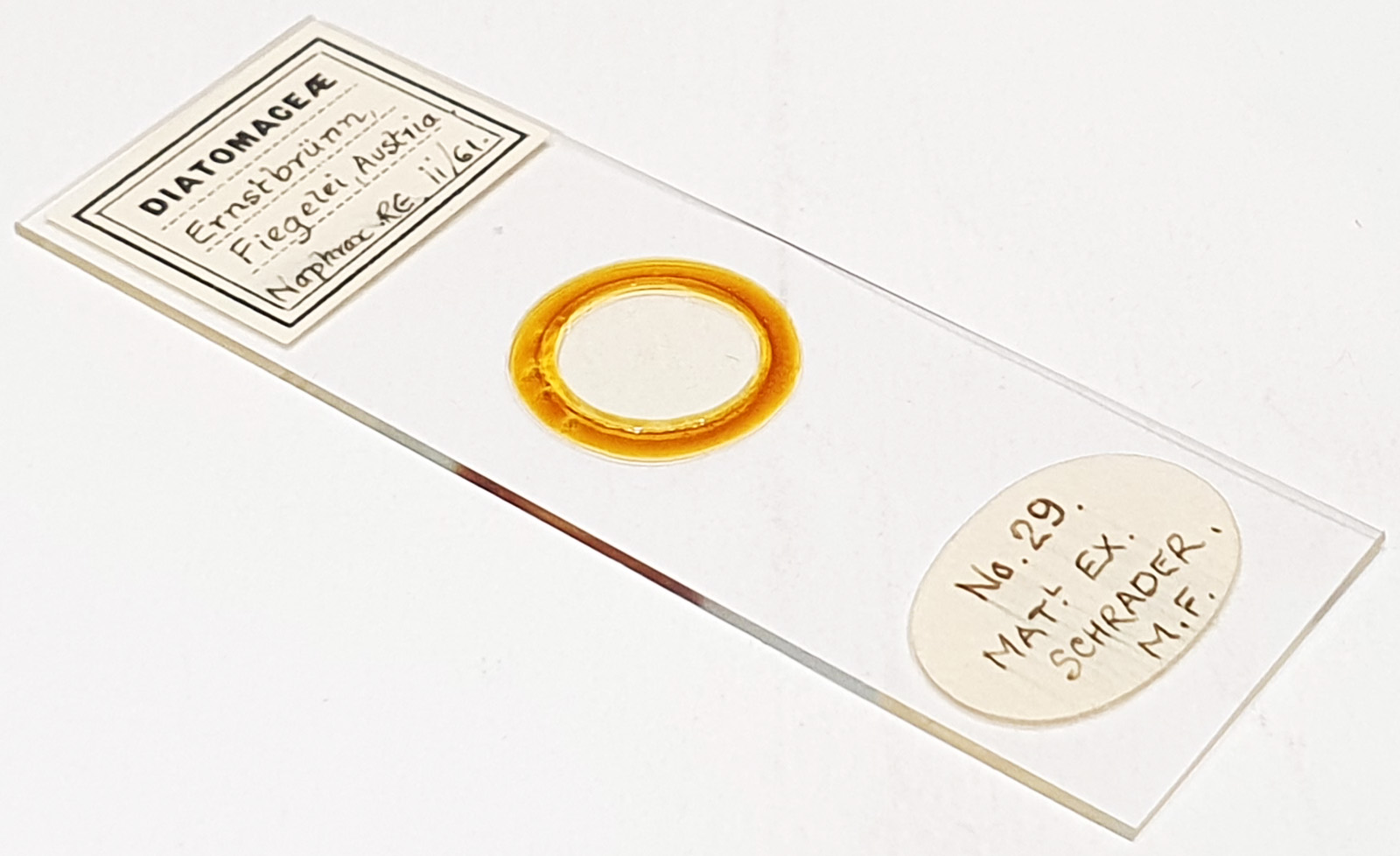
Mounted in Naphrax and dated February 1961. Material ex. Schrader. Marine fossil material (looks to be Lower Miocene – for example see: Schneider S, Harzhauser M, Kroh A, Lukeneder A, Zuschin M, Ernstbrunn Limestone and Klentnice beds (Kimmeridgian-Berriasian; Waschberg-Ždánice Unit; NE Austria and SE Czech Republic): state of the art and bibliography, Bulletin of Geosciences, 88(1), 105-130. https://dx.doi.org/10.3140/bull.geosci.1360). Quite a spread out slide and with lots of fragments.
Next one is from New Brunswick, Canada.
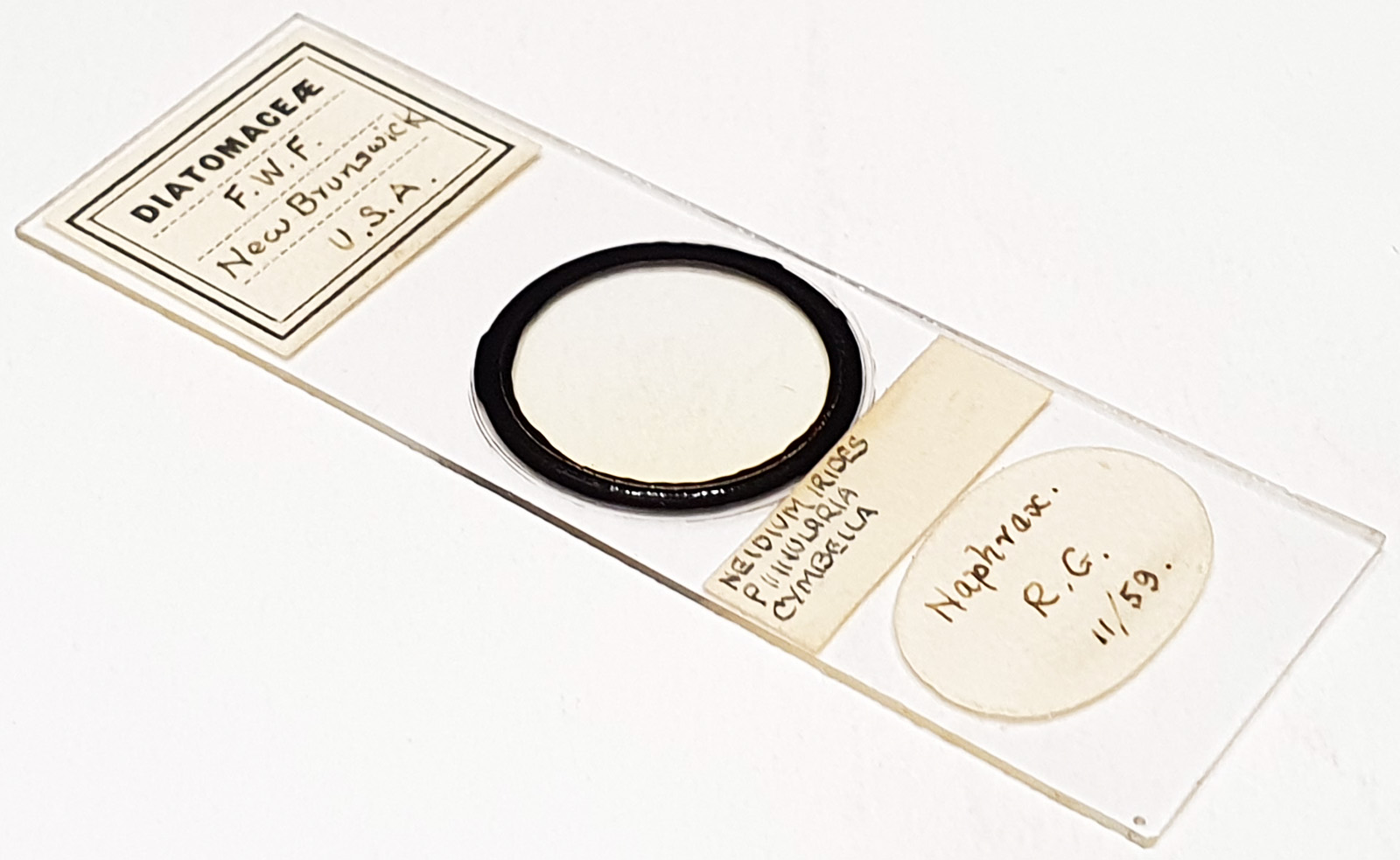
Mounted in Naphrax and dated November 1959. Fossil freshwater material. Fossil freshwater diatoms in New Brunswick are widely preserved in post-glacial (Quaternary) lacustrine deposits and lake sediment cores. Good range of species, including examples of Neidium, Pinnularia and Cymbella. Quite a thick mount, so some diatoms are very deep.
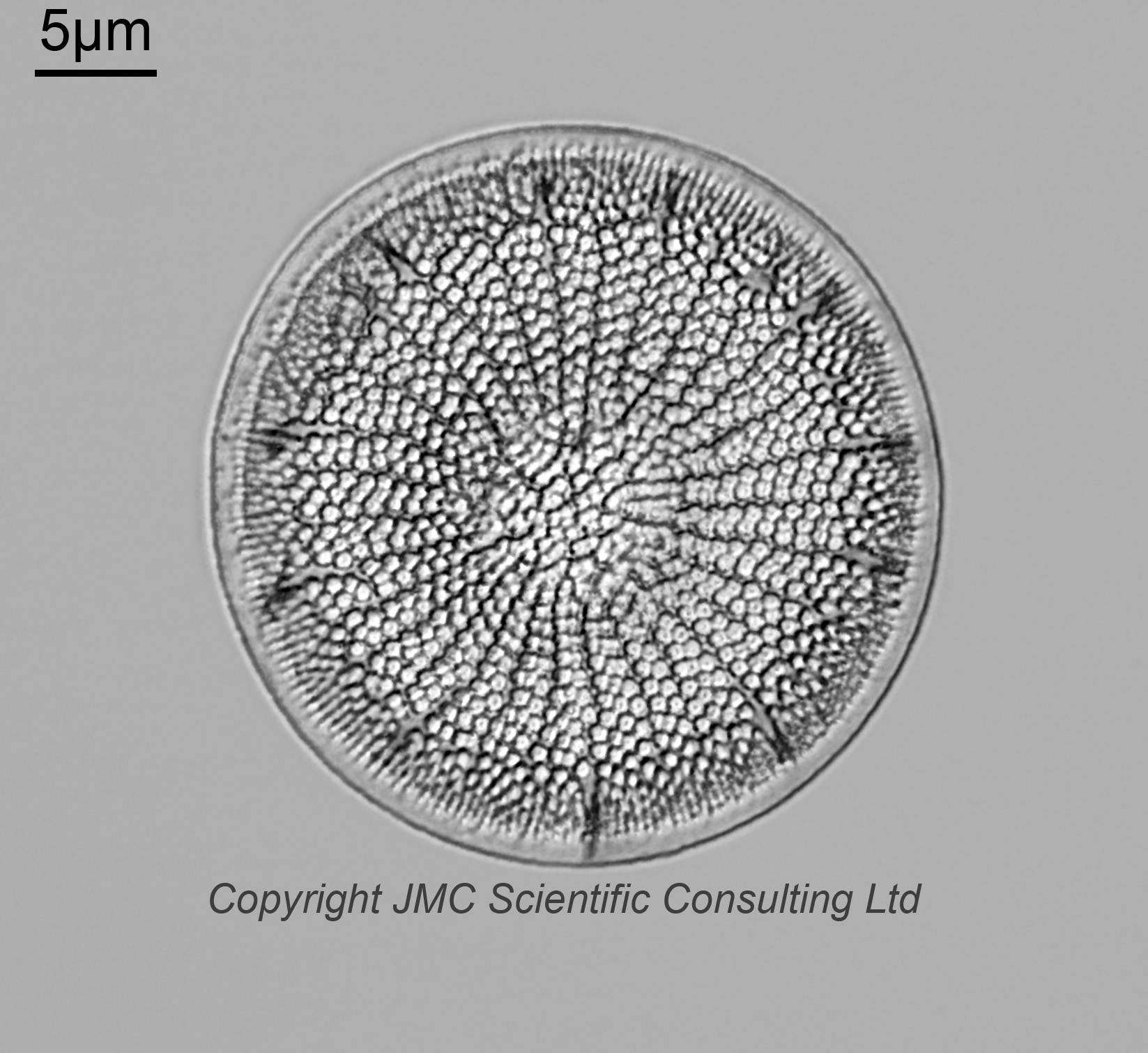
For image image of what I think is Stephanodiscus niagarae I used the 63x Leitz Pl Apo 1.4 objective, oil immersion. Olympus Aplanat Achromat condenser, oil immersion, oblique lighting. 2.5x Nikon CF PL photoeyepiece. Monochrome converted Nikon d850 camera. 29 images stacked in Zerene (Pmax). An underside view with the rim towards the coverslip.
Stephanodiscus niagarae has been documented in historical freshwater diatom and diatomite surveys in New Brunswick. See: Bailey, L.W. 1911. The freshwater diatoms and diatomaceous earths of New Brunswick. Natural History Society of New Brunswick, Bulletin 29, p. 291–320. However I am not 100% on this ID.
Next is from Skye, Scotland.
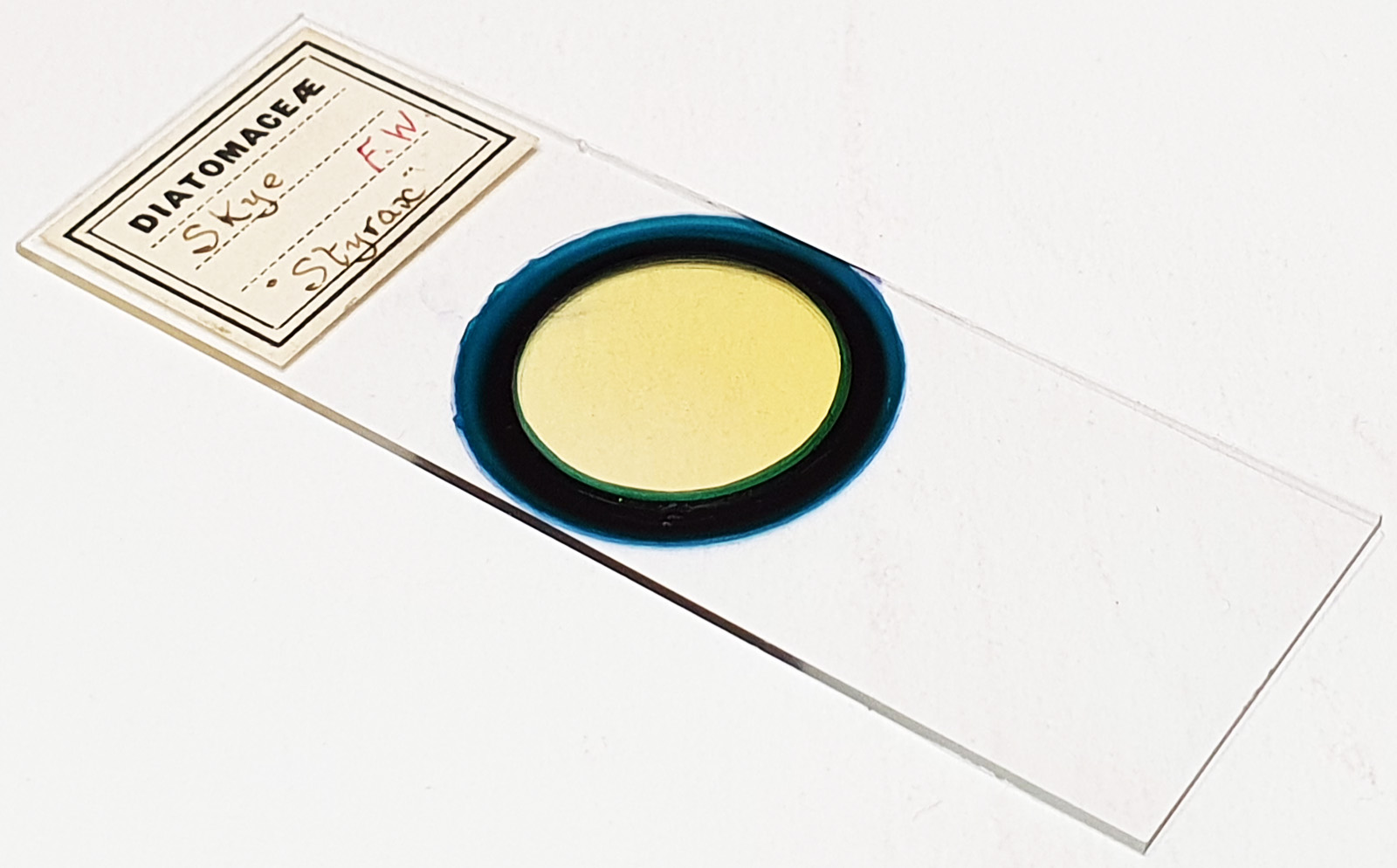
A freshwater strew mounted in Styrax. Some yellowing of the mountant.
Next is from Oberohe, Germany.
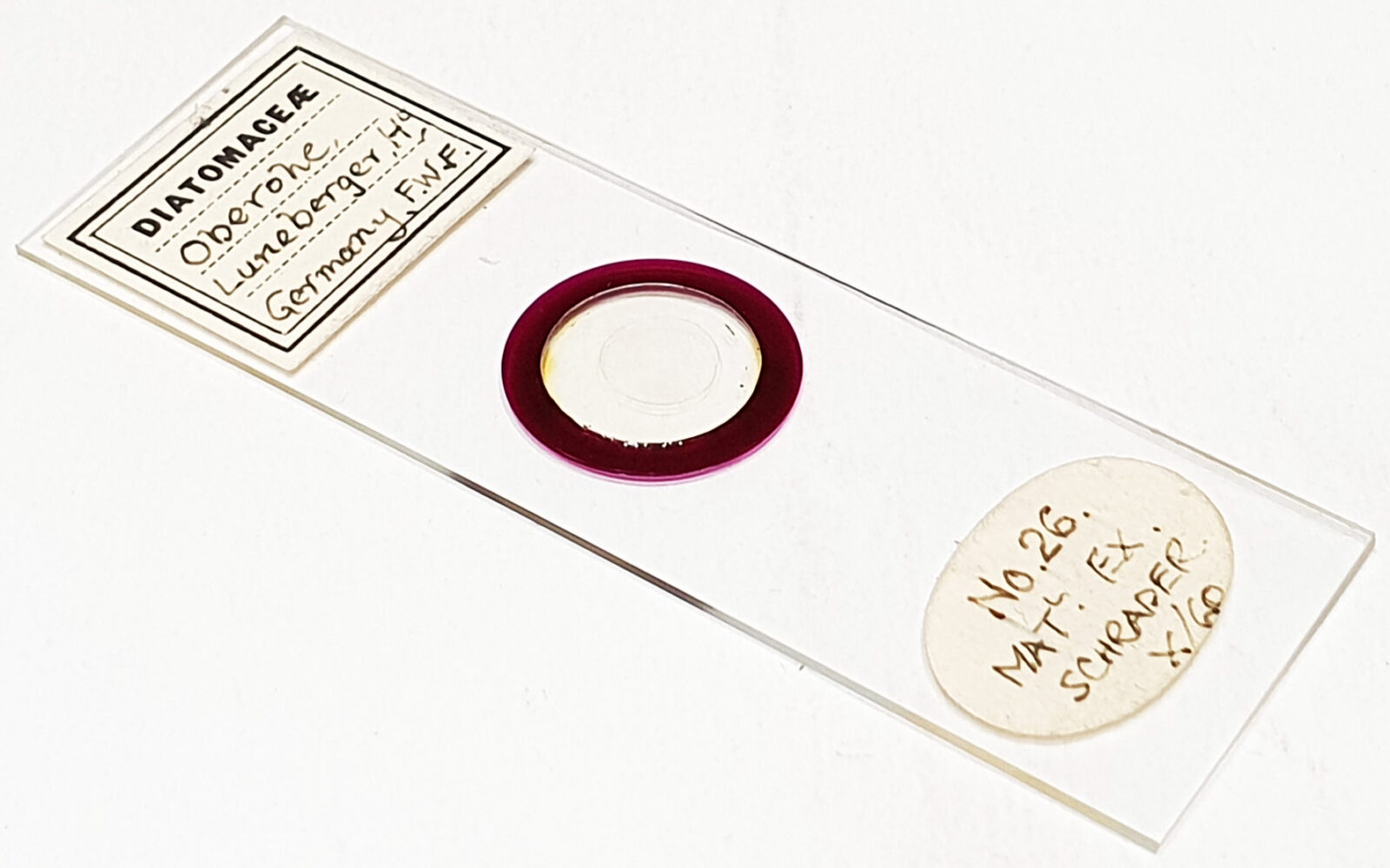
Oberohe, located in the Faßberg/Celle district of Lower Saxony, Germany, in the Lüneburg Heath (Lüneburger Heide). Known for its rich Quaternary freshwater diatomite, known locally as Kieselgur or the “white gold of the heath”. Material ex. Schrader. October 1960. Mainly very small diatoms.