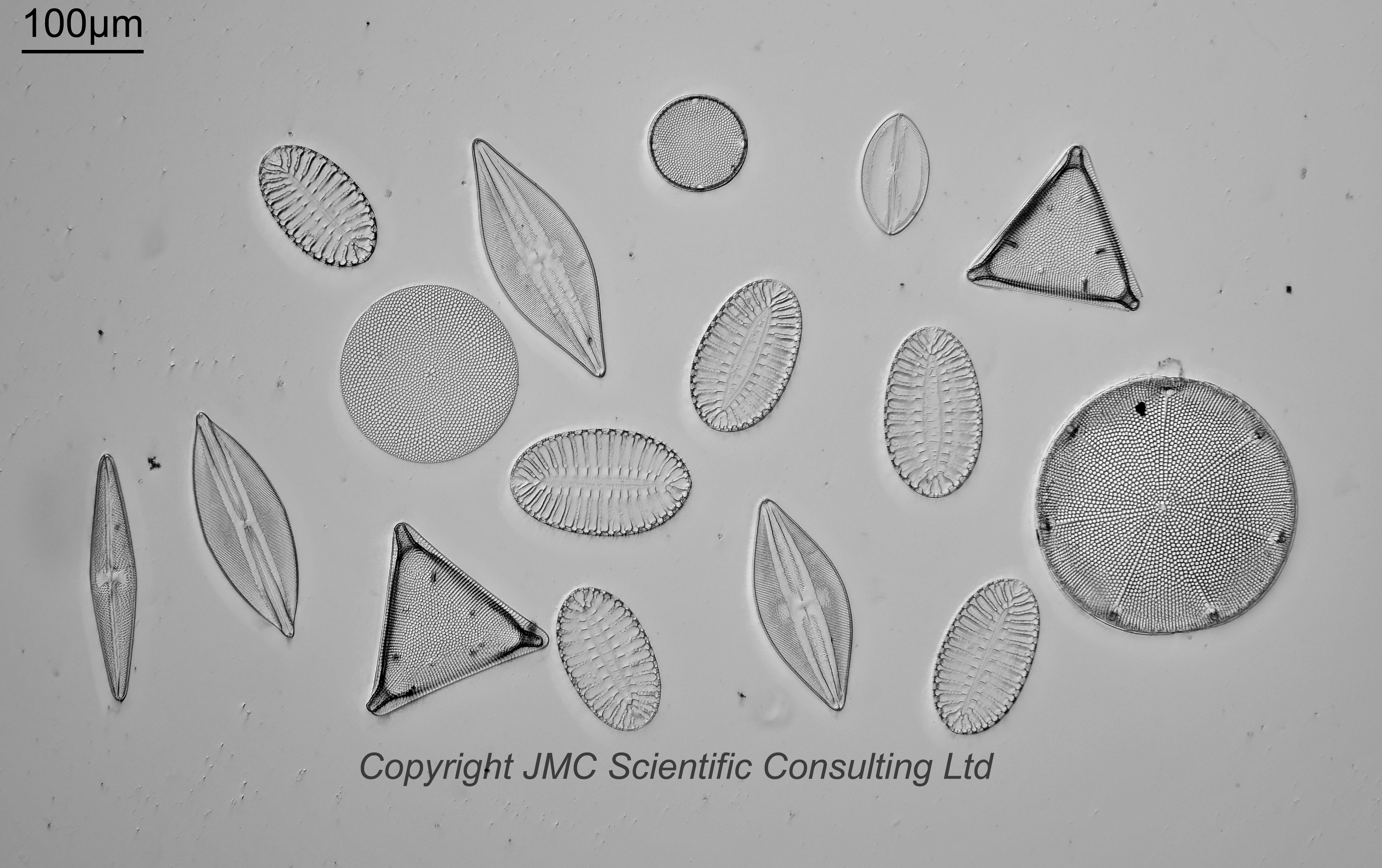
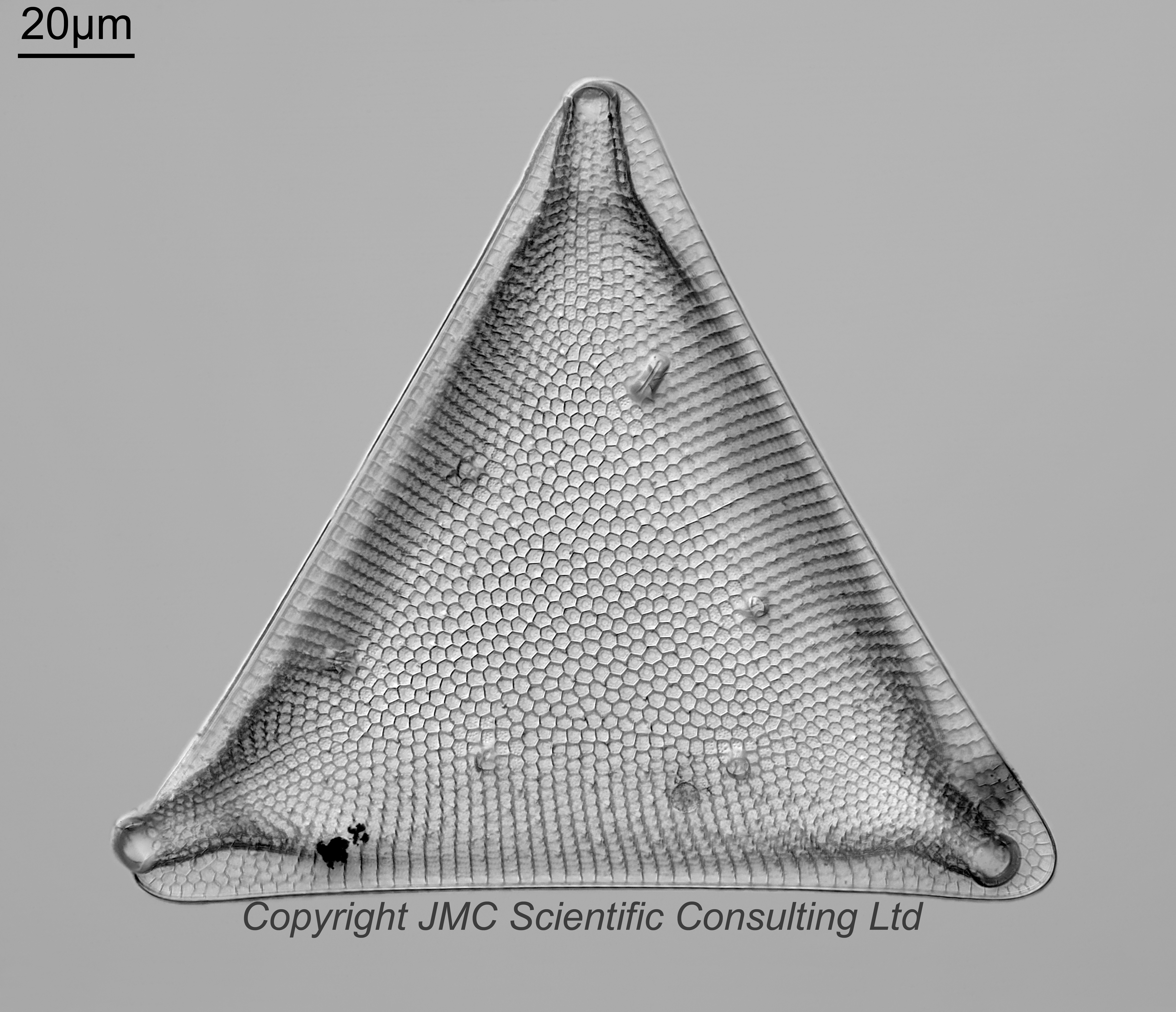
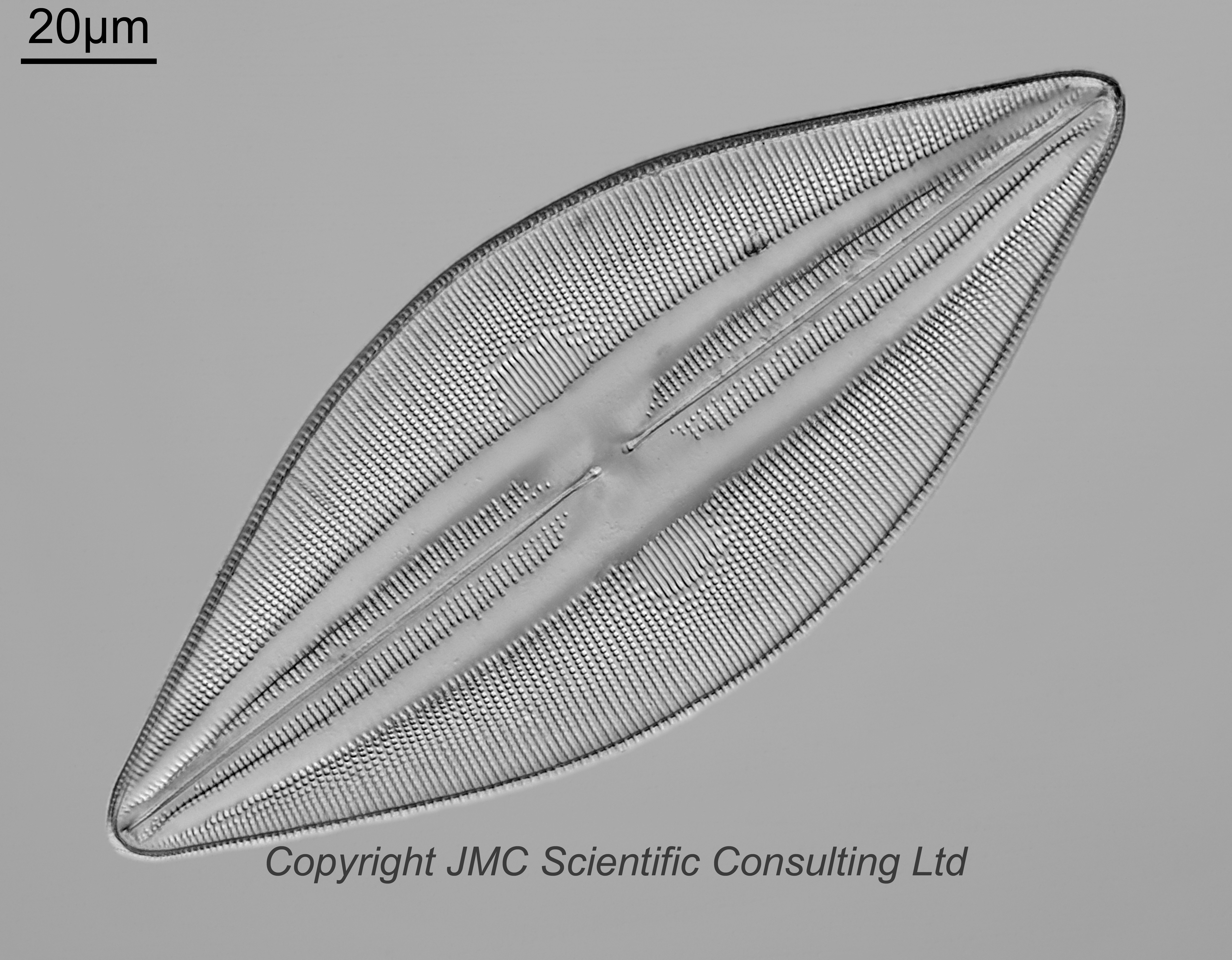
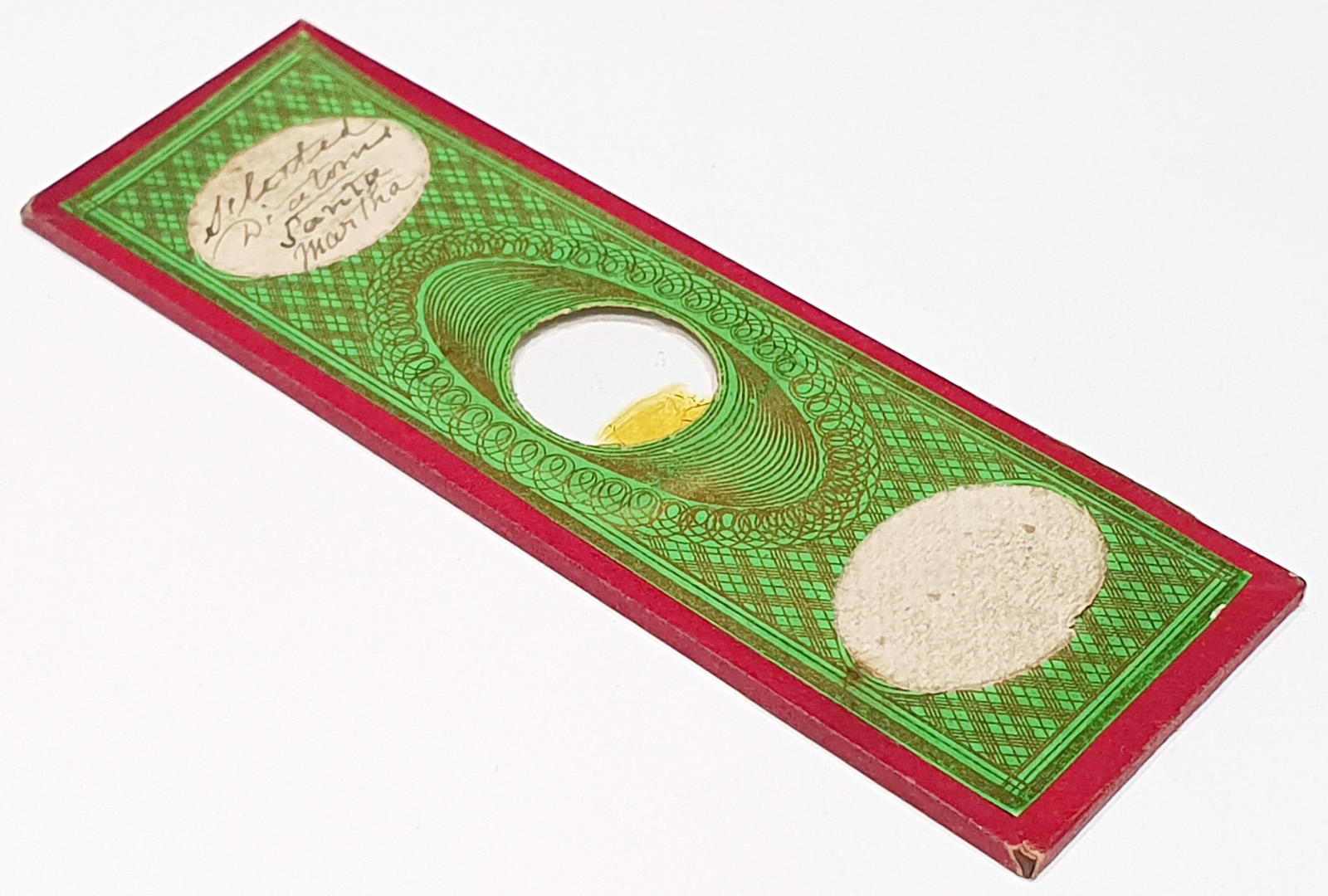
An arrangement of selected diatoms from Santa Martha (not sure where this is, maybe Santa Marta, Columbia?). Range of species present. Prepared by John Barnett. Olympus BHB microscope using 450nm LED light. As well as the arrangement I imaged two using a 63x Leitz Pl Apo 1.4 objective, oil immersion. Olympus Aplanat Achromat condenser, oil immersion, oblique lighting. 2.5x Nikon CF PL photoeyepiece. 11mm tube to the camera removed to increase the field of view. Monochrome converted Nikon d850 camera. Images stacked in Zerene (Pmax).
Biddulphia spinosa. 94 images stacked. Looks like Triceratium spinosum (Schmidt’s Atlas, Plate 87, Figures 2 and 3).Triceratium spinosum Bailey 1844. Published in: Bailey, J.W. (1844). Account of some new Infusorial forms discovered in the fossil Infusoria from Petersberg, Va., and Piscataway, Md. American Journal of Science 46: 137-141, 1 pl. Page 139, Plate 2. This name is currently regarded as a synonym of Biddulphia spinosa (Bailey) Boyer nom. illeg. 1901 ‘1900’. Published in: Boyer, C.S. (1901 ‘1900’). The biddulphoid forms of North American Diatomaceae. Proceedings of the Academy of Natural Sciences of Philadelphia 1900: 685-748. Page 703.
Lyrella genifera (underside view, rim upwards towards the coverslip). 42 images stacked. Lyrella genifera (A.W.F.Schmidt) D.G.Mann 1990. Published in: Round, F.E., Crawford, R.M. & Mann, D.G. (1990). The diatoms. Biology and morphology of the genera. pp. [i-ix], 1-747. Cambridge: Cambridge University Press. Page 672. Basionym: Navicula genifera A.W.F.Schmidt 1874. Published in: Schmidt, A.[W.F.] (1874). Atlas der Diatomaceenkunde. Series I, Heft 1. pp. pls 1-4. Aschersleben: [Verlag von Ernst Schlegel]. Plate 2, Figure 6. No description.