Three slides by Johann Diedrich Möller using the unusual mountant of Jodkalium-Quecksilber-Jodid (Potassium Iodide/Mercury Iodide). Olympus BHB microscope using 450nm LED light. Where they have survived, these are nice high contrast, with a high refractive index of about 1.75-1.80. At the end of the page some optical transmission measurements to show how they impact the light passing through them.
First a slide labelled as Pleurosigma angulatum. Also some Gyrosigma sp. present. Some solvent loss over about 20% of the area of the coverslip.
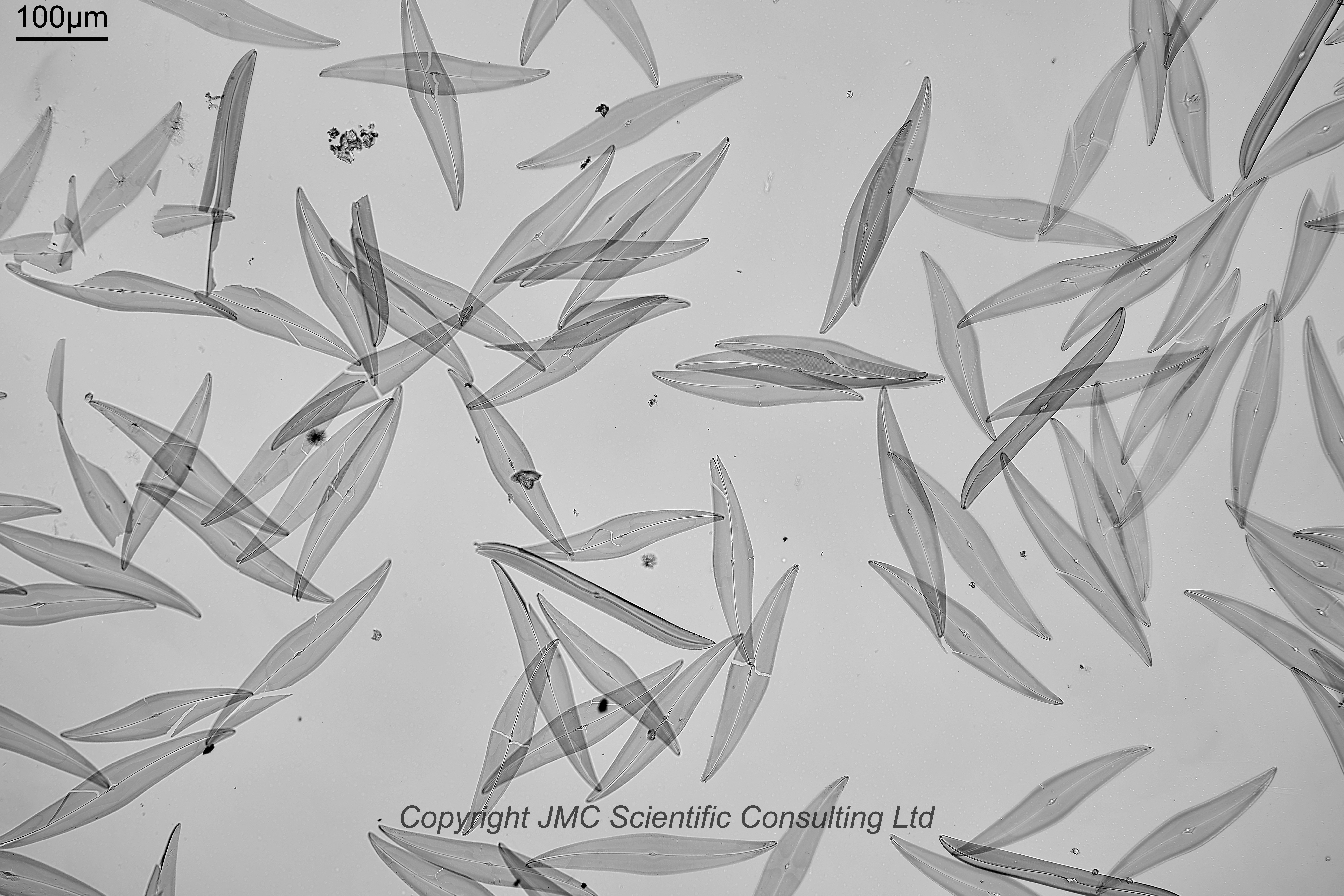
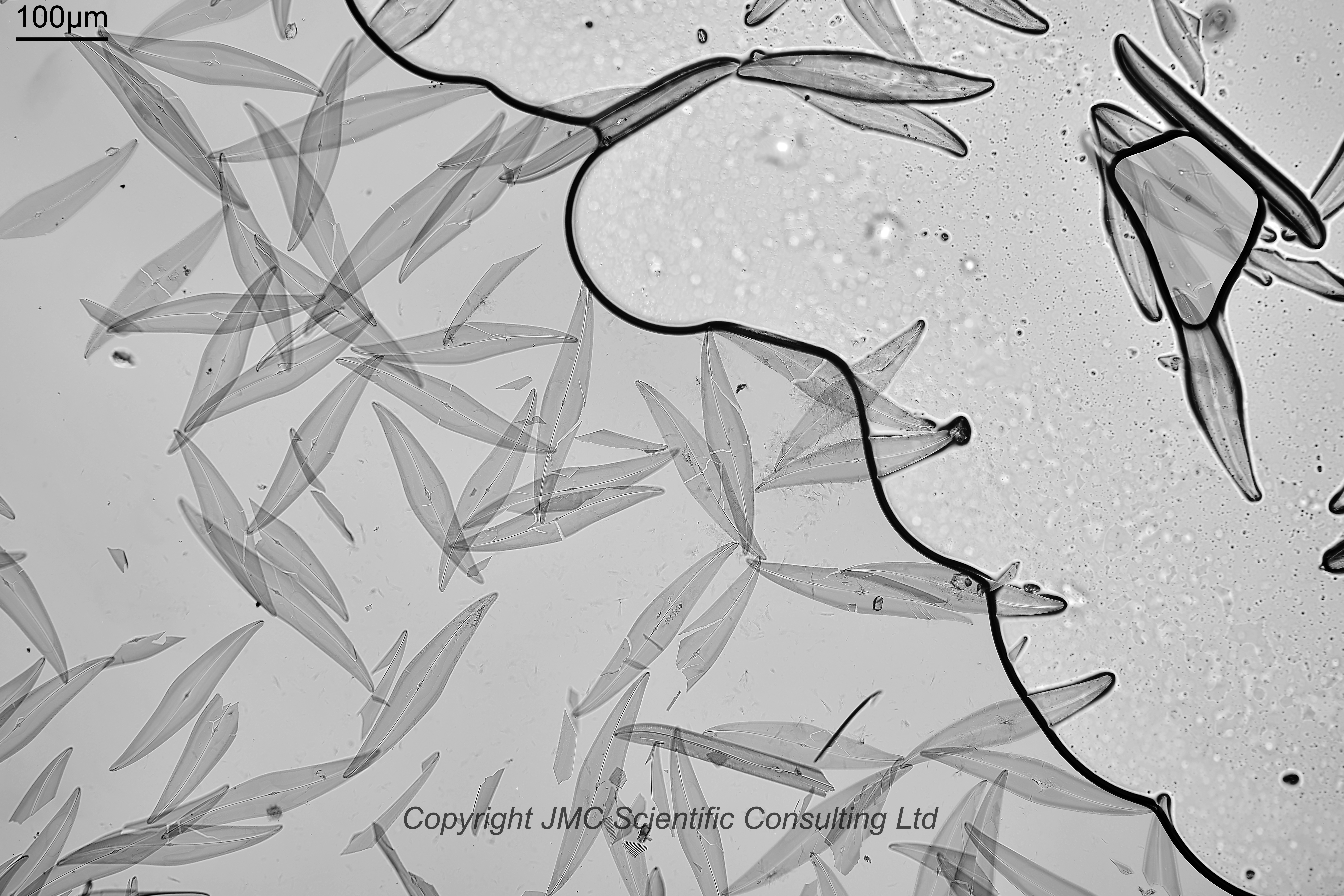
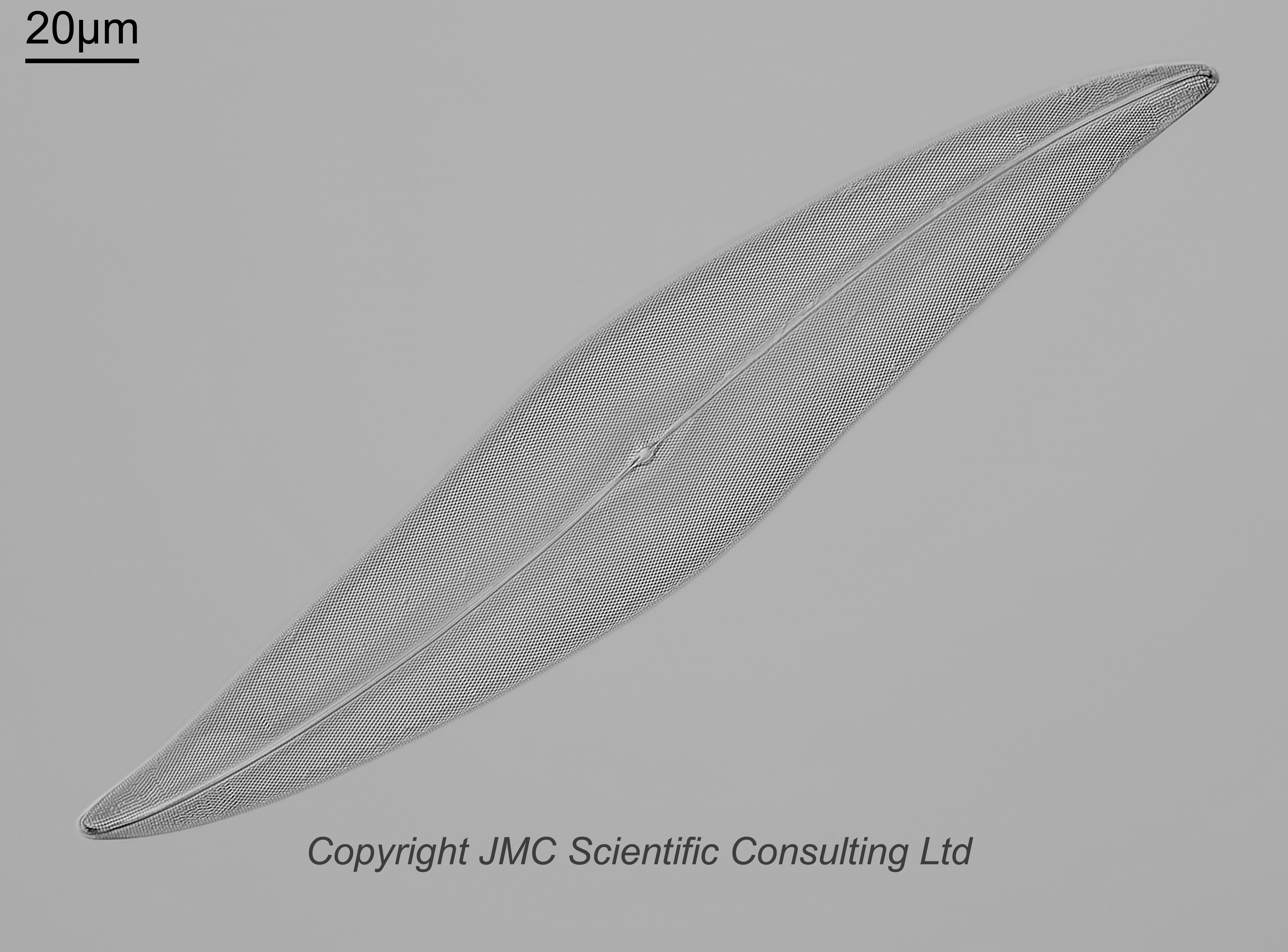
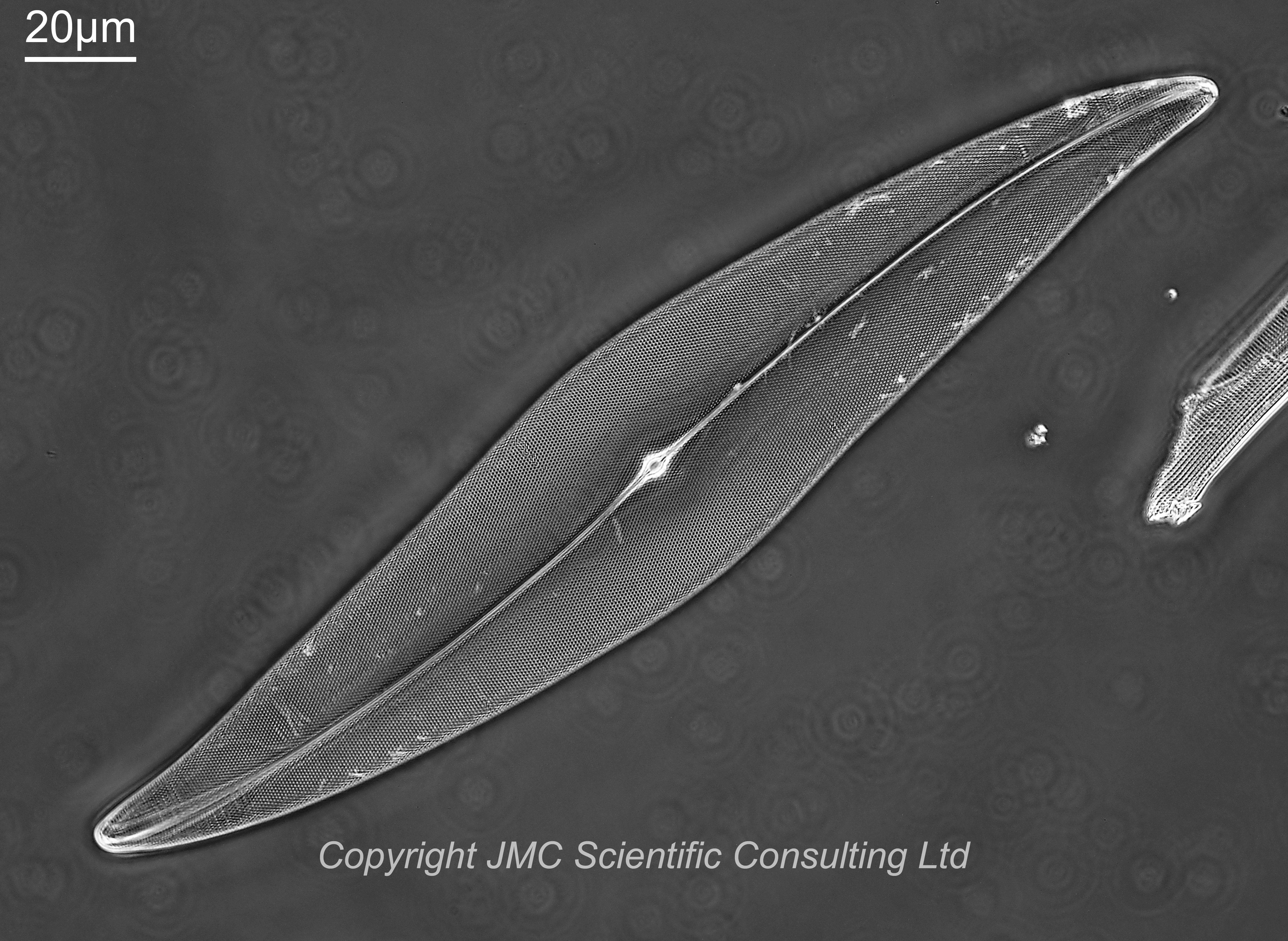
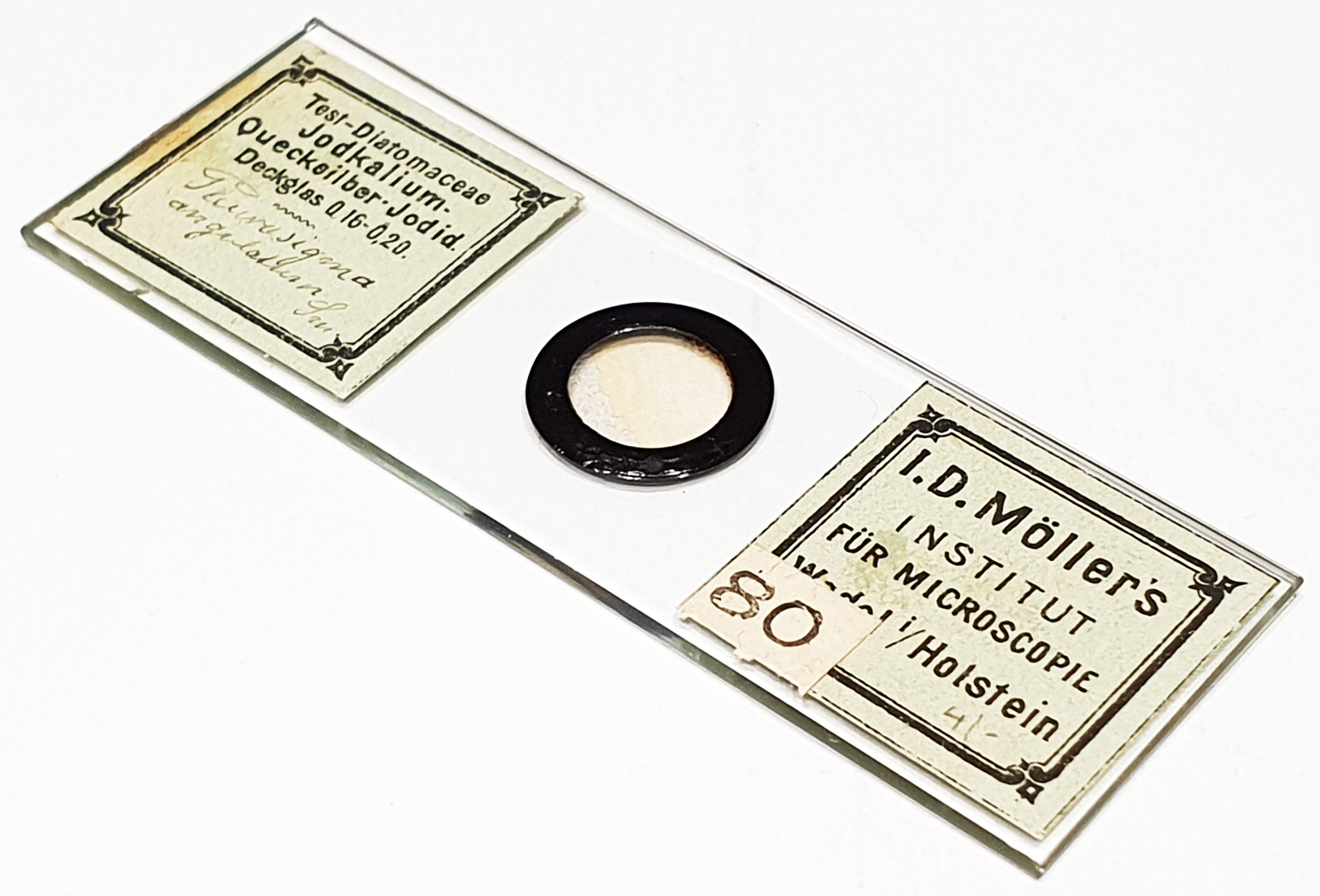
0.16-0.20mm thick coverslip. As well as the wider field view of the strew, one was imaged using a 40x Leitz Pl Apo NA 1.00 objective, oil immersion. Olympus Aplanat Achromat condenser, oil immersion, oblique lighting. 2.5x Nikon CF PL photoeyepiece. Monochrome converted Nikon d850 camera. 24 images stacked in Zerene (Pmax). Couldn’t get close enough to use the 63x Leitz. These diatoms were very flat against the coverslip and they have the look of having been sintered on to it. In addition to the stack, I imaged the same diatom using a 40x Zeiss Plan Apo NA 1.00 oil immersion objective, and a Leitz Heine condenser set to darkground (single unstacked image).
Pleurosigma angulatum (J.T.Quekett) W.Smith 1852. Published in: Smith, W. (1852). Notes on the Diatomaceae with descriptions of British species included in the genus Pleurosigma. Annals and Magazine of Natural History, Series 2 9: 1-12, 2 pls. Page 7, Plate 1, Figures 7,8 [as var. beta], 9 [as var. gamma].
Next, a slide labelled as Cymatopleura nobilis, but with example of other genus such as Campylodiscus and Pinnularia.
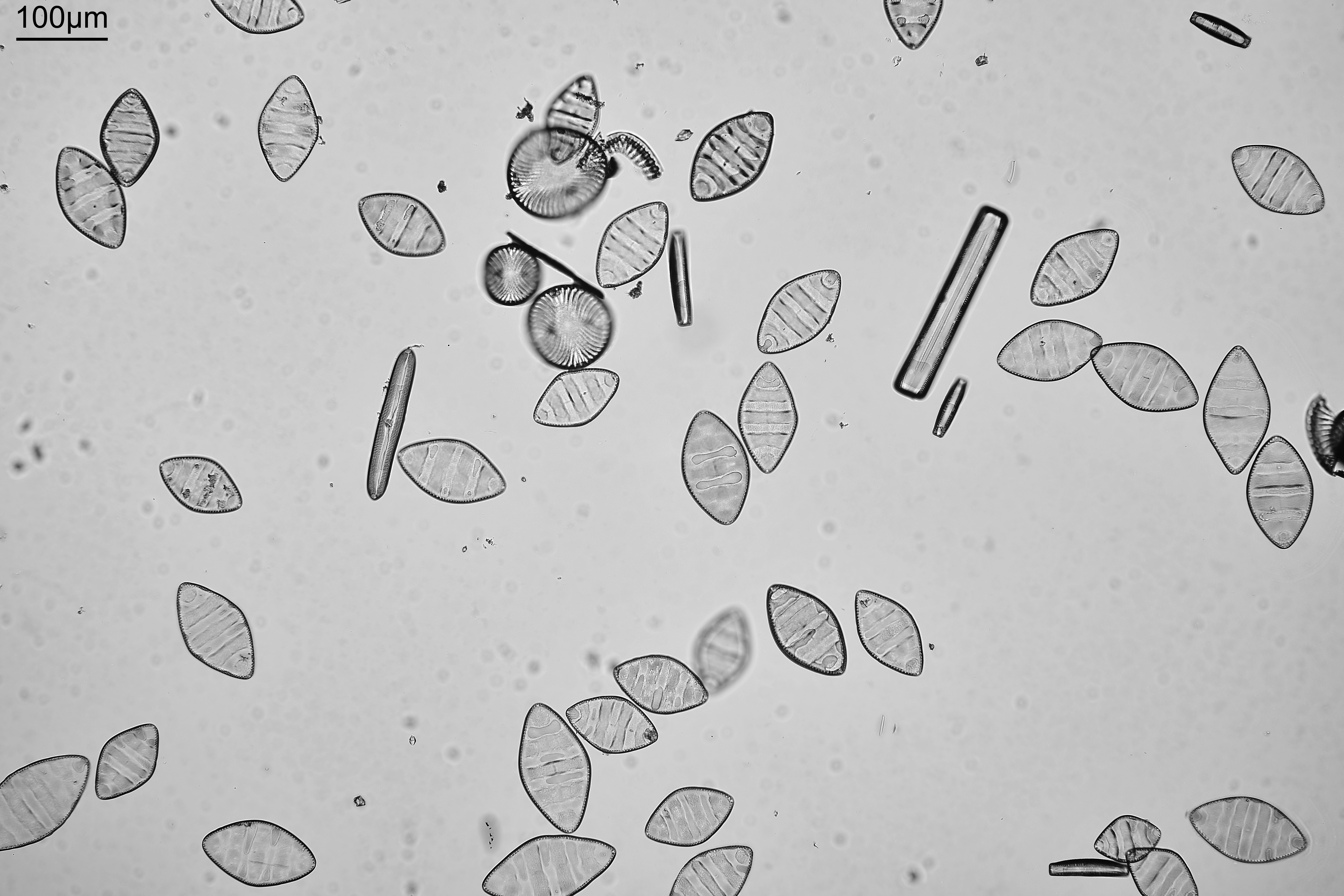
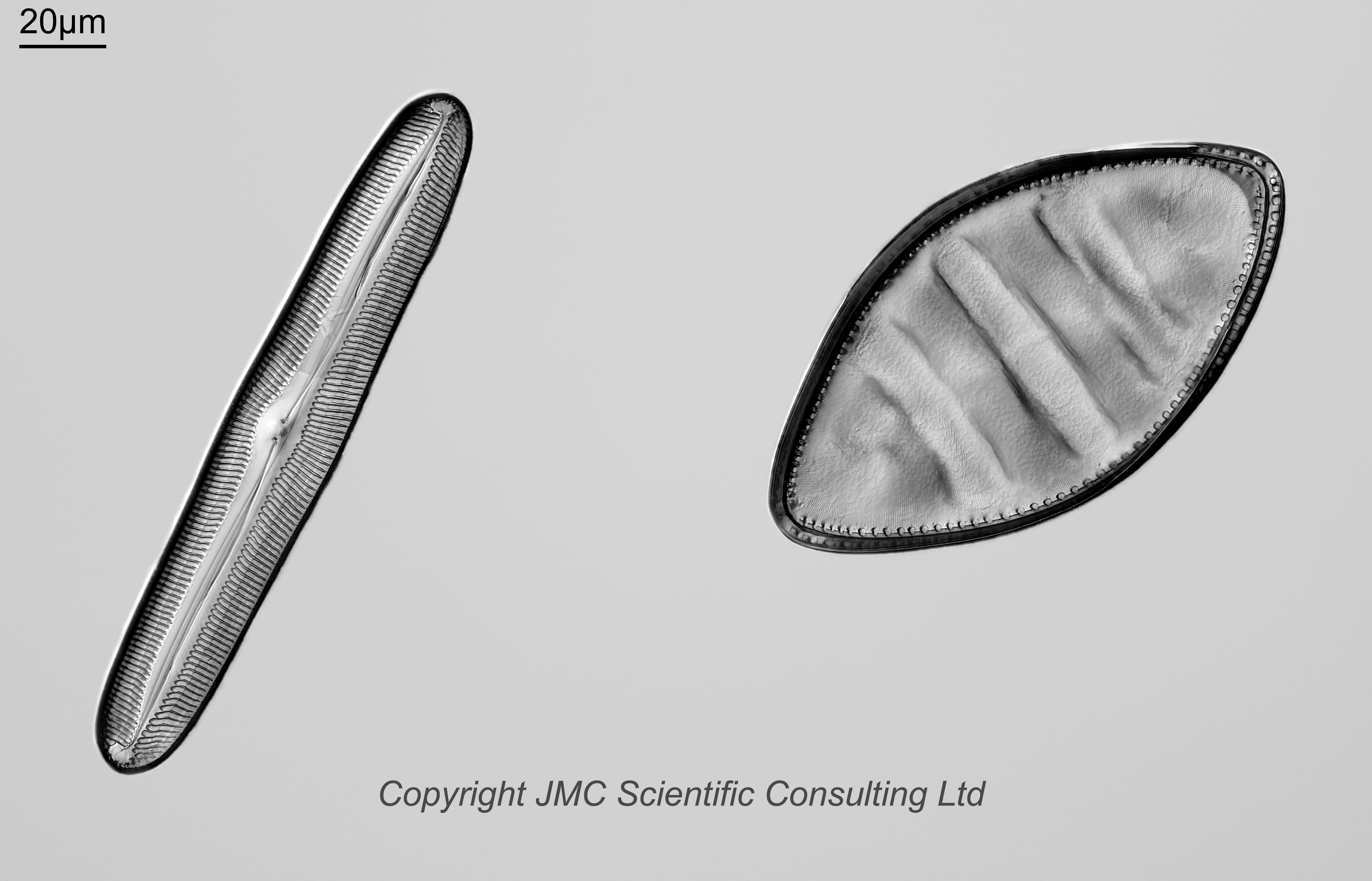
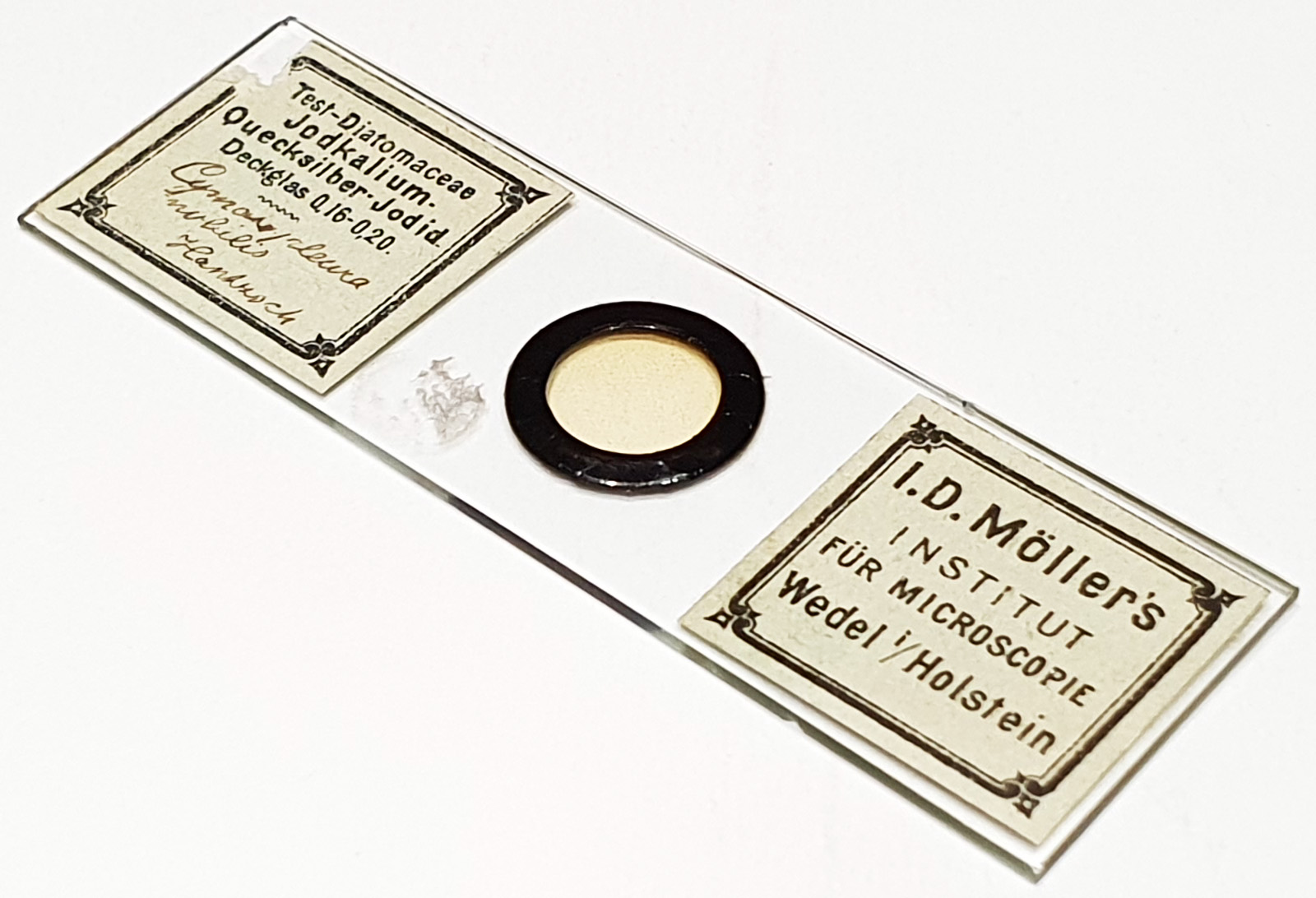
0.16-0.20mm thick coverslip. As well as the wider field view of the strew, one was imaged along with a Pinnularia sp. using a 40x Leitz Pl Apo NA 1.00 objective, oil immersion. Olympus Aplanat Achromat condenser, oil immersion, oblique lighting. 2.5x Nikon CF PL photoeyepiece. Monochrome converted Nikon d850 camera. 55 images stacked in Zerene (Pmax). Couldn’t get close enough to use the 63x Leitz.
Cymatopleura nobilis Hantzsch 1860: 36. Published in: Hantzsch, C.A. (1860). Neue Bacillarien: Nitzschia vivax var. elongata, Cymatopleura nobilis. Hedwigia 2(7): 1-40, pl. 6. Page 36. Also see Cymatopleura elliptica var. nobilis (Hantzsch) Hustedt 1912. Published in: Schmidt, A.[W.F.] (1912). Atlas der Diatomaceen-kunde Series VII: Heft 70. pp. pls 277-280. Leipzig: O.R.Reisland. Plate 278, Figures 2,4,5. This name is currently regarded as a synonym of Cymatopleura nobilis Hantzsch.
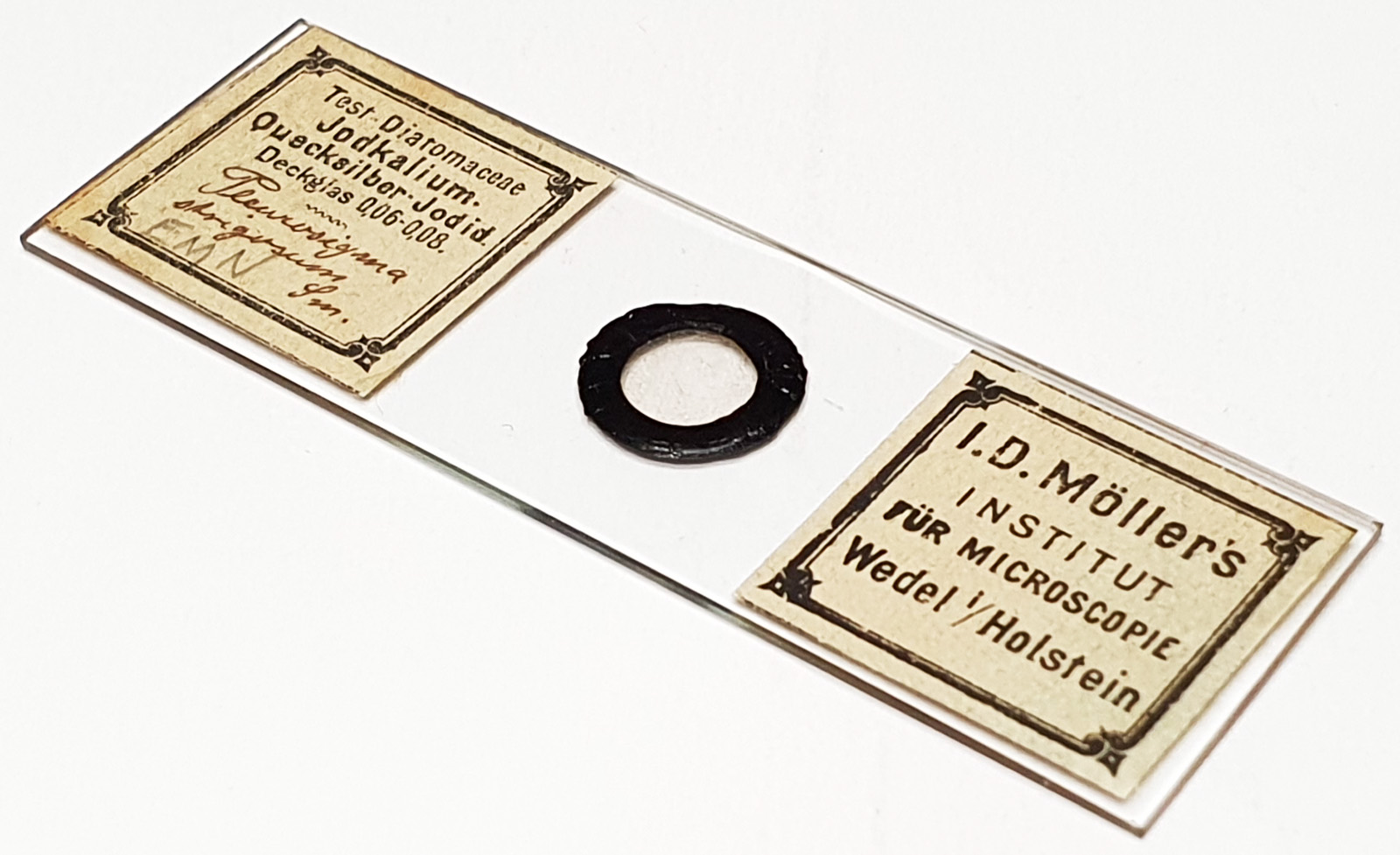
Final slide labelled as Pleurosigma strigosum. Mainly broken diatom pieces, and the solvent has been lost across the whole slide.
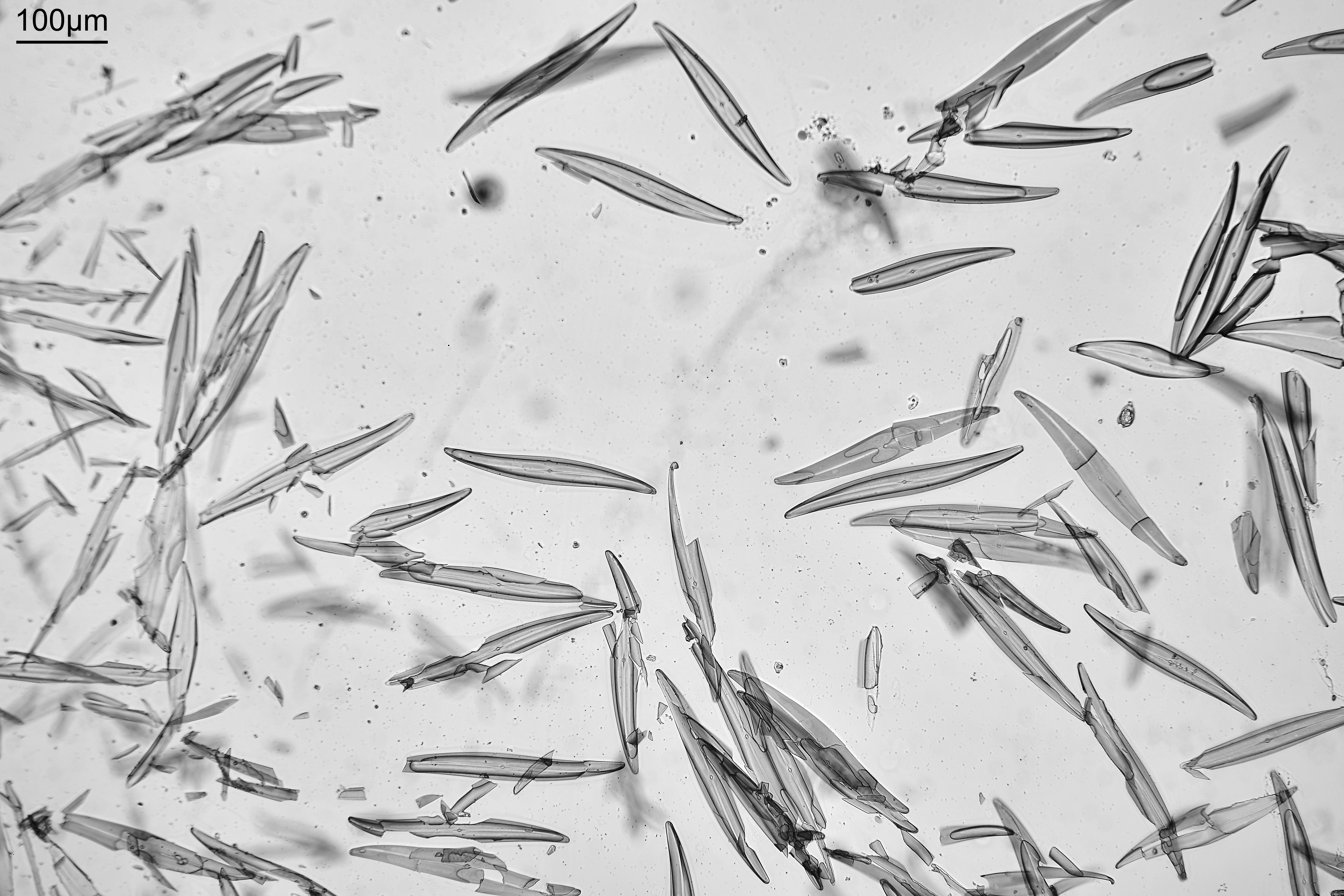
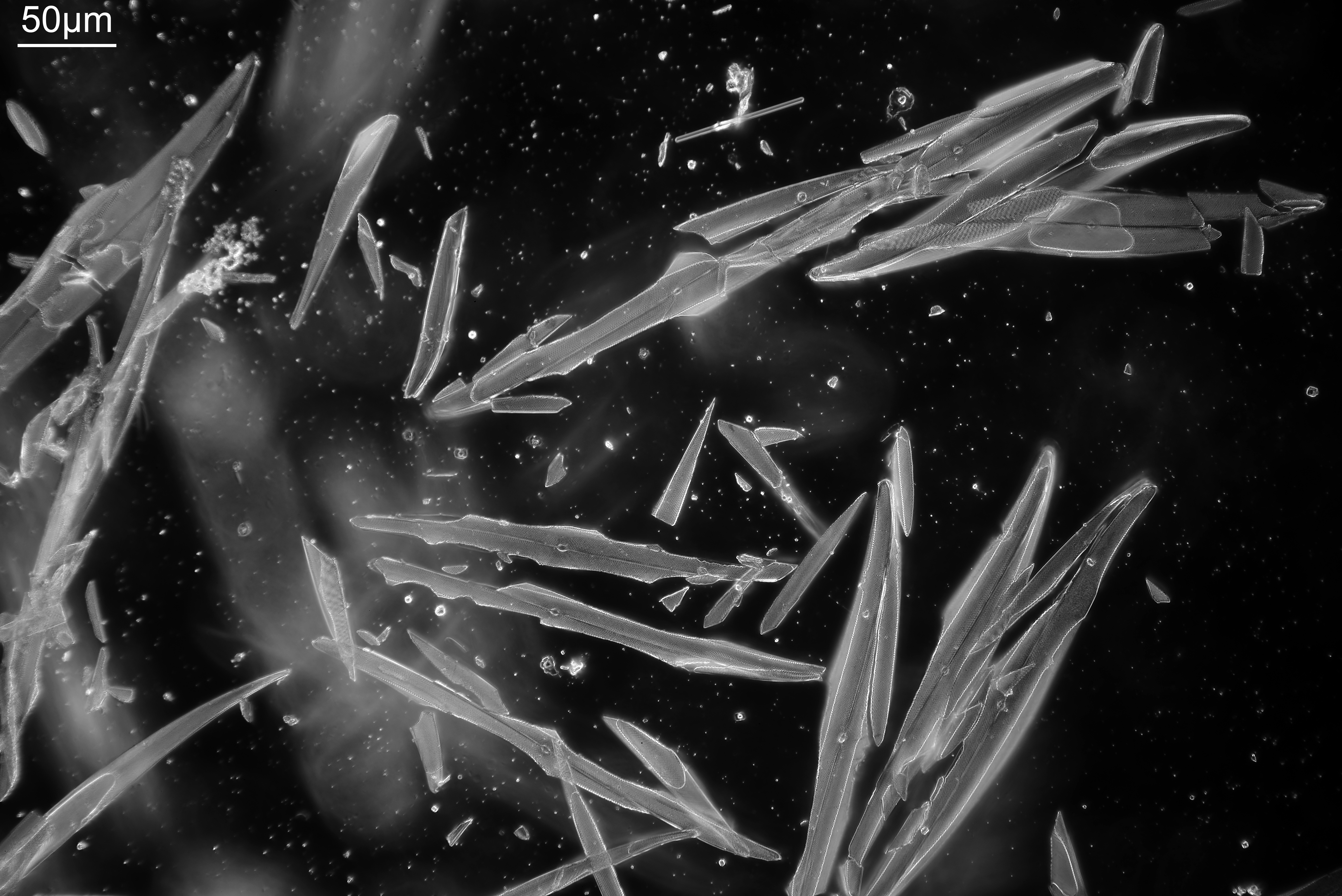
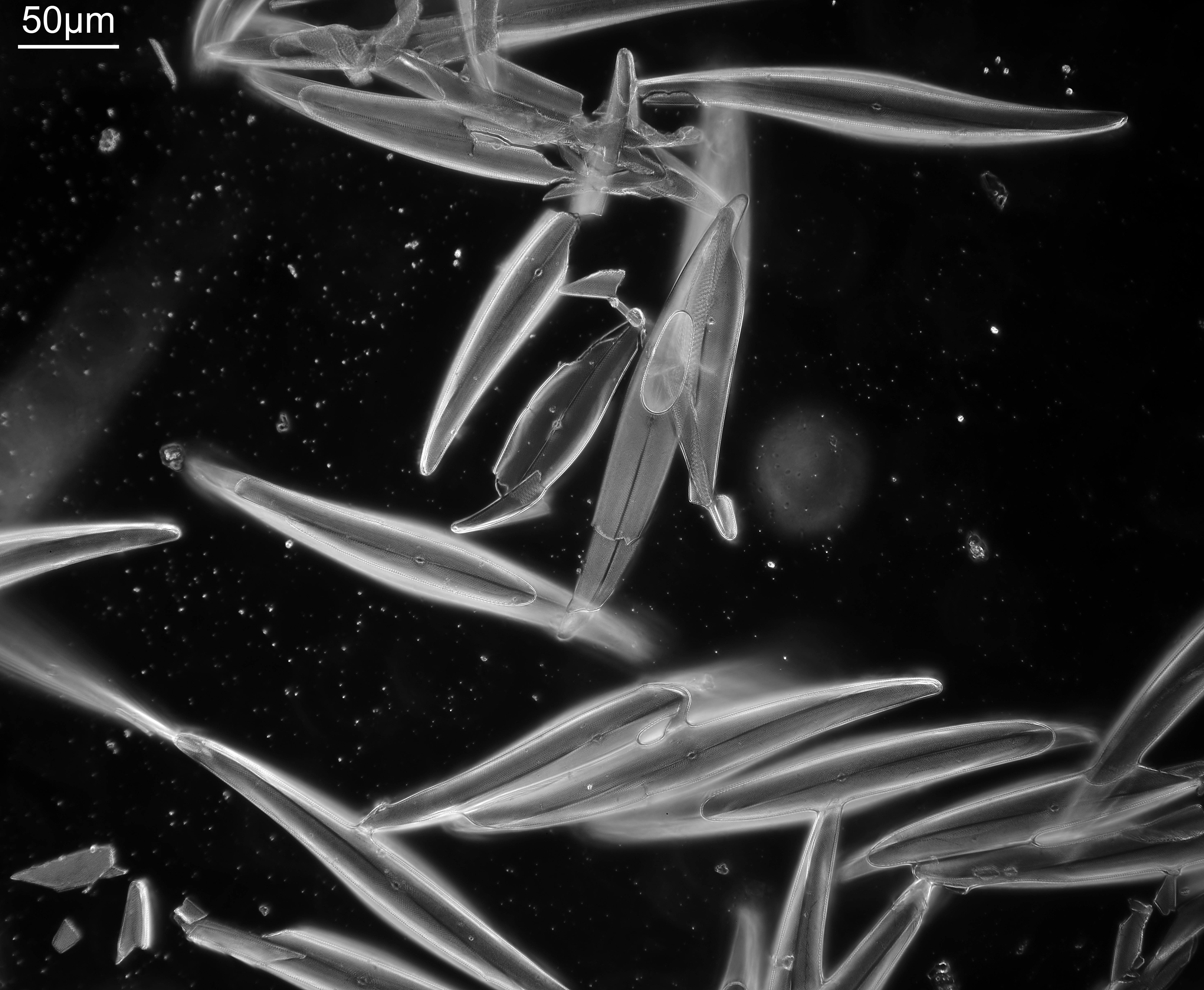
Thin (0.06-0.08mm) coverslip. As well as the wider field view of the strew,I did a couple of images using the 20x Nikon Plan Apo NA 0.65 objective, and a Leitz Heine condenser set to darkground (unstacked images).
Pleurosigma strigosum W.Smith 1852. Published in: Smith, W. (1852). Notes on the Diatomaceae with descriptions of British species included in the genus Pleurosigma. Annals and Magazine of Natural History, Series 2 9: 1-12, 2 pls. Page 7, Plate 1, Figure 6.
I measured the optical transmission through these slides, as I like to know how they behave in the UV to understand how low I can go with the wavelength of light for imaging.
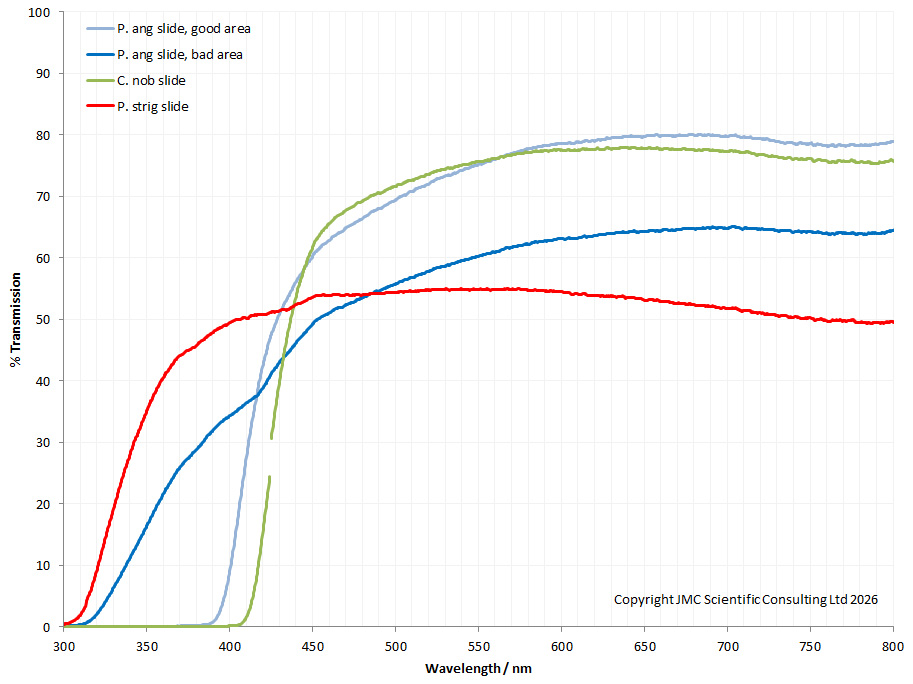
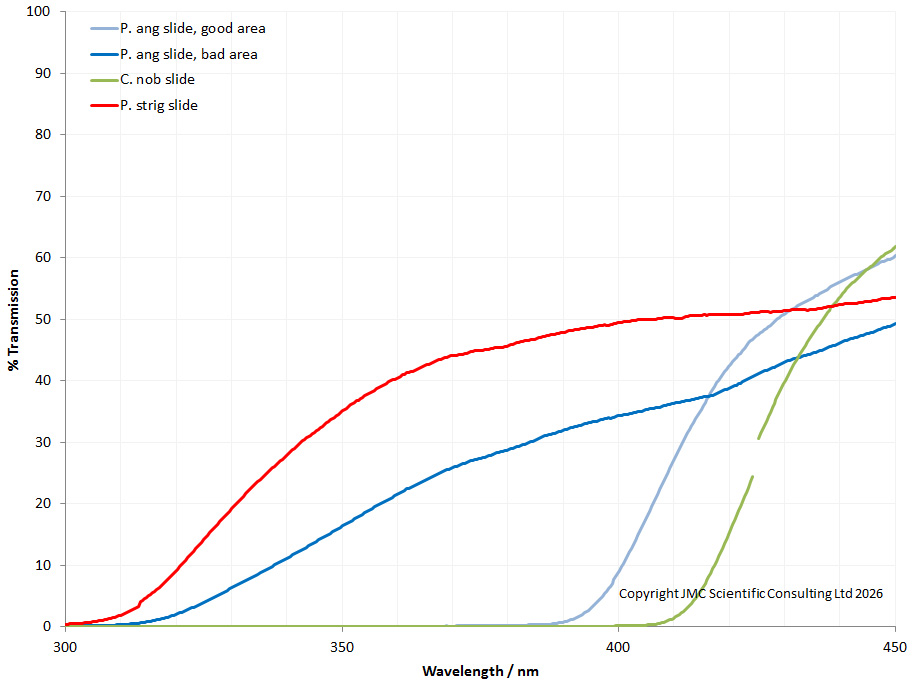
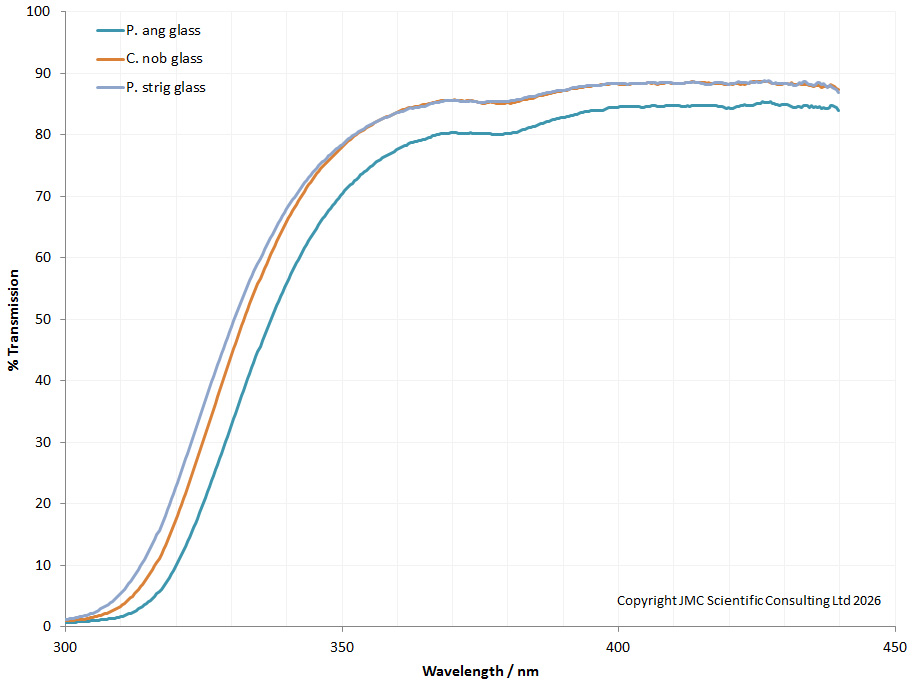
The good slides (the good area of the Pleurosigma angulatum slide and the Cymatopleura slide) had high optical transmission down to about 450nm, and then transmission dropped quickly down to about zero around 400nm. In the areas where the solvent has been lost (the bad area of the P. angulatum slide, and the P. strigosum slide), maximum transmission the visible region is reduced, but there is a deeper penetration of the light into the UV. This implies that the solvent was quite strongly UV absorbing. Interesting – what was the solvent? As can be seen the glass of the main body of the slides looks to be the limiting factor for UV light penetration.
I really like these unusual mountants. In the late 1800s and early 1900s, slide makers were playing around with some weird and whacky mountants for diatoms, mainly aimed at increasing the refractive index. Later, with the advent of organic based high RI mountants for as Naphrax the use of these more esoteric ones died out, and relatively little has been published on them. Hence my interest.