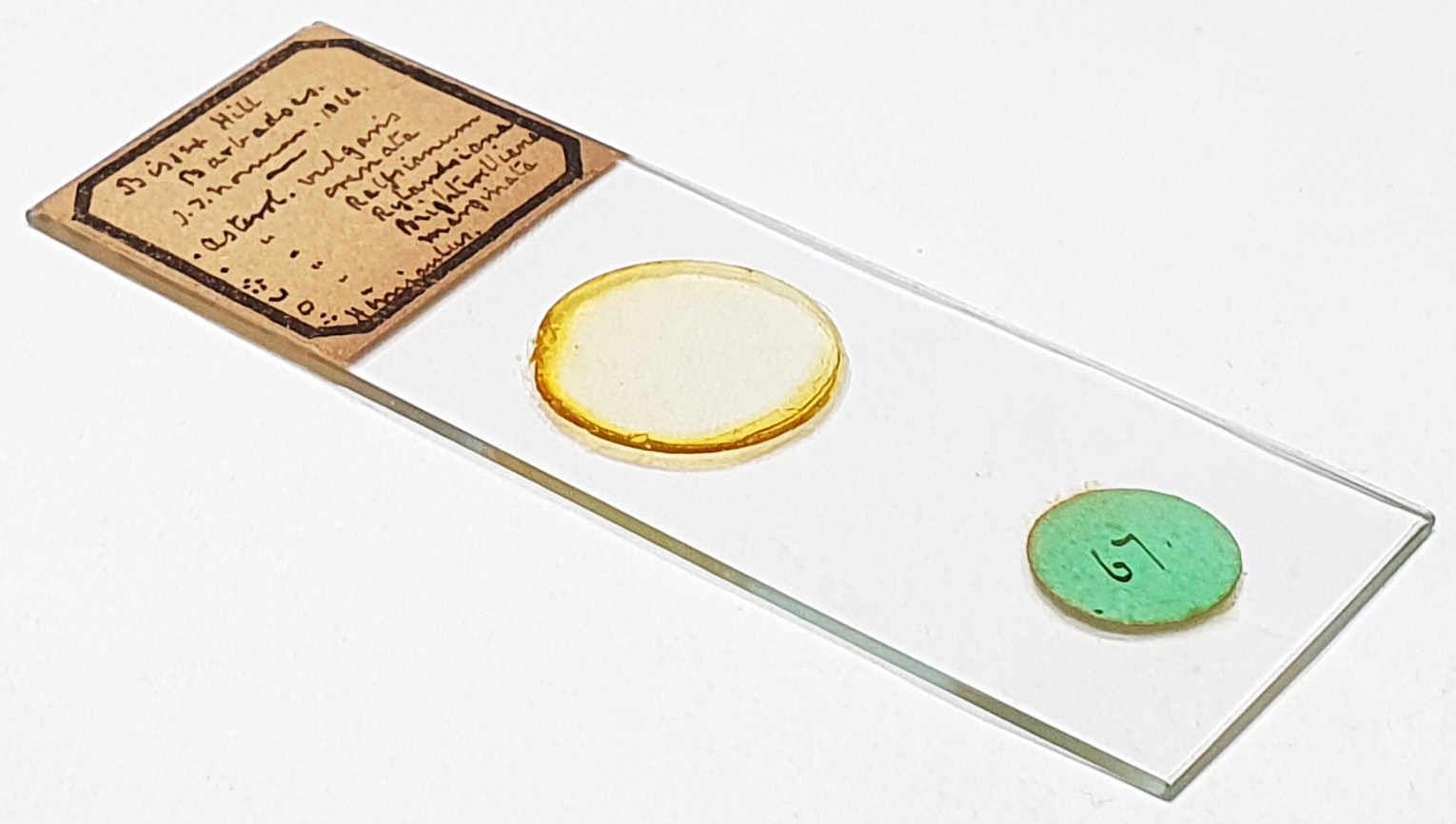
This is a revisit of a slide I have already looked at. This slide is a strew from Bissex Hill, Barbados, by JT Norman (see here for that page). The slide is really interesting with lots on it, but either the coverslip is very thick, or there is a lot of mountant, as the 40x and 63x Leitz Pl Apo objectives I like to use couldn’t get deep enough. However since the initial page I have got a 50x Leitz Fluoreszenz 1.0 objective, water immersion, which has a really long working distance. This has allowed me to go back and image a few of the diatoms at higher magnification, and I am showing those here. Quality is not great (the amount of glass/mountant there is to go through), however as they are unusual diatoms I think they are still worth sharing.
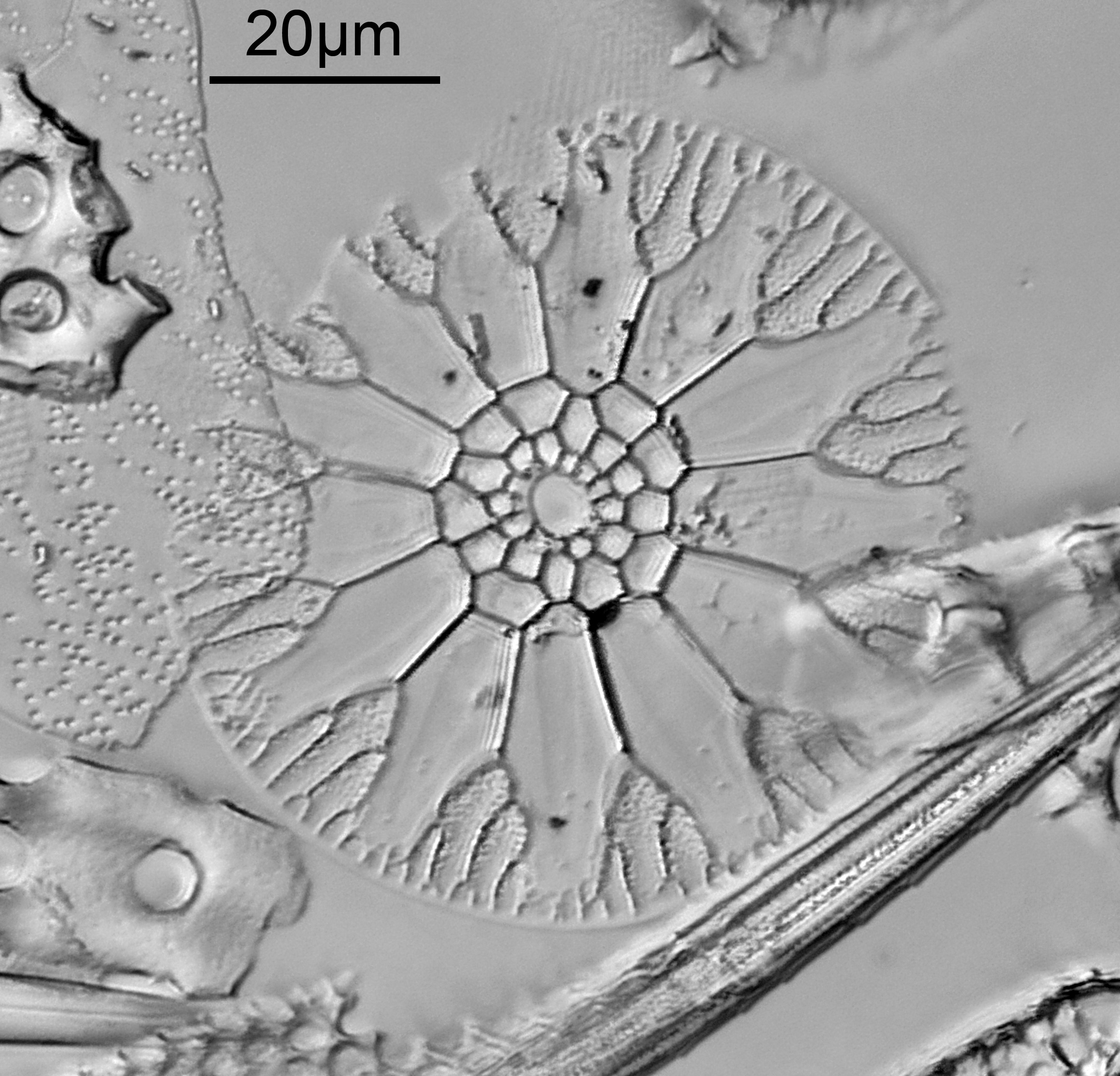
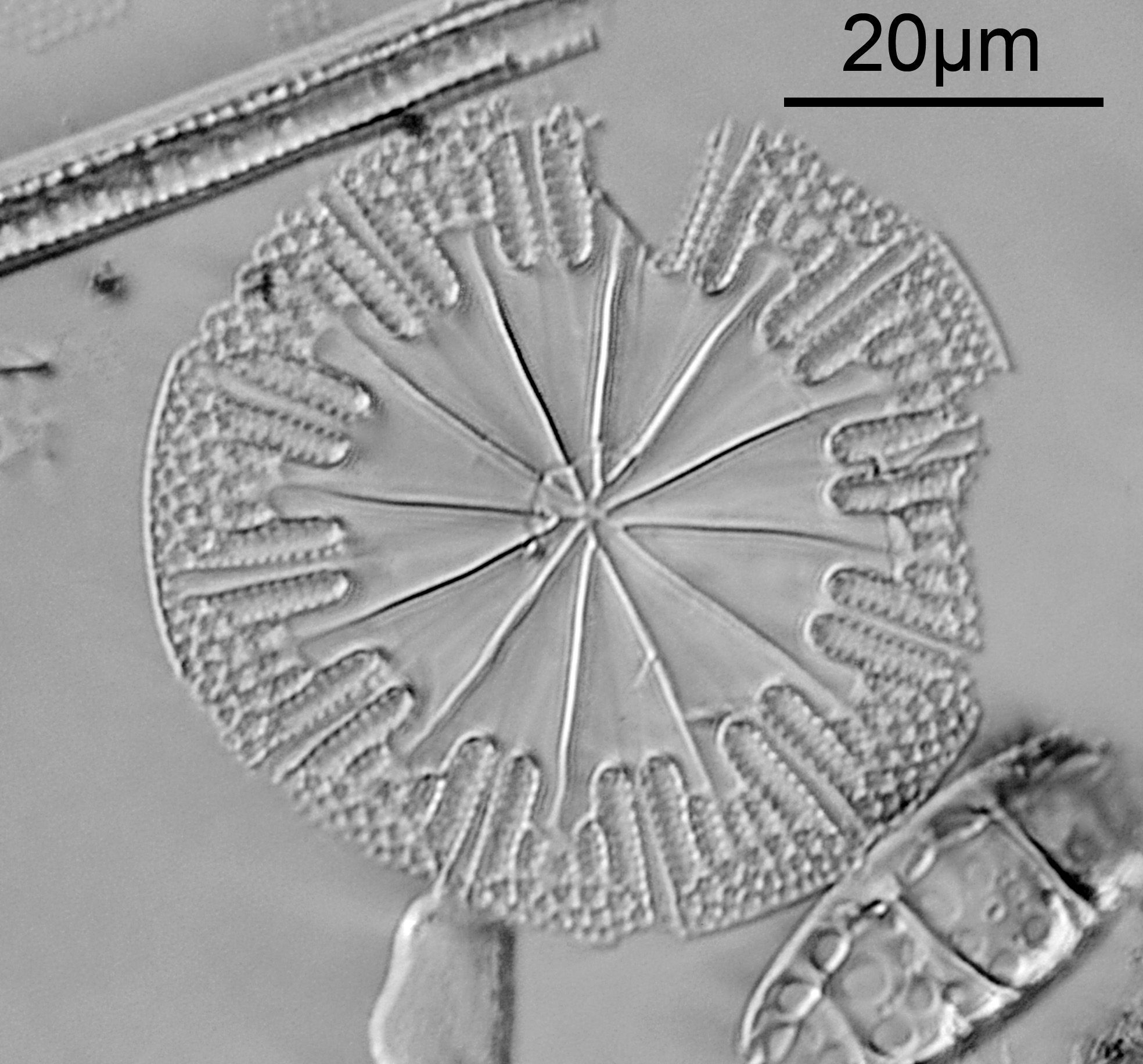
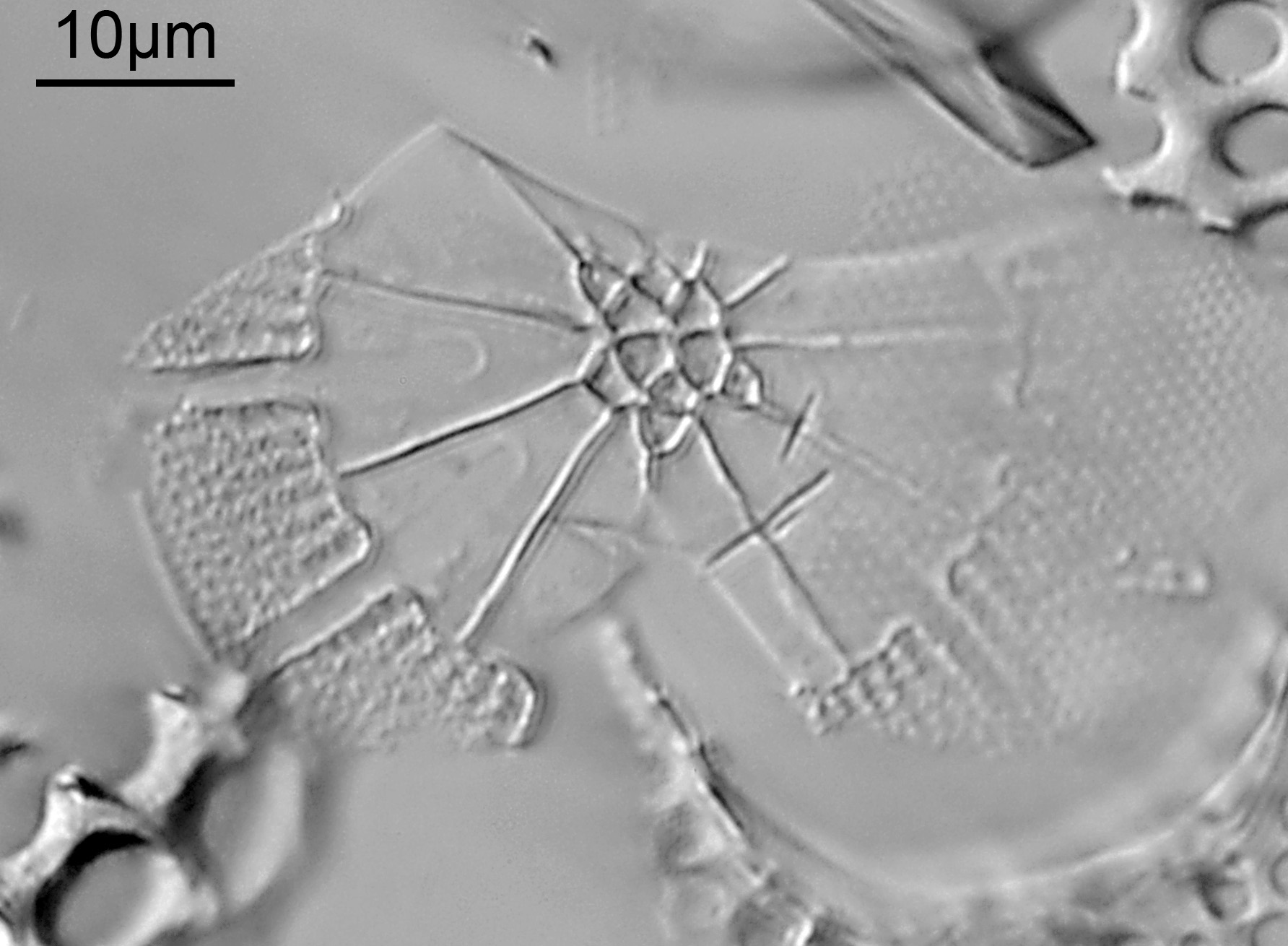
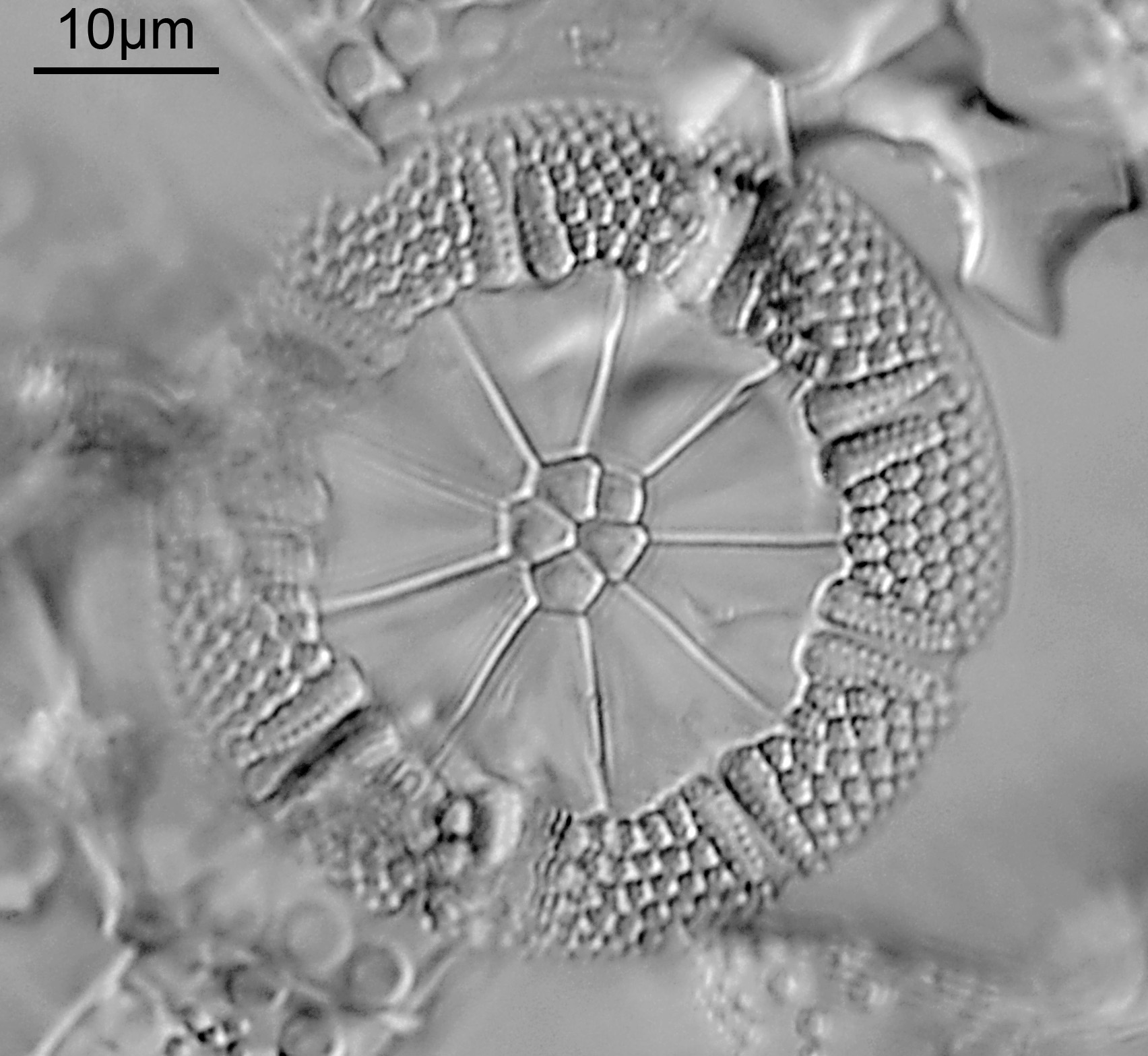
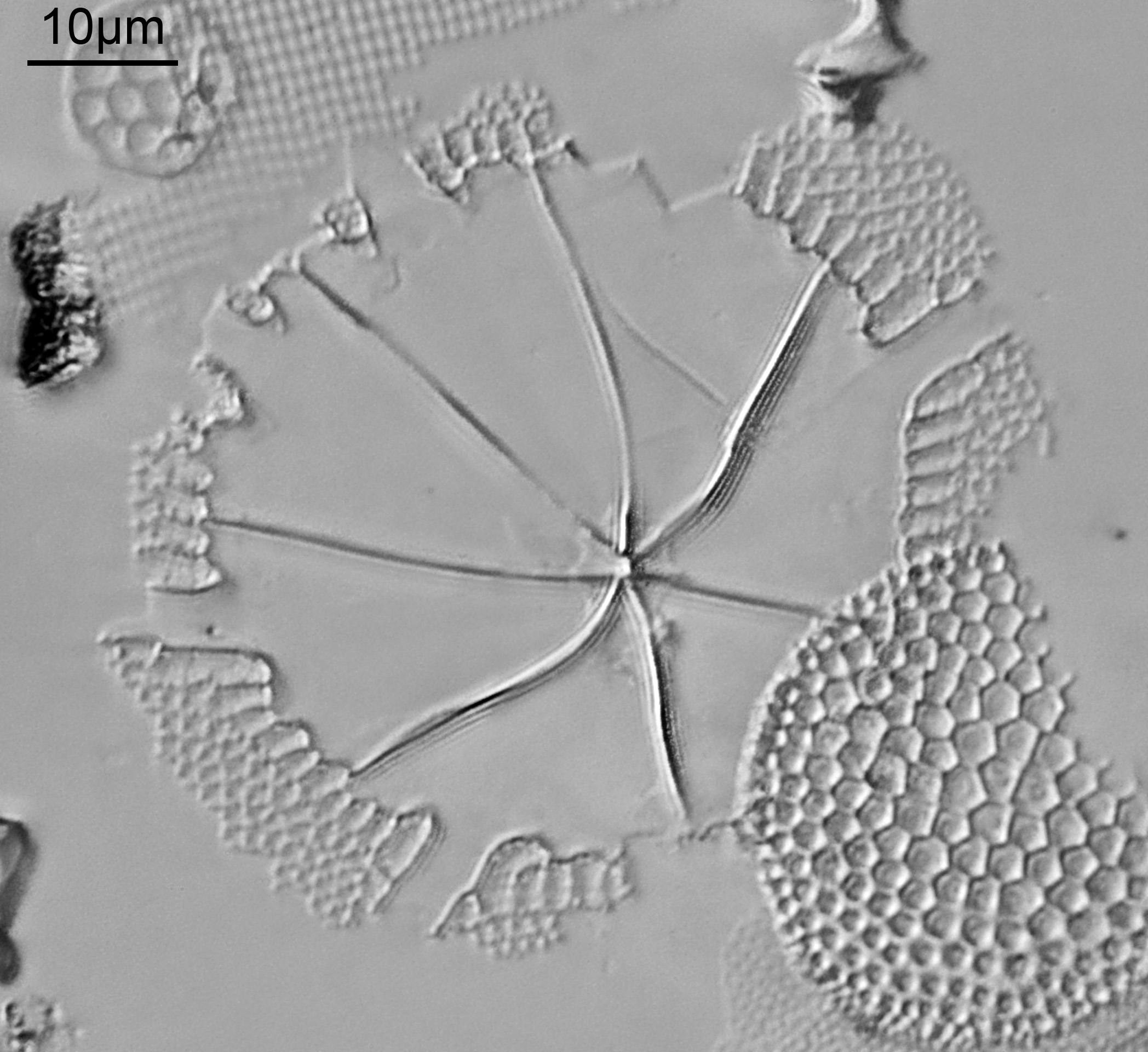
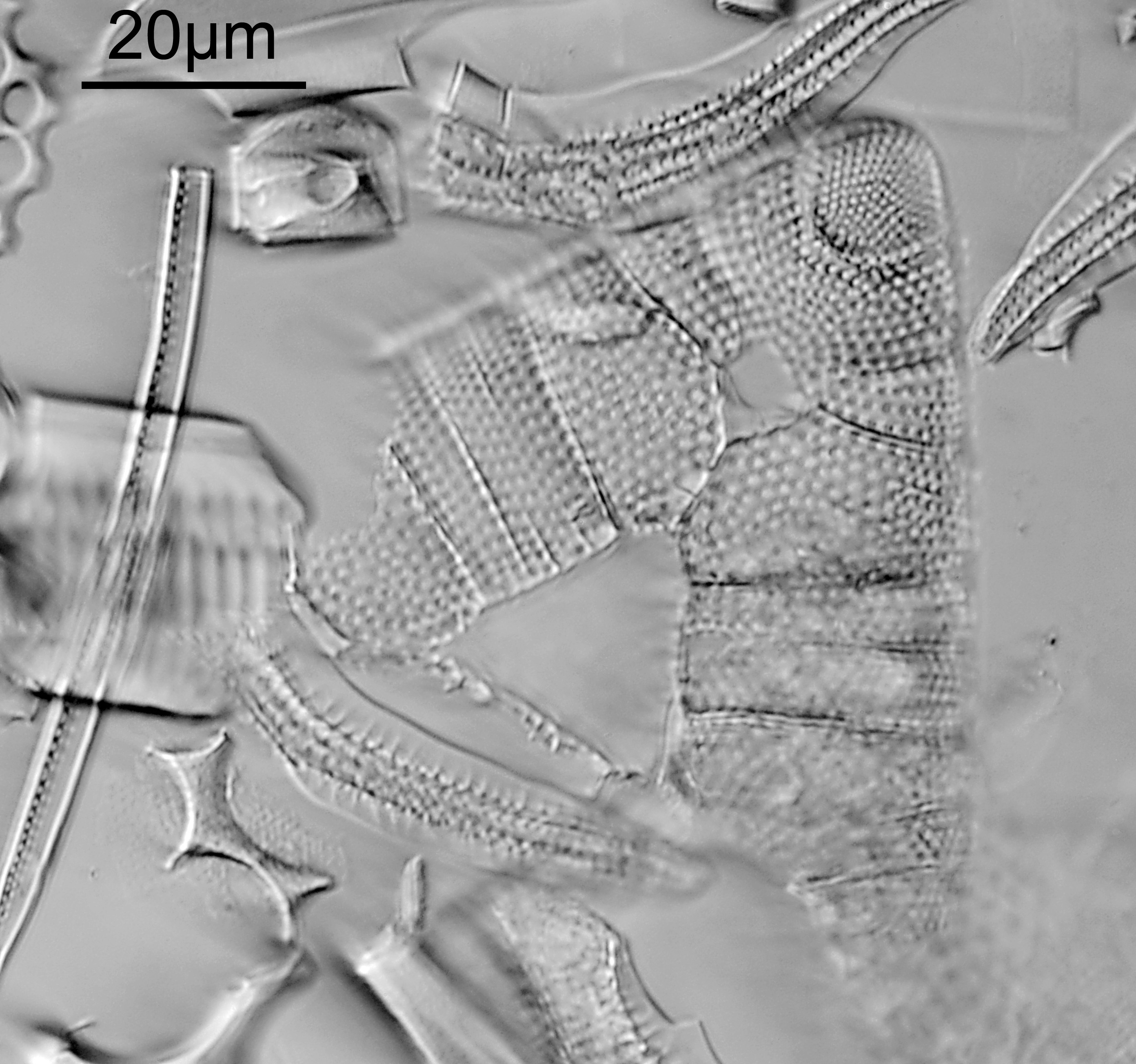
Olympus BHB microscope using 450nm LED light. 50x Leitz Fluoreszenz 1.0 objective, water immersion. Olympus Aplanat Achromat condenser, oil immersion, oblique lighting. 2.5x Nikon CF PL photoeyepiece. Monochrome converted Nikon d850 camera. Some were stacked in Zerene (PMax) others are just single images.
Names came from Greville, R.K. (1862). On the Asterolamprae of the Barbadoes deposit. Transactions of the Microscopical Society, New Series, London 10(2): 41-55, pls VII, VIII.
As well as the Asterolampra, I came across a fragment of Entogonia gratiosa which I don’t recall seeing previously.
This is a really interesting slide, however a pain to image due to either the thickness of the coverslip or thickness of the mountant. Barbados samples are often heavy on radiolaria, but this one has loads of diatoms. I would love to see examples of others from this site if anyone has any to spare, especially the wide variety of Asterolampra sp..
EDIT, 14th September 2026.
This slide continues to intrigue me. I wasn’t happy with the images above. Even though the 50x Leitz water immersion objective had the working distance to get down to the diatoms, the final images weren’t great quality. I suspect is something to do with the thickness of the coverslip, and the mismatch between the reflective index of water and the coverslip. What I needed was an oil immersion objective with a very long working distance (and high NA). Initially I thought the Zeiss Neofluar 63x NA 1.25 might work, as this has a working distance of 0.65mm (compared with the 0.68mm of the Leitz). I got hold of one (a ph3 phase version), and it very nearly had enough working distance, but I contacted the top of coverslip just before the diatoms came into focus. This make me realise how lucky I was with the Leitz water immersion one. That only has another 30 microns working distance than the Zeiss, and I must have just got the diatoms in focus with it.
So, I was left thinking about long working distance, oil immersion, high NA, high magnification objectives. Then I remember the Leitz Ks series of objectives designed for looking at photographic emulsions. One of those, the 53x Ks Fl NA 0.95, oil immersion one, is designed for use with photographic emulsions up to 1mm thick. This would give an enormous working distance, and should be more than enough for the slide. However, this objective is for 170mm tube length Leitz microscopes, not my 160mm tube length one. Another issue is this is a short barrel objective, vs the usual long barrel ones I use. The second one isn’t really an issue, I have a Plezy Flu adapter, to allow it to be used. Also, the 170mm is less of a problem than is often thought, and high NA, high magnifications objectives can often be used without huge degradation of the image quality. Here’s the objective with the Plezy adapter attached.
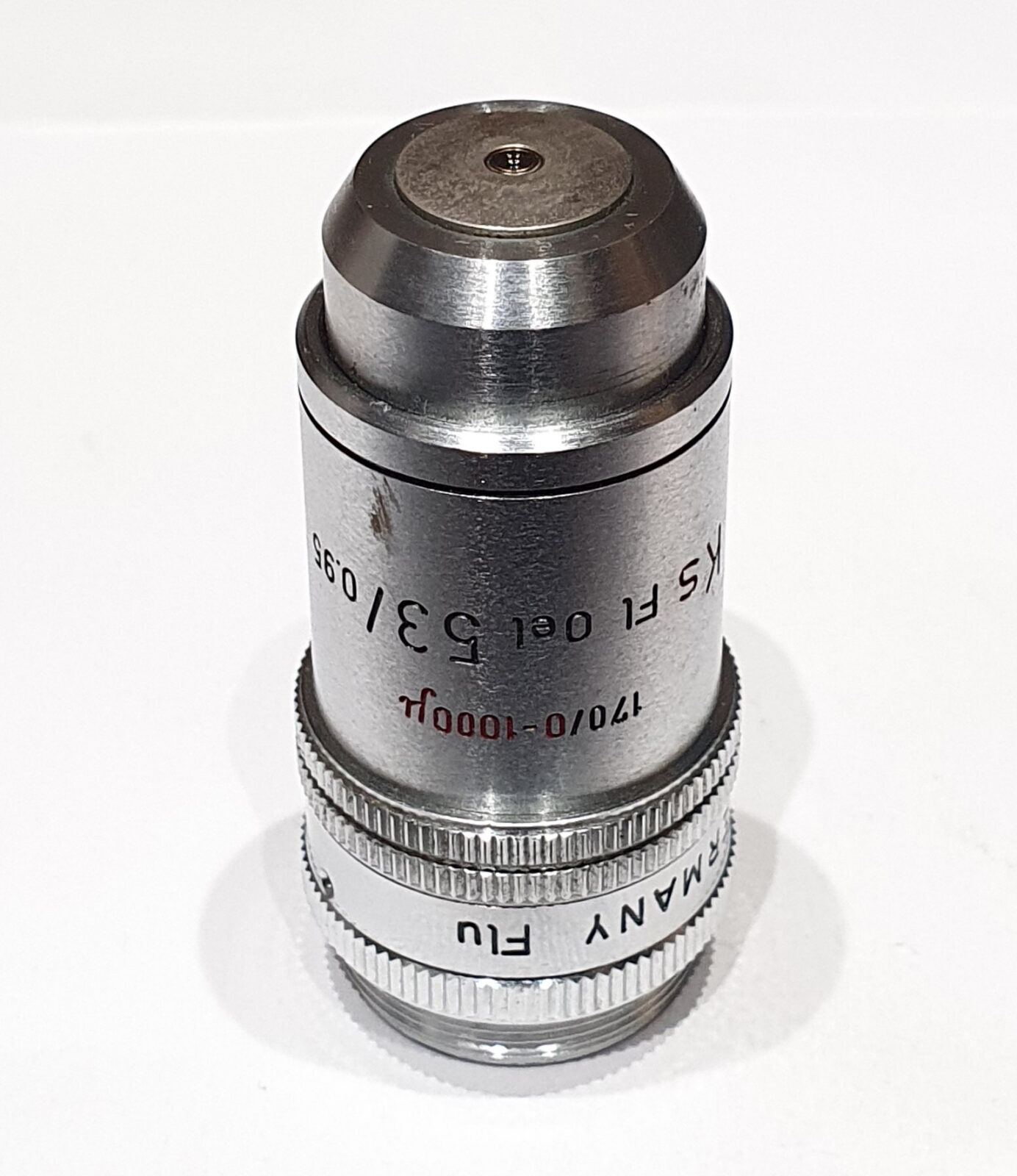
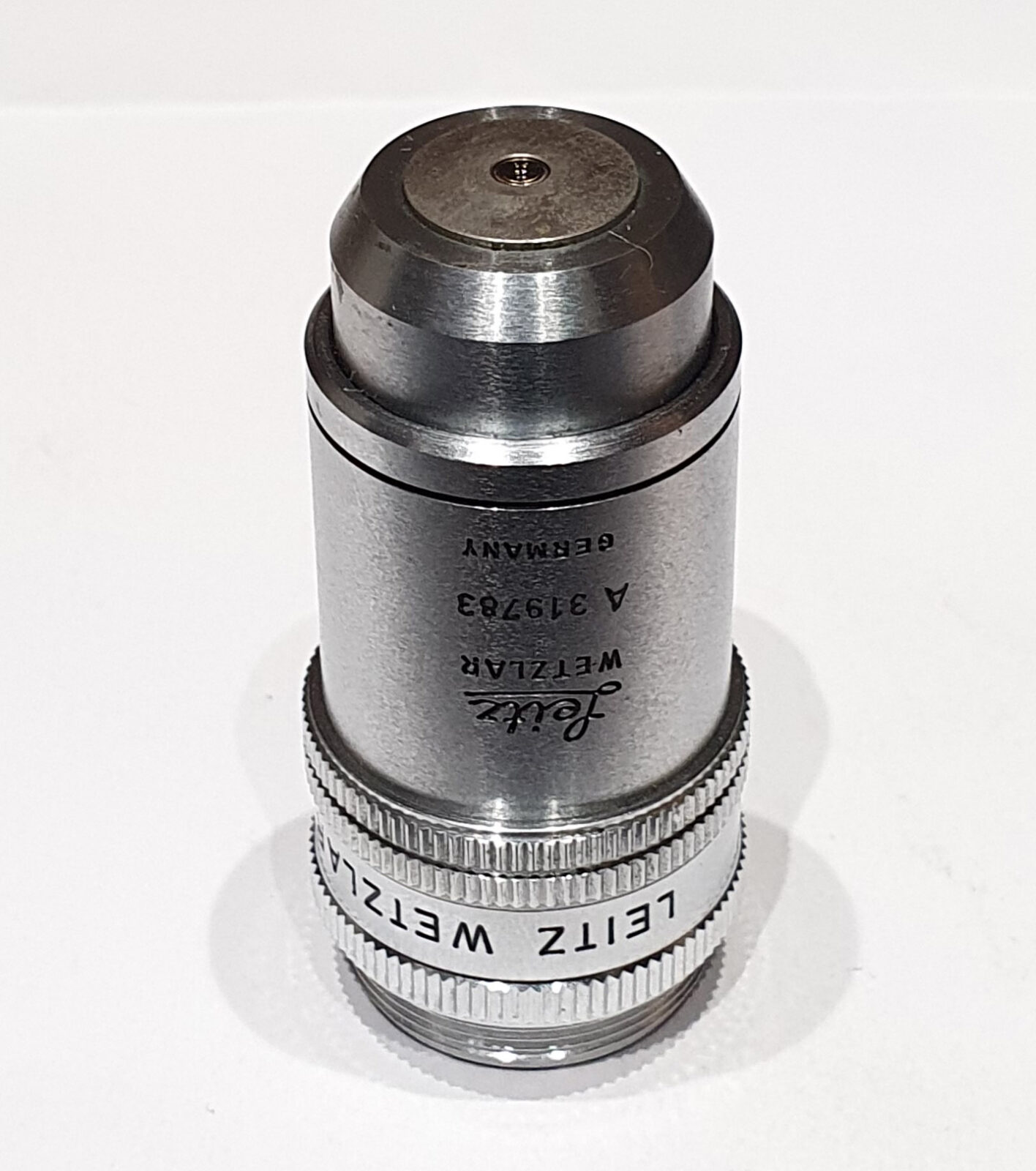
Returning the the slide, I was very happy to see that yes indeed I could get usable images with this objective, and here are a few examples.
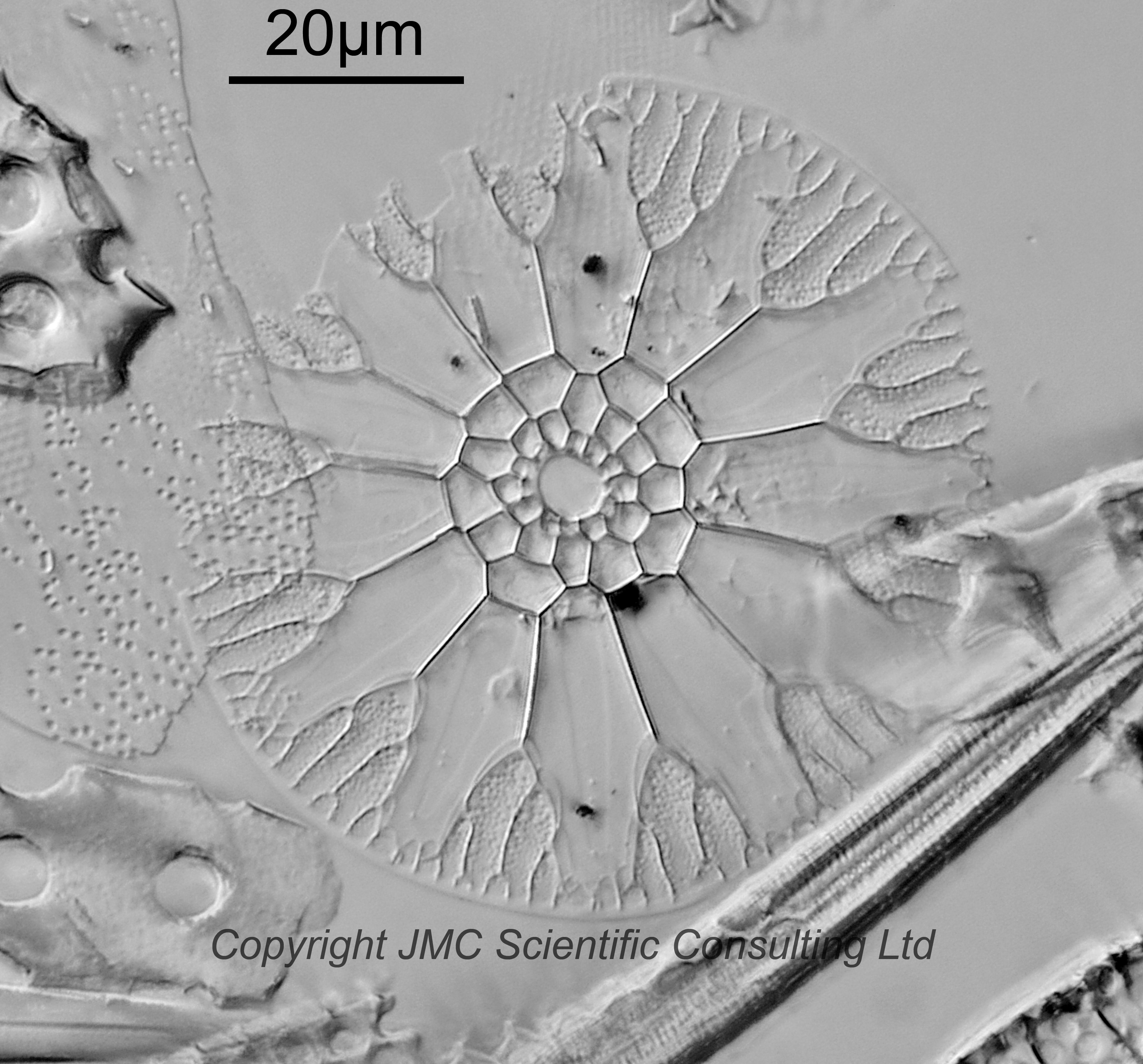
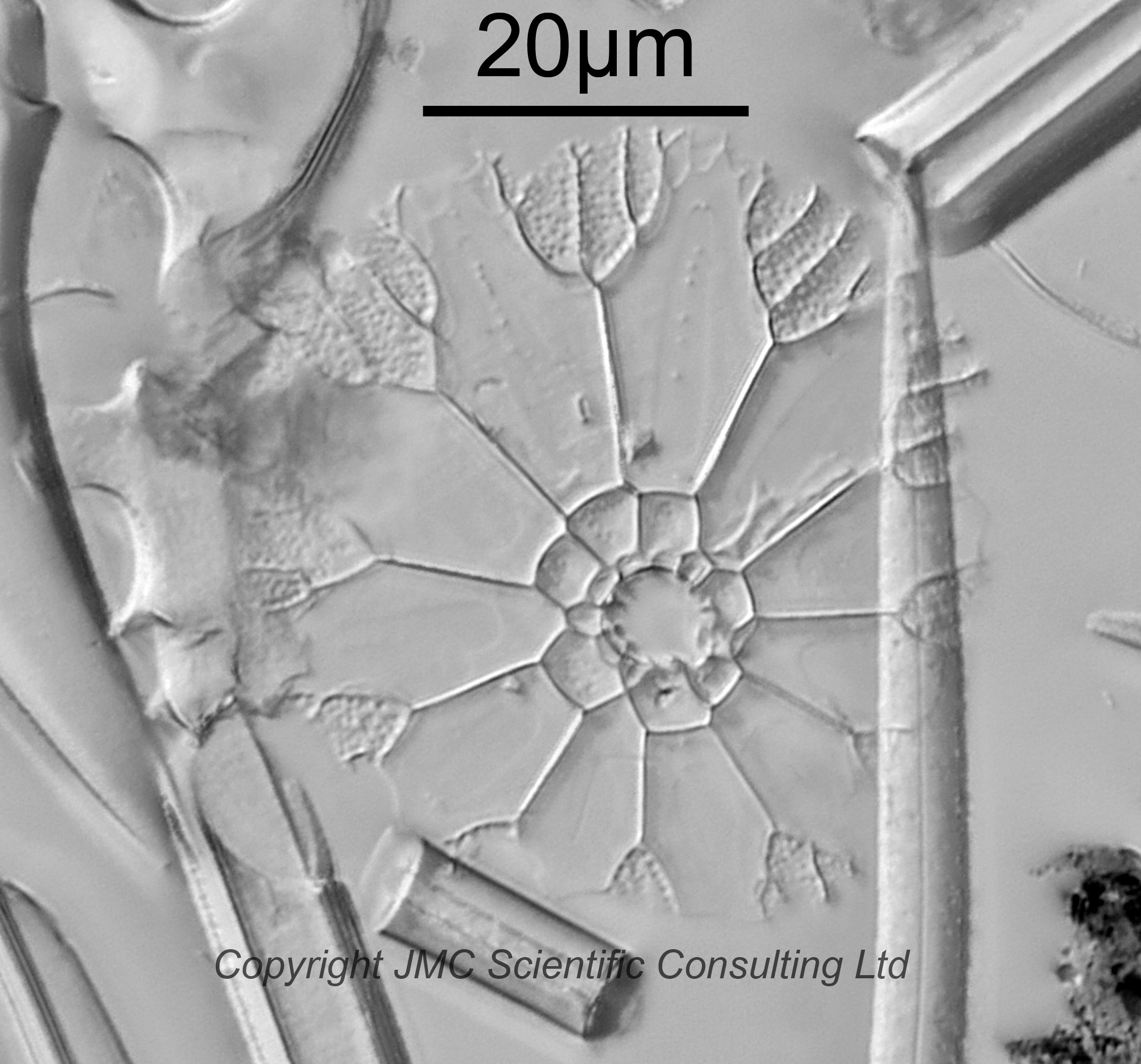
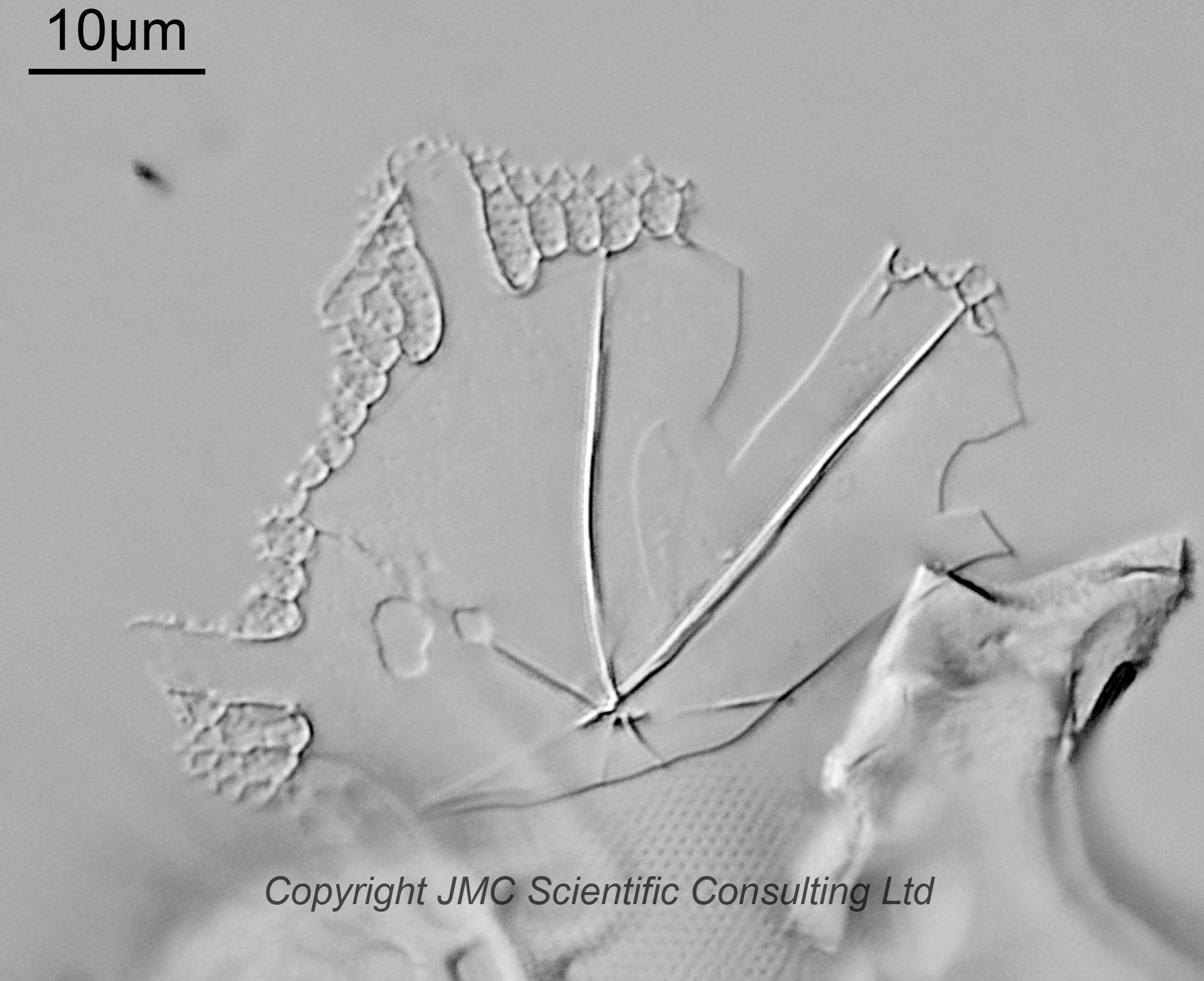
One of the Asterolampra‘s that I found was the same A. ralfsiana that I imaged with the water immersion objective, at the beginning of this page, and the image quality is much better with this 53x Leitz objective. So, success. I also found another A. ralfsiana fragment, and a different A. brightwelliana fragment, all of which imaged well (all done with oblique 450nm lighting and stacked in Zerene using Pmax). In addition I found a Pseudopodosira sp. which I had not seen on this slide before, which is shown below.
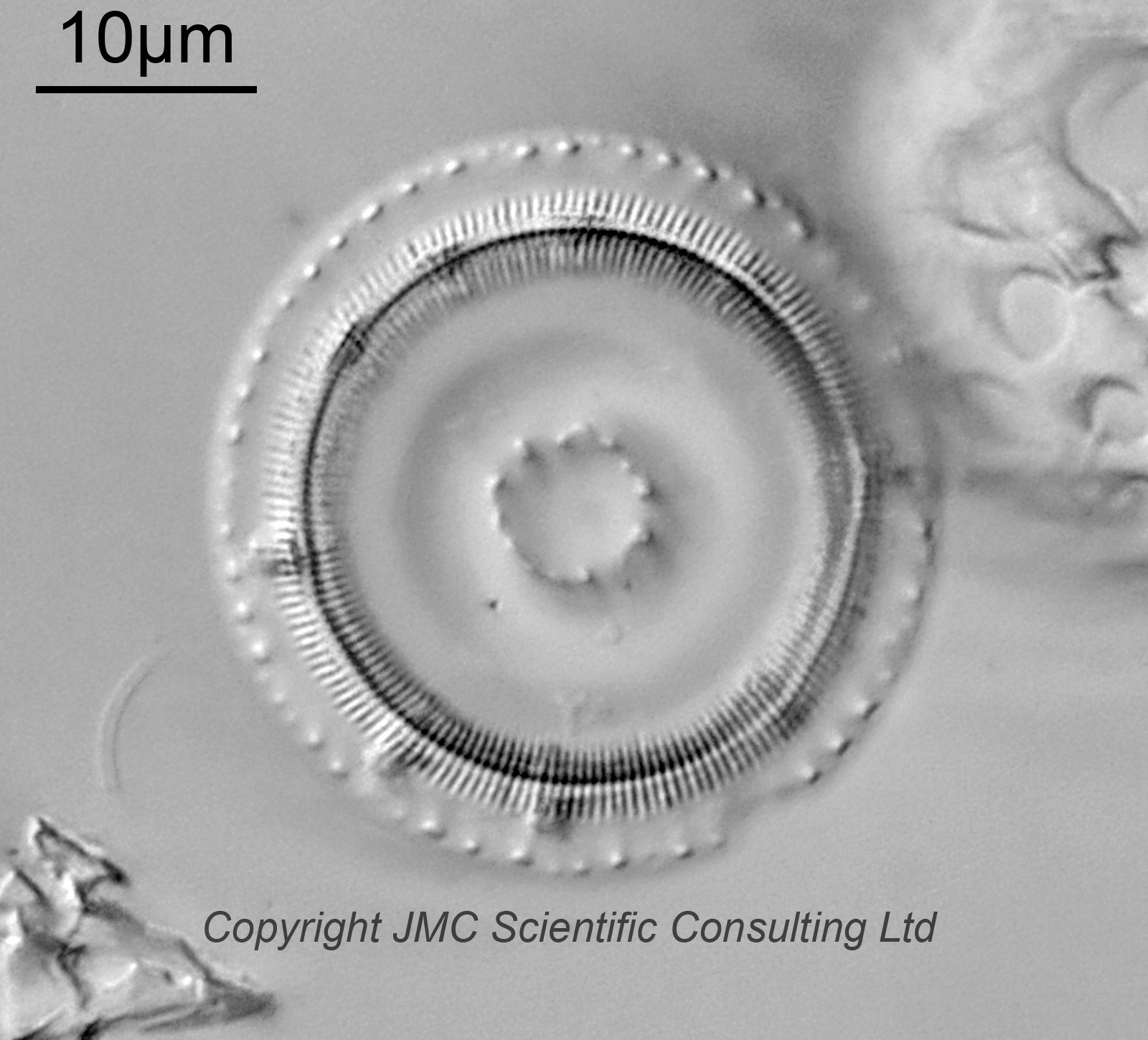
This was an underside view, and is similar (although not exactly the same) to one I’ve showed here.
Overall I am very happy with how this Leitz 53x Ks objective performed. It is being used well outside of its intended usage scenario, however it performed admirably, and I now know that I have some that can help with really deep samples in the future.