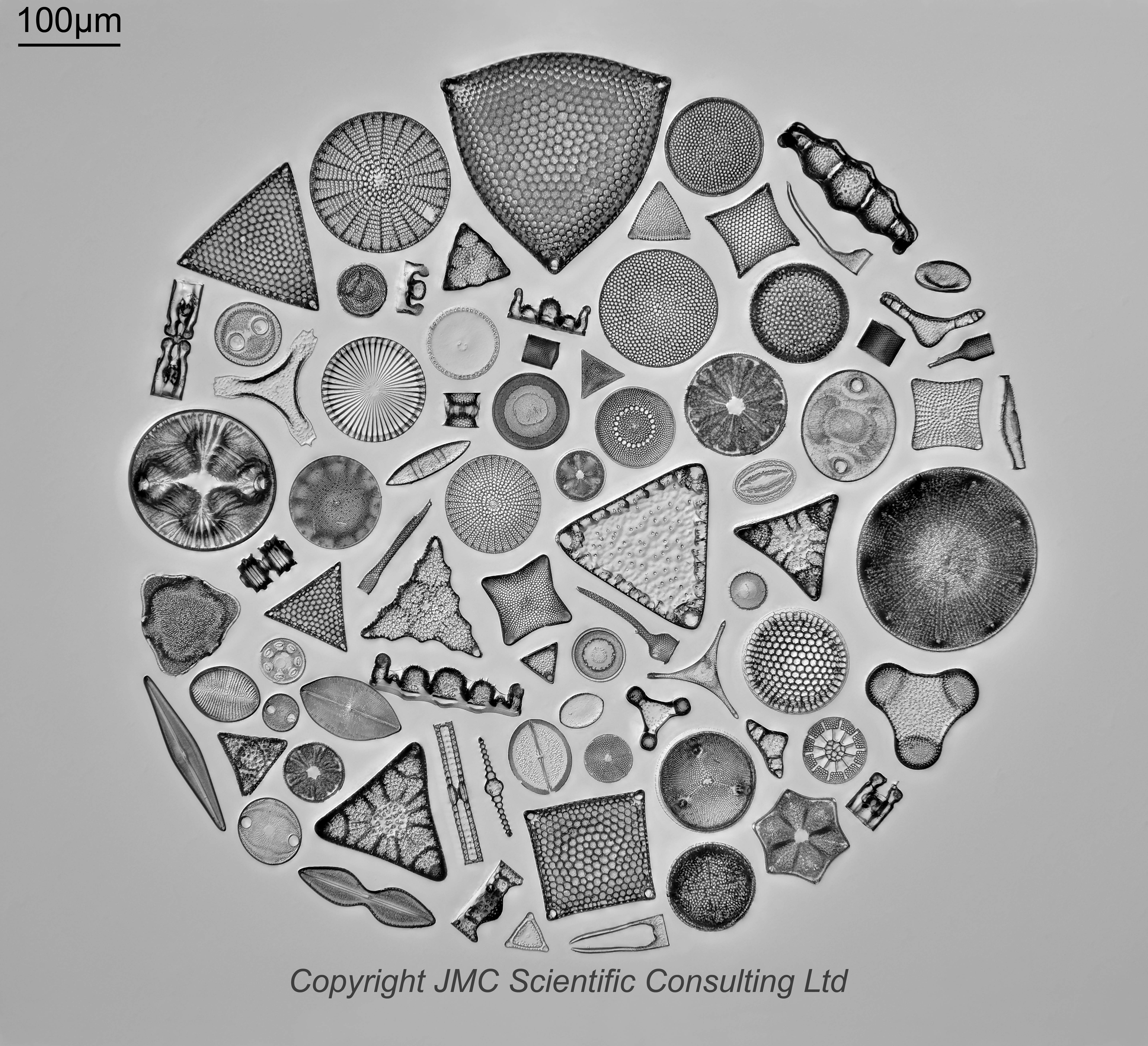
Please be patient with this page, it’ll take some time to load all the images. A quite stunning circular arrangement of diatoms from Allan’s Farm, Oamaru, New Zealand. Mounted in Darax and dated 2025. Prepared by Steve Beats. Olympus BHB microscope using 450nm LED light. For the higher resolution images I used a 63x Leitz Pl Apo 1.4 objective, oil immersion. Olympus Aplanat Achromat condenser, oil immersion, oblique lighting. 2.5x Nikon CF PL photoeyepiece. Monochrome converted Nikon d850 camera. Image stacks prepared in Zerene (Pmax).
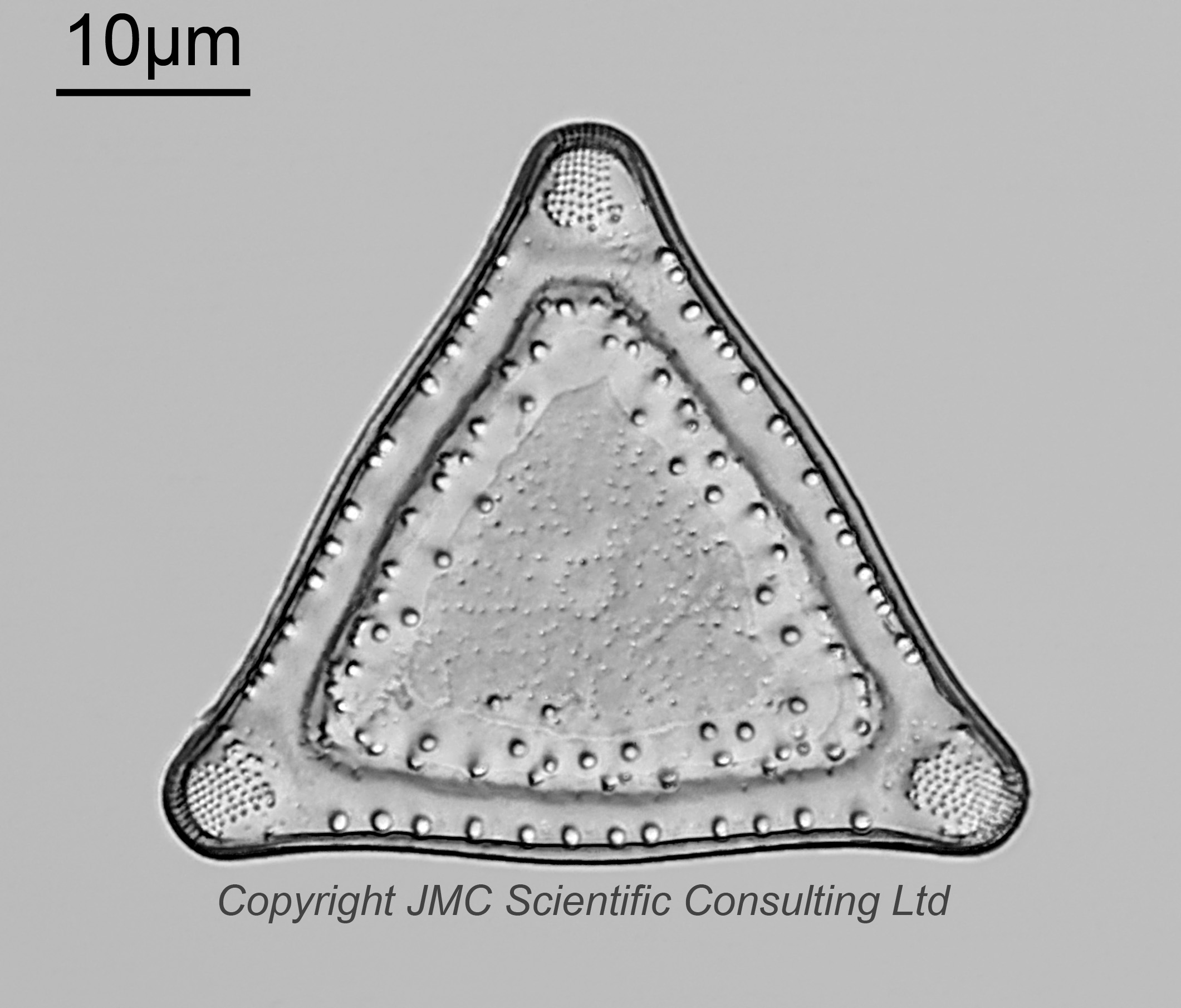
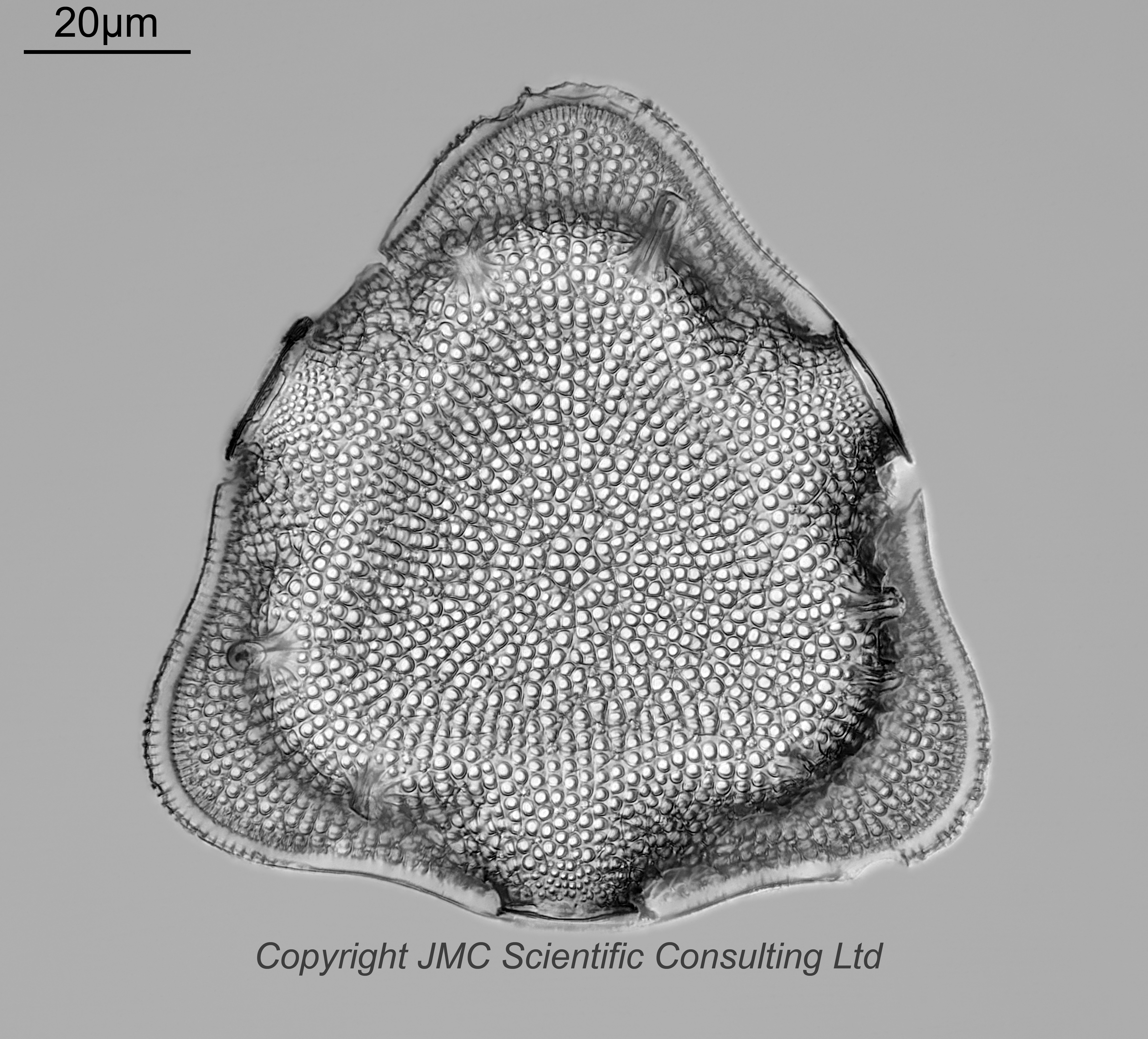
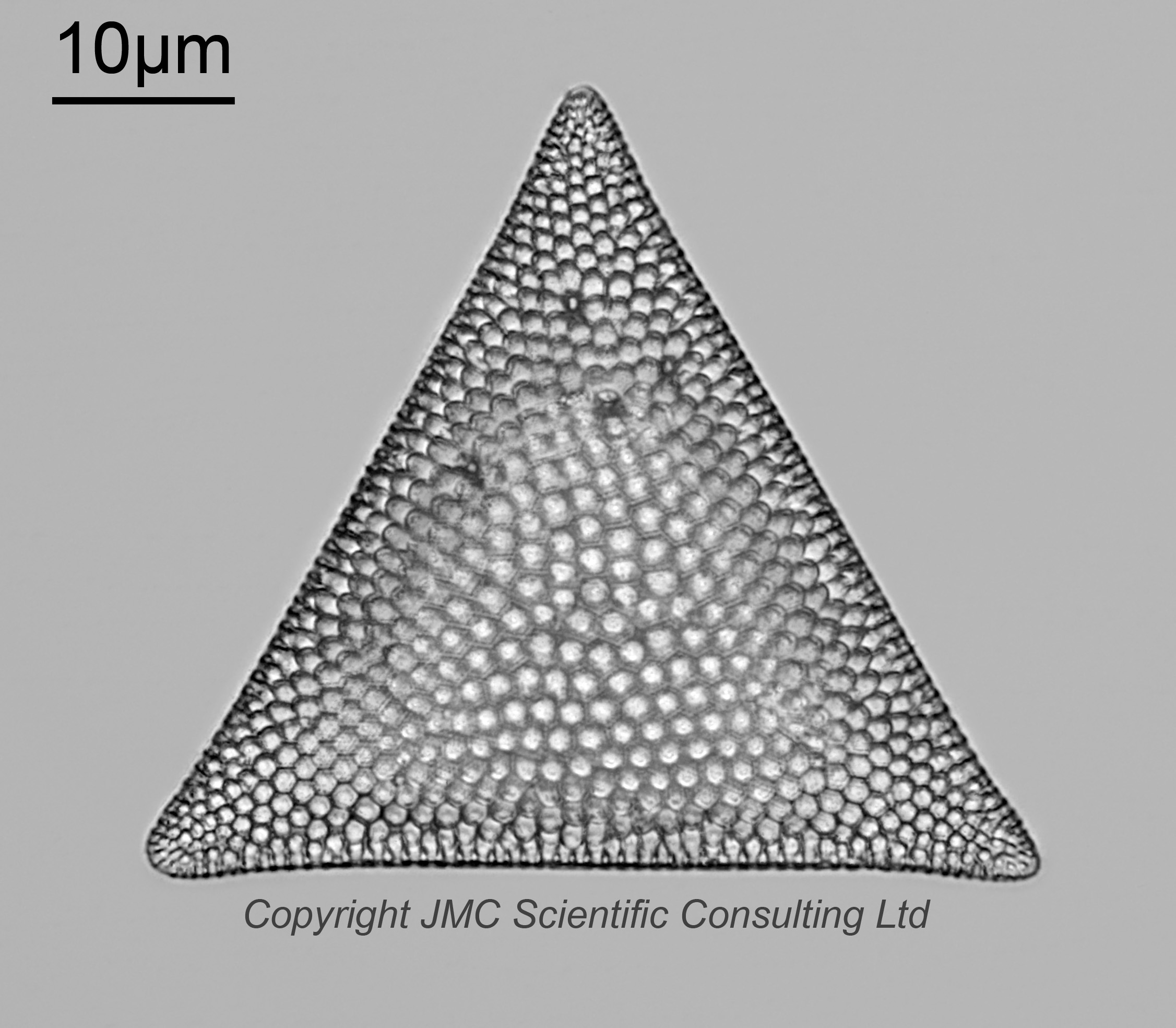
Triceratium bimarginatum, 32 images stacked. Triceratium bimarginatum Grove & Sturt 1887. Published in: Grove, E. & Sturt, G. (1887). On a fossil marine Diatomaceous deposit from Oamaru, Otago, New Zealand. Part III. Journal of the Quekett Microscopical Club, Series 2 3: 63-78, pls 5, 6. Page 76, Plate VI [6], Figure 15.
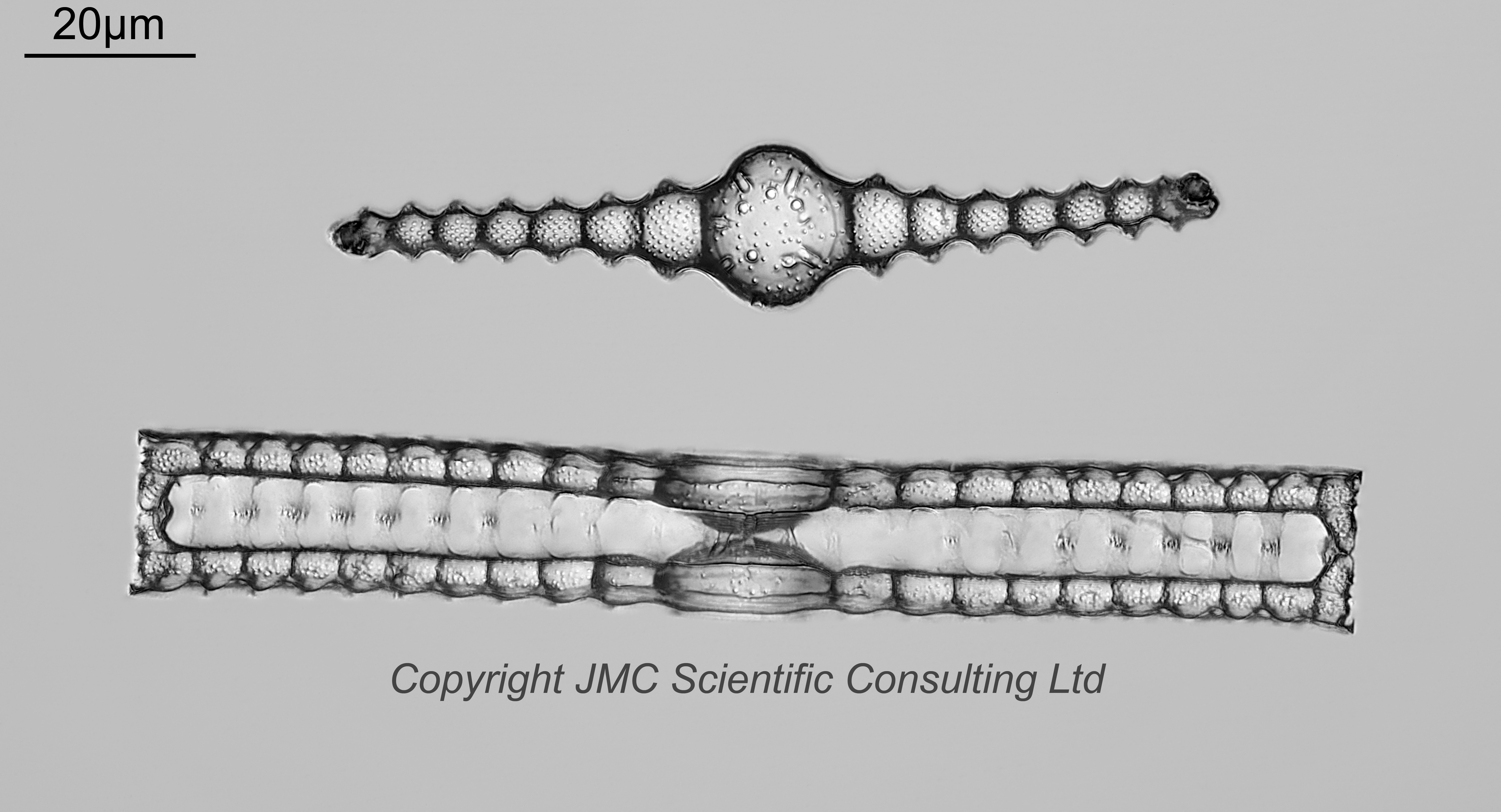
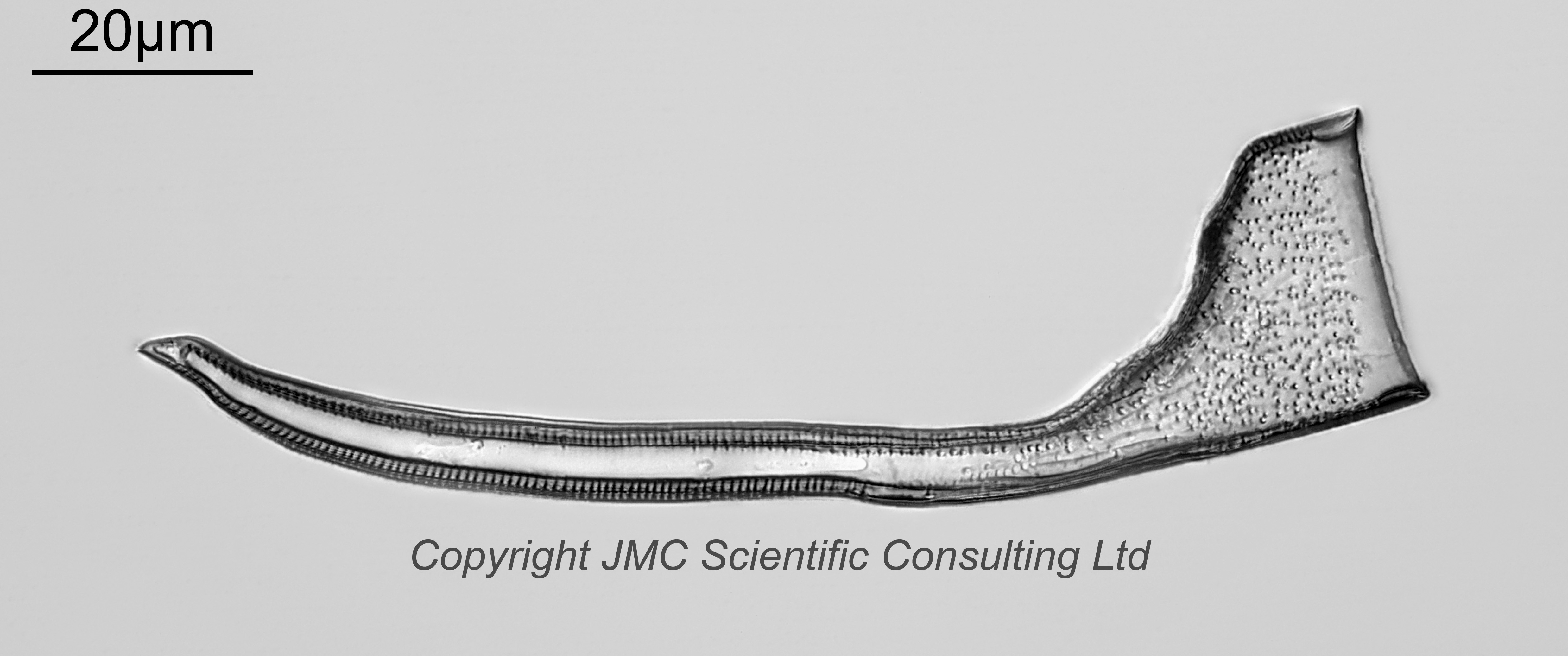
Pseudorutilaria monile, 61 images stacked. Valve and girdle views. Pseudorutilaria monile Grove & Sturt 1886. Published in: Grove, E. & Sturt, G. (1886). On a fossil marine Diatomaceous deposit from Oamaru, Otago, New Zealand. Part I. Journal of the Quekett Microscopical Club, Series 2 2(16): 321–330, plates 18–19. Page 324, Plate 18, Figures 7,8.
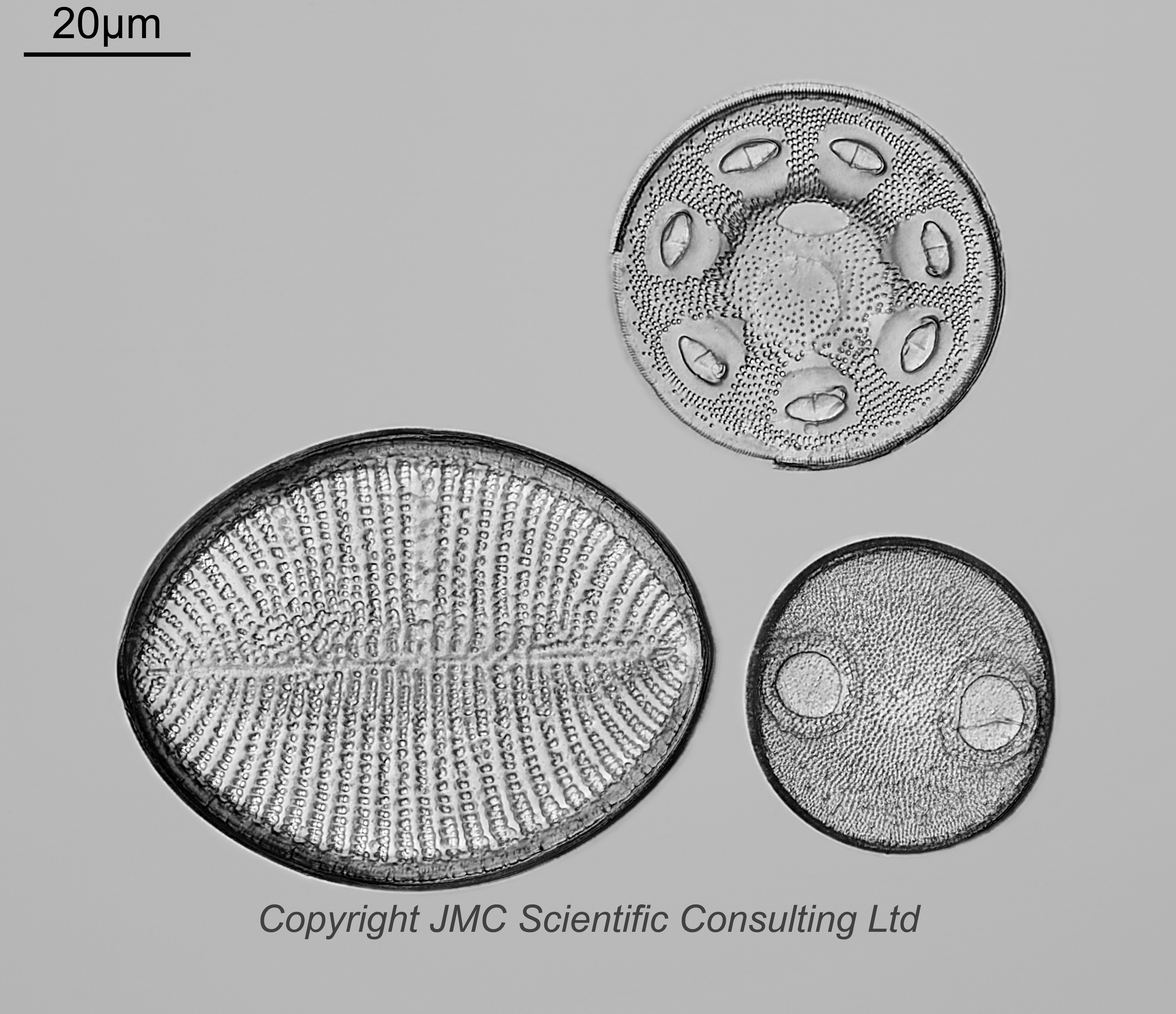
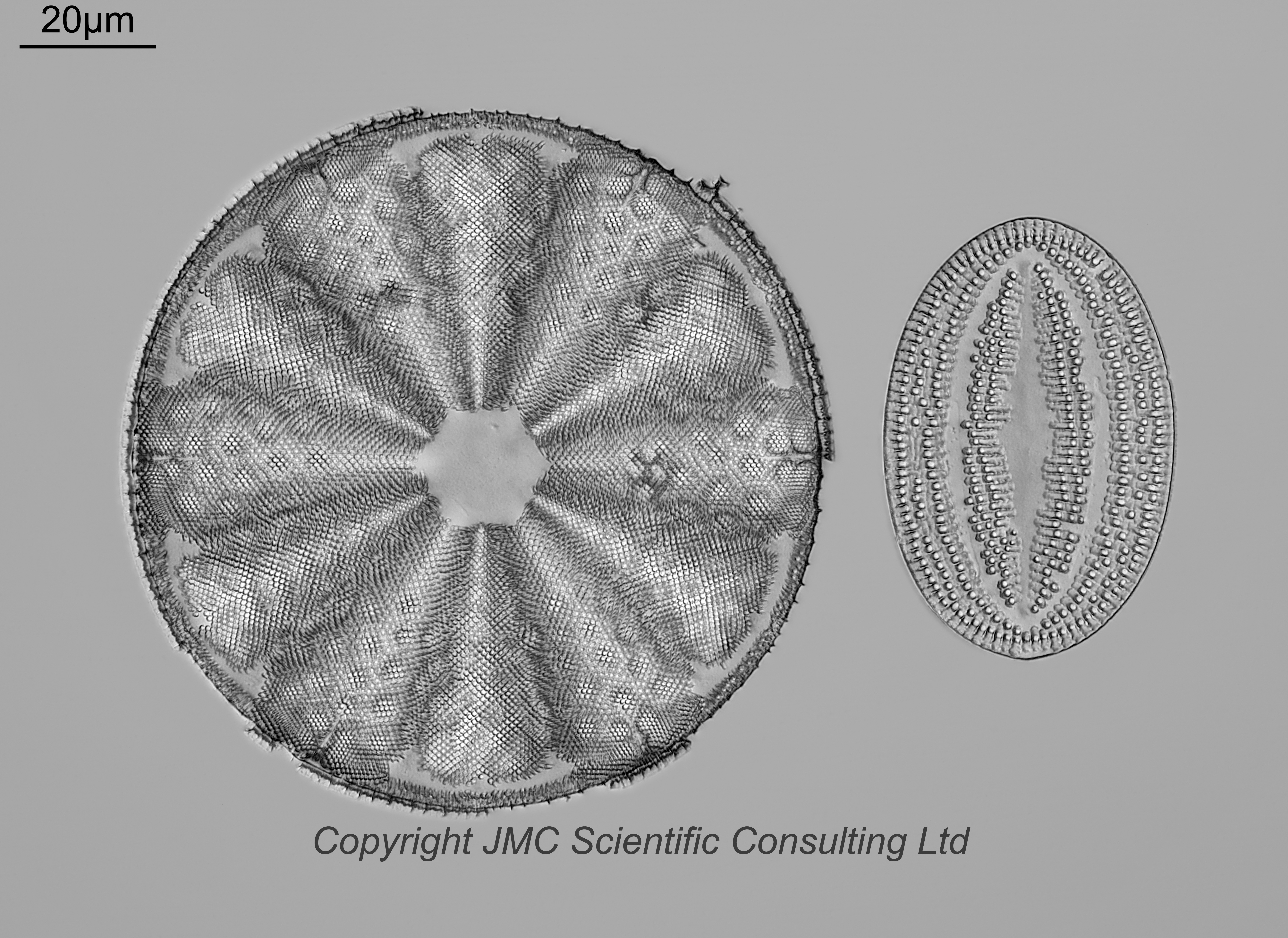
Sturtiella elegans and others, 53 images stacked. Sturtiella elegans (Grove & Sturt) Simonsen & Schrader 1973. Published in: Simonsen, R. & Schrader, H.-J. (1973). On the fine structure of the centric diatom Craspedoporus elegans Grove & Sturt. . Page 152, Figures 1,2. Also see: Jakub Witkowski, Patricia A. Sims & David M. Williams (2017) Typification of Eocene–Oligocene diatom taxa proposed by Grove & Sturt (1886–1887) from the Oamaru Diatomite, Diatom Research, 32:4, 363-408, DOI: 10.1080/0269249X.2017.1395366. Lower left is a Cocconeis sp., maybe C. oamaruensis (rapheless valve). Lower right looks like Pseudauliscus diffusus.
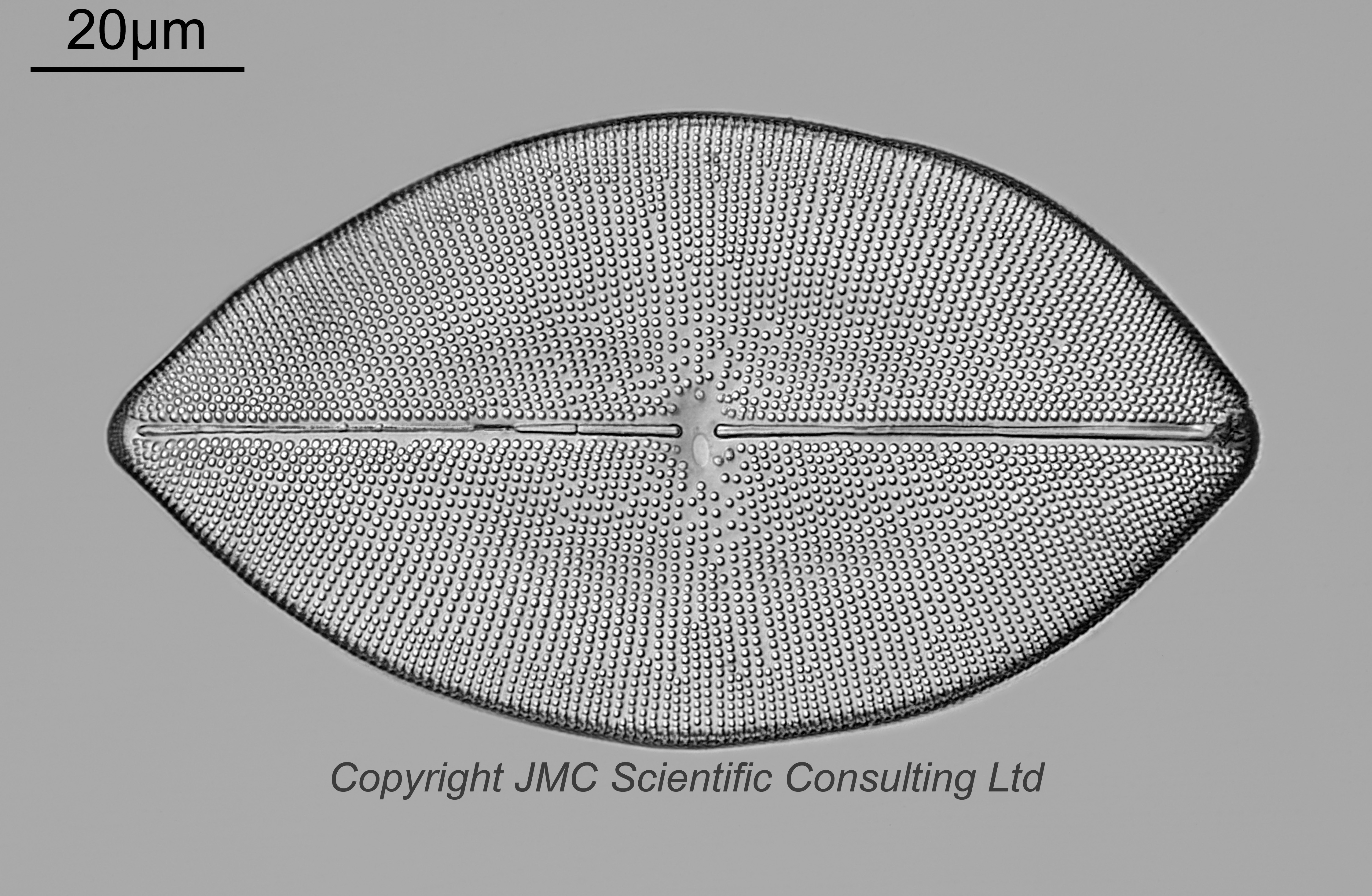
Auliscus propinquus, 42 images stacked. Auliscus propinquus Grove & Sturt 1887. Published in: Grove, E. & Sturt, G. (1887). On a fossil marine diatomaceous deposit from Oamaru, Otago, New Zealand. Appendix. Journal of the Quekett Microscopical Club, Series 2 3(19): 131-148, pls 10-14. Page 141, Plate 12, Figure 34.
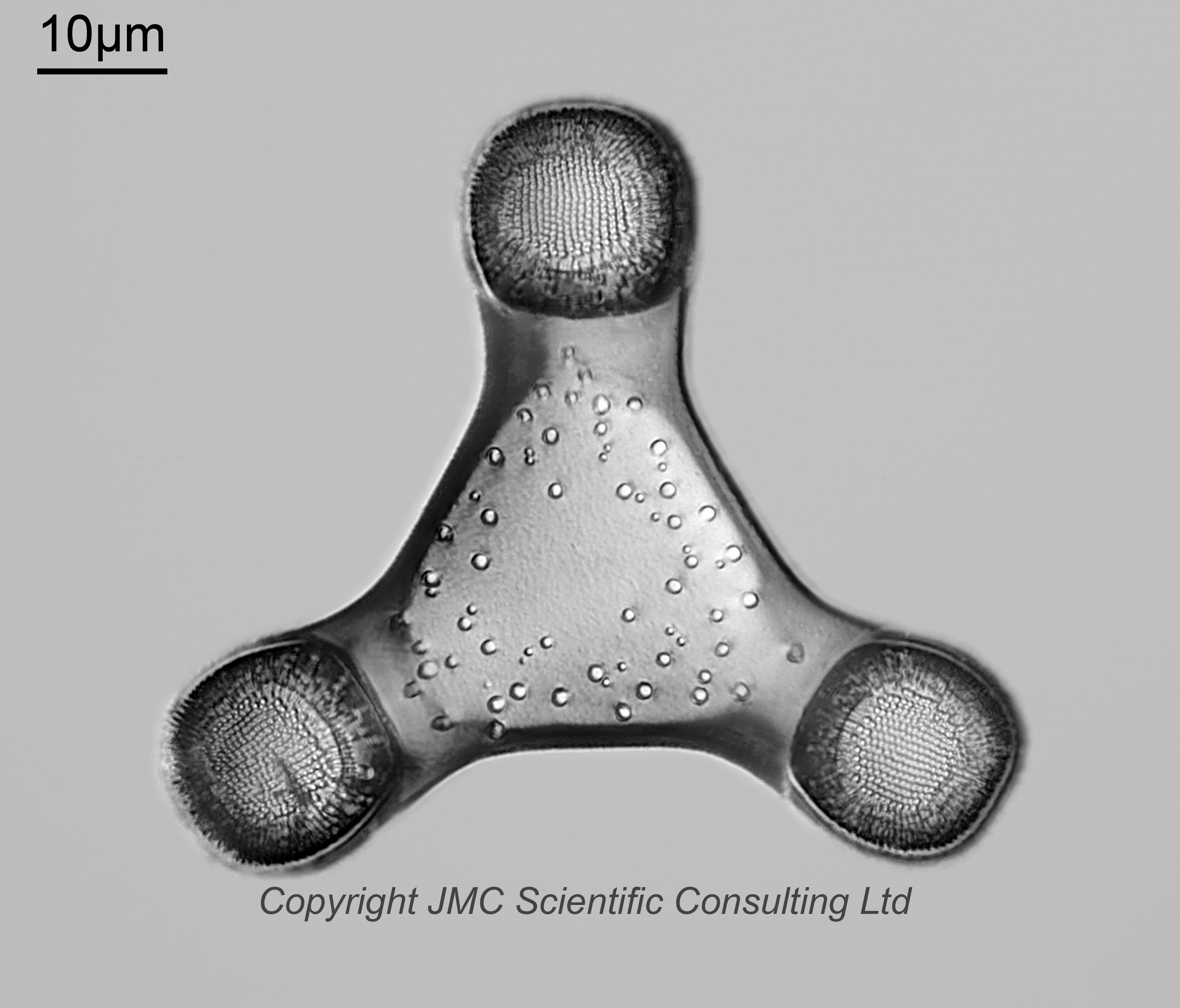
Cerataulus subangulatus, 83 images stacked. Spines upwards towards the coverslip (!!). Cerataulus subangulatus Grove & Sturt 1886. Published in: Grove, E. & Sturt, G. (1886). On a fossil marine Diatomaceous deposit from Oamaru, Otago, New Zealand. Part I. Journal of the Quekett Microscopical Club, Series 2 2(16): 321–330, plates 18–19. Page 325, Plate XIX [19], Figure 12. This name is currently regarded as a synonym of Ceratangula subangulata (Grove & Sturt) P.A.Sims. Source of synonymy: Sims, P.A. (2008). Ceratangula gen. nov. is proposed together with a discussion on the genera Cerataulus, Eupodiscus, Amphitetras, Amphipentas and Diommatetras. Diatom Research 23(2): 435-444, 29 figs.
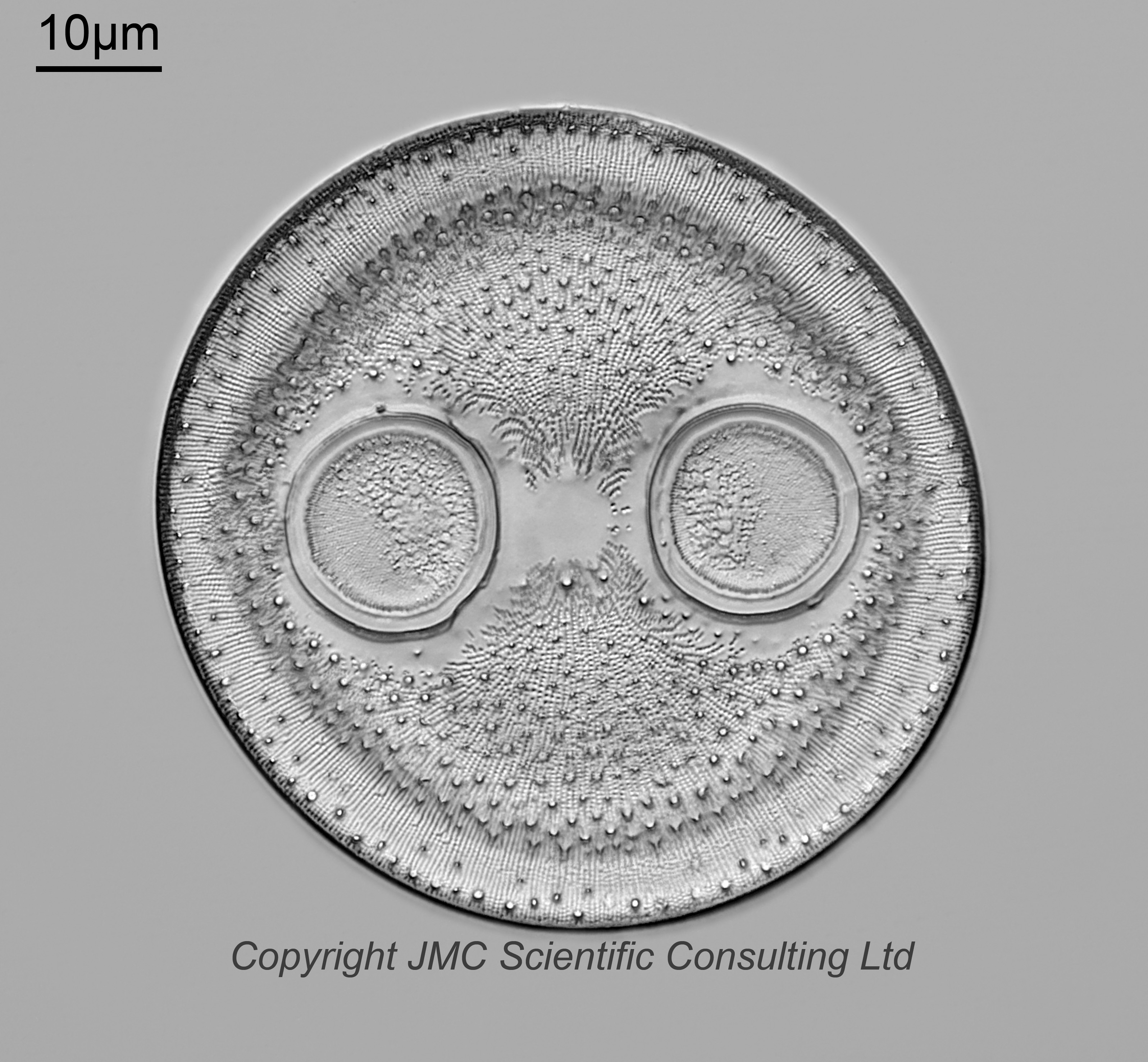
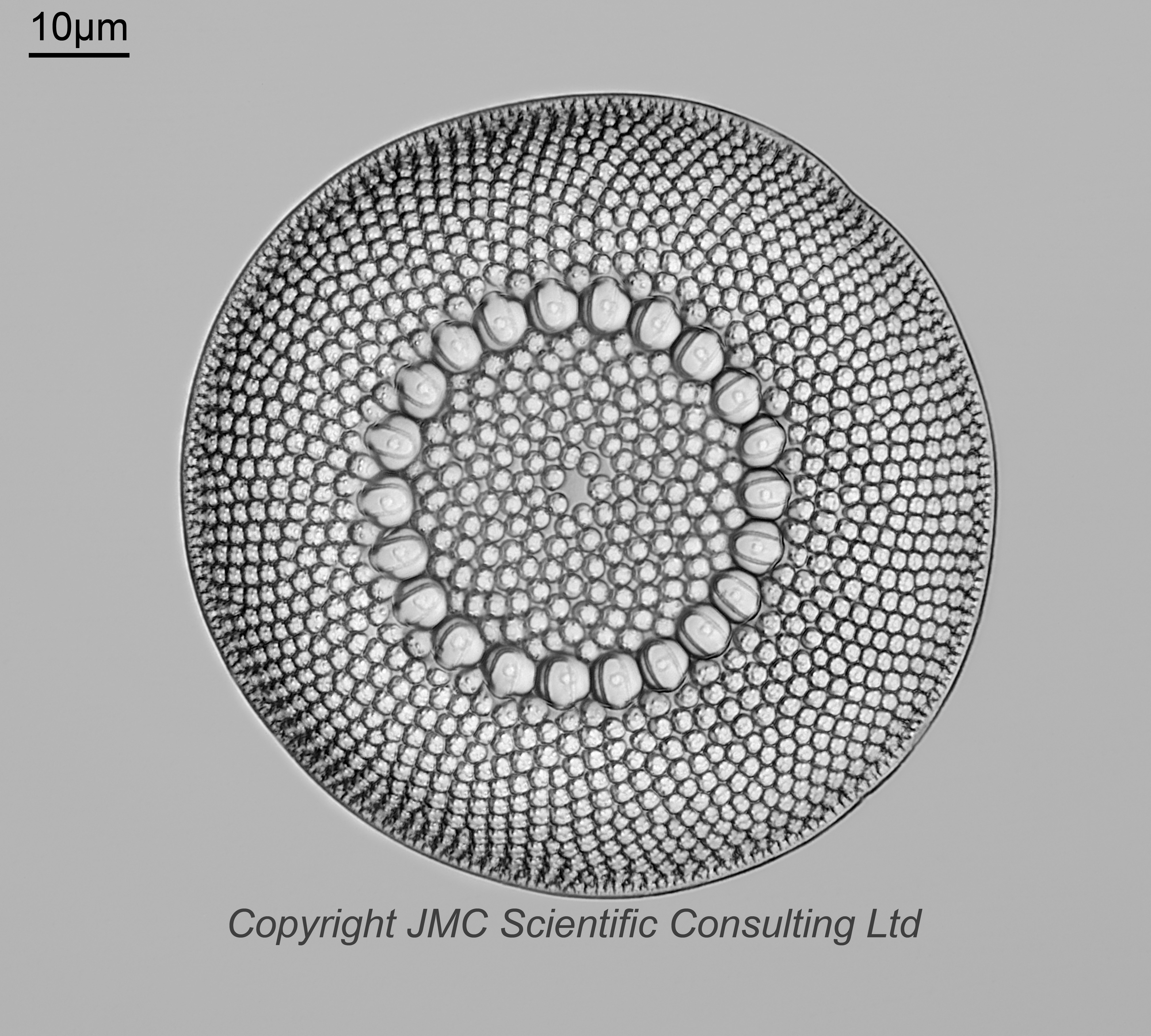
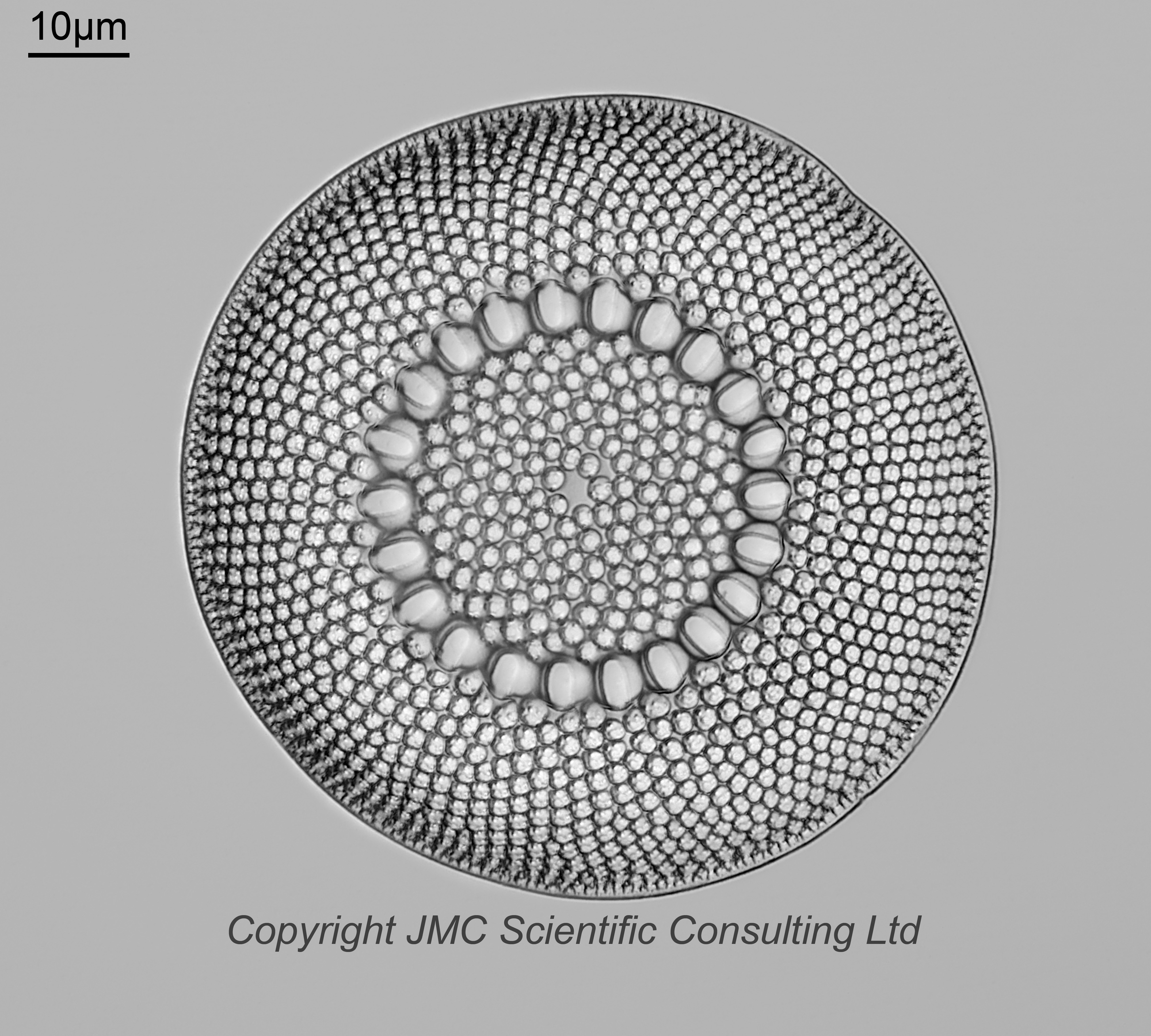
Brightwellia coronata, 64 images stacked. Brightwellia coronata (Brightwell) Ralfs 1861. Published in: Pritchard, A. (1861). A history of infusoria, including the Desmidiaceae and Diatomaceae, British and foreign. Fourth edition enlarged and revised by J. T. Arlidge, M.B., B.A. Lond.; W. Archer, Esq.; J. Ralfs, M.R.C.S.L.; W. C. Williamson, Esq., F.R.S., and the author. pp. [1]-xii, [1]-968, 40 pls [I-XV]. London: Whittaker and Co.. Page 940. In addition to the full stack, I prepared one where I imaged the top seperately. In the full stack the larger features in the coronal had ‘nipples’ in the middle of each one, which are from features just under the surface. I think these don’t look that good in the full stack, so I also prepared one with these removed during stacking. Both images are technically correct, the one with them remvoed is more focused on the surface appearance.
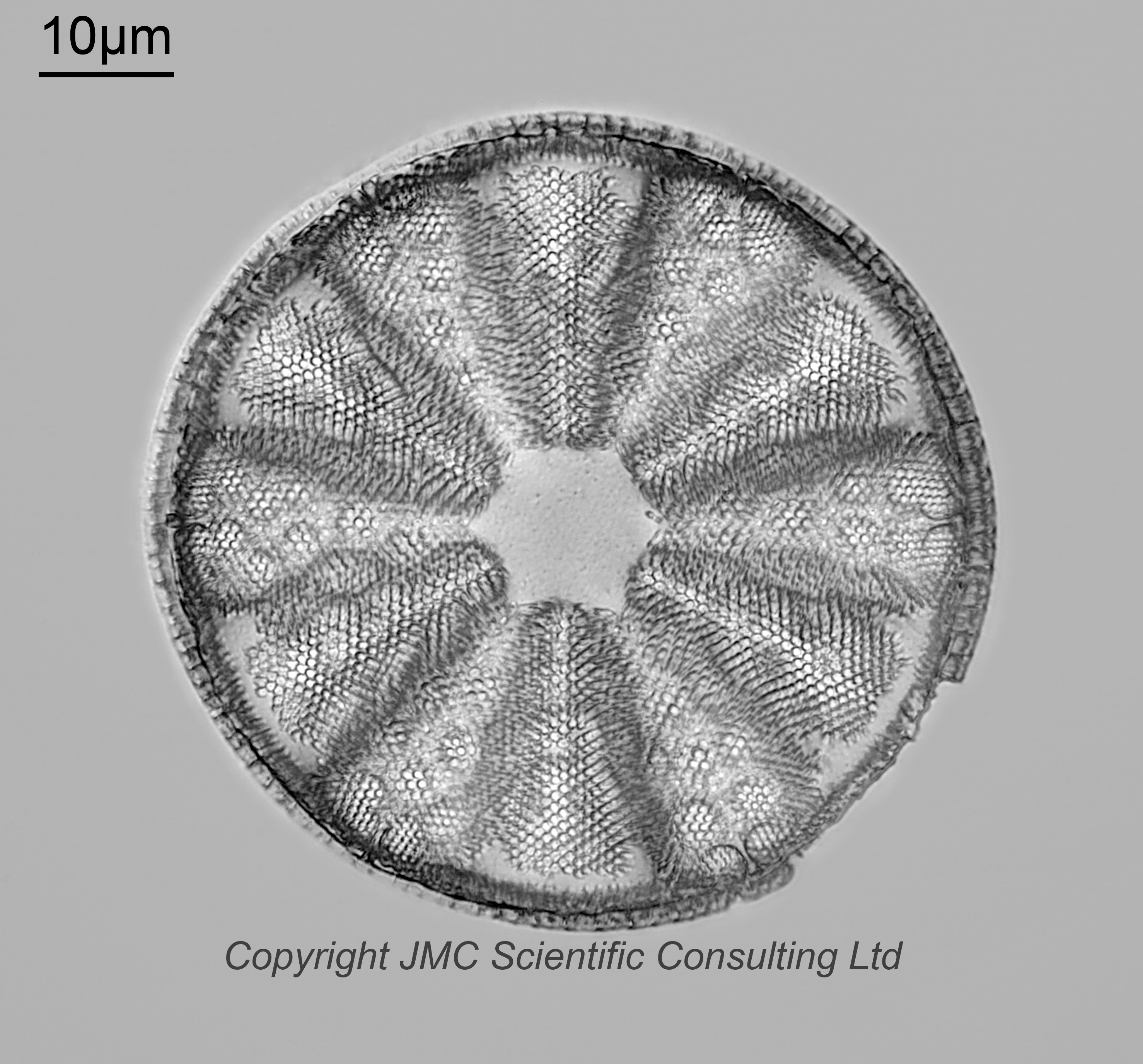
Actinoptychus maculatus, 41 images stacked. Actinoptychus maculatus A.W.F.Schmidt 1888. Published in: Schmidt, A.[W.F.] (1888). Atlas der Diatomaceen-kunde. Series III: Heft 33-34 [“Heft 29-30”]. pp. pls 129-136. Aschersleben: Verlag von Ludwig Siever. Plate 132, Figures 18-20.
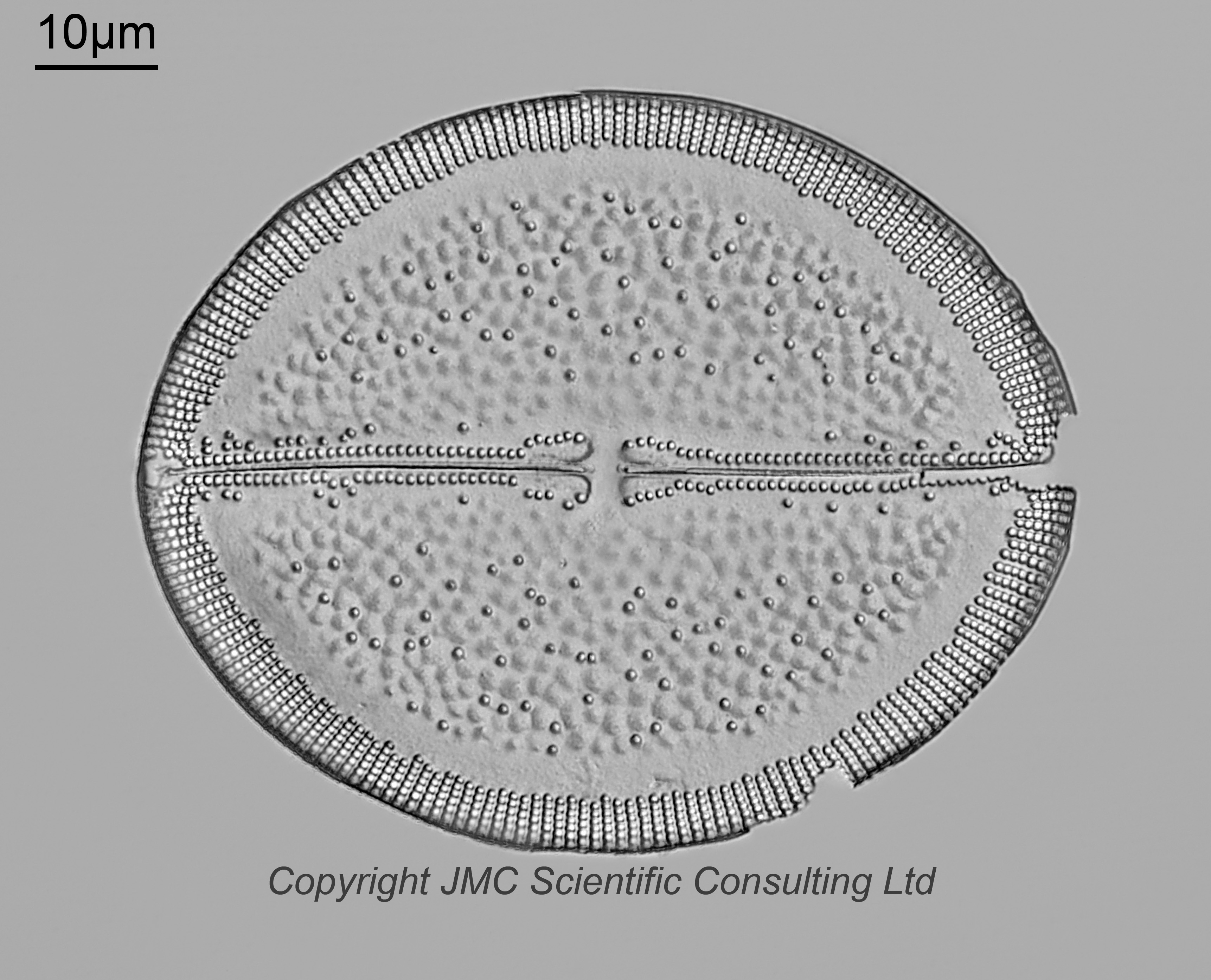
Cocconeis cymatoda Schrader, 1969. Original description: Schrader, H.-J. (1969). Die Pennaten Diatomeen aus dem Obereozän von Oamaru, Neuseeland. Beihefte zur Nova Hedwigia, 28: p. 1-163, pl. 1-39. Page 34, Plate 14, Figure 5. Looks rapheless, but then according to Schrader, this is normal for examples of this.
Hemiaulus unicornutus, 40 images stacked. Hemiaulus unicornutus Brun 1893. Published in: Brun, J. (1893). Notes sur quelques espèces nouvelles. Le Diatomiste 1(12): 173-177, pl. 24. Page 175, Plate XXIV, Figure 3. This name is currently regarded as a synonym of Monobrachia unicornuta (Brun) H.J.Schrader & J.Fenner. Source of synonymy: Schrader, H.-J. & J. Fenner (1976). Norwegian Sea Cenozoic diatom biostratigraphy and taxonomy. Initial Reports Deep Sea Drilling Project 38: 921-1099, 45 pl., 42 fig., 26 tables.
Navicula meridiepacifica ?, 42 images stacked. Reasonably sure of my ID for this, but not 100%. Navicula meridiepacifica Hustedt 1964. Published in: Hustedt, F. (1966). Die Kieselalgen Deutschlands, Österreichs und der Schweiz unter Berücksichtigung der übrigen Länder Europas sowie der angrenzenden Meeresgebiete. Bd. VII: Teil 3: Liefrung 4. In: Rabenhorst’s Kryptogamen Flora von Deutschland, Österreich und der Schweiz. (Anon. Eds), pp. 557-816. Leipzig: Akademische Verlagsgesellschaft m.b.h. Page 669, Figure 1669a. I did patch a small hole on the rim (roughly 10 o’clock position).
Actinoptychus sp. (A. maculatus), 37 images stacked. I had initially thought this might be a different species, but on stacked, I am veering towards a smaller A. maculatus).
Navicula sp. (probably N. oamaruensis, but I am not ruling out N. novaeseelandiae). 22 images stacked.
Pseudotriceratium radiosoreticulatum, 21 images stacked. Pseudotriceratium radiosoreticulatum (Grunow) Fenner 1985. Published in: Fenner, J. (1985 ‘1984’). Eocene-Oligocene planktic diatom stratigraphy in the low latitudes and the high southern latitudes. Micropaleontology (New York) 30(4): 319-342, 2 pls, 6 figs. Page 735, Figure 12. Basionym: Triceratium radiosoreticulatum Grunow. 2nd Attempt. Seems to be very difficult to get a clear image of the central part.
Triceratium castelliferum, 32 images stacked. Triceratium castelliferum Grunow in A.W.F.Schmidt 1888. Published in: Schmidt, A.[W.F.] (1888). Atlas der Diatomaceen-kunde Series III (Heft 31-32). pp. pls. 121-128. Leipzig: Fuess Verlag (R. Reisland). Plate 128, Figures 17,18. This name is currently regarded as a synonym of Sheshukovia castellifera (Grunow) J.Witkowski. Source of current name: Witkowski, J. (2022). Early Paleocene-Late Eocene diatoms from the Blake Nose Western North Atlantic Ocean. Nova Hedwigia, Beheift 152: [i]-v, [1]-381, incl. 2 figs, 7 tables, 156 pls.
I could easily have carried on and imaged more from this slide, but time waits for no man, and I must move on to other slides (this page took me 5 days to do). If there are any you specifically want to see, let me know.