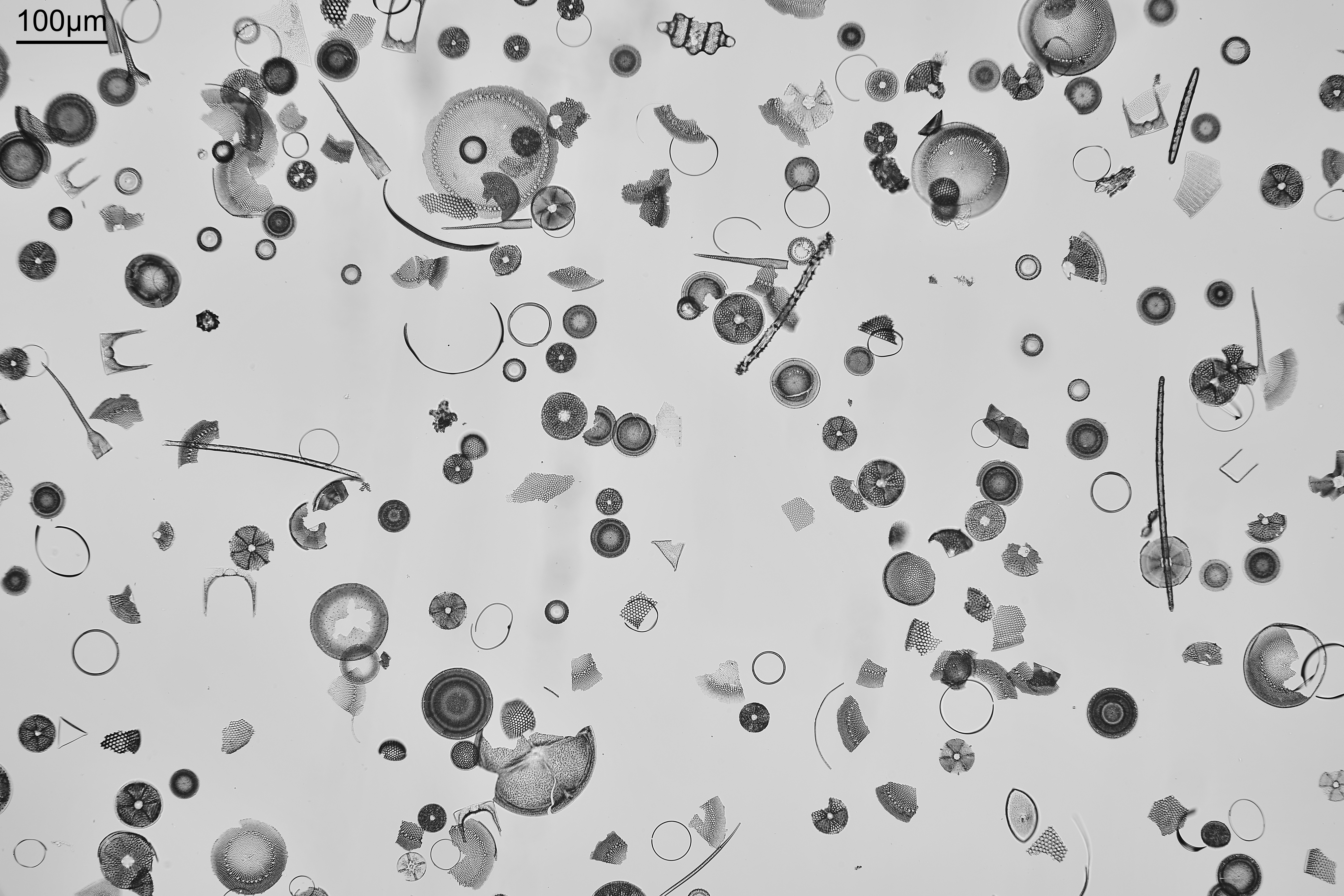
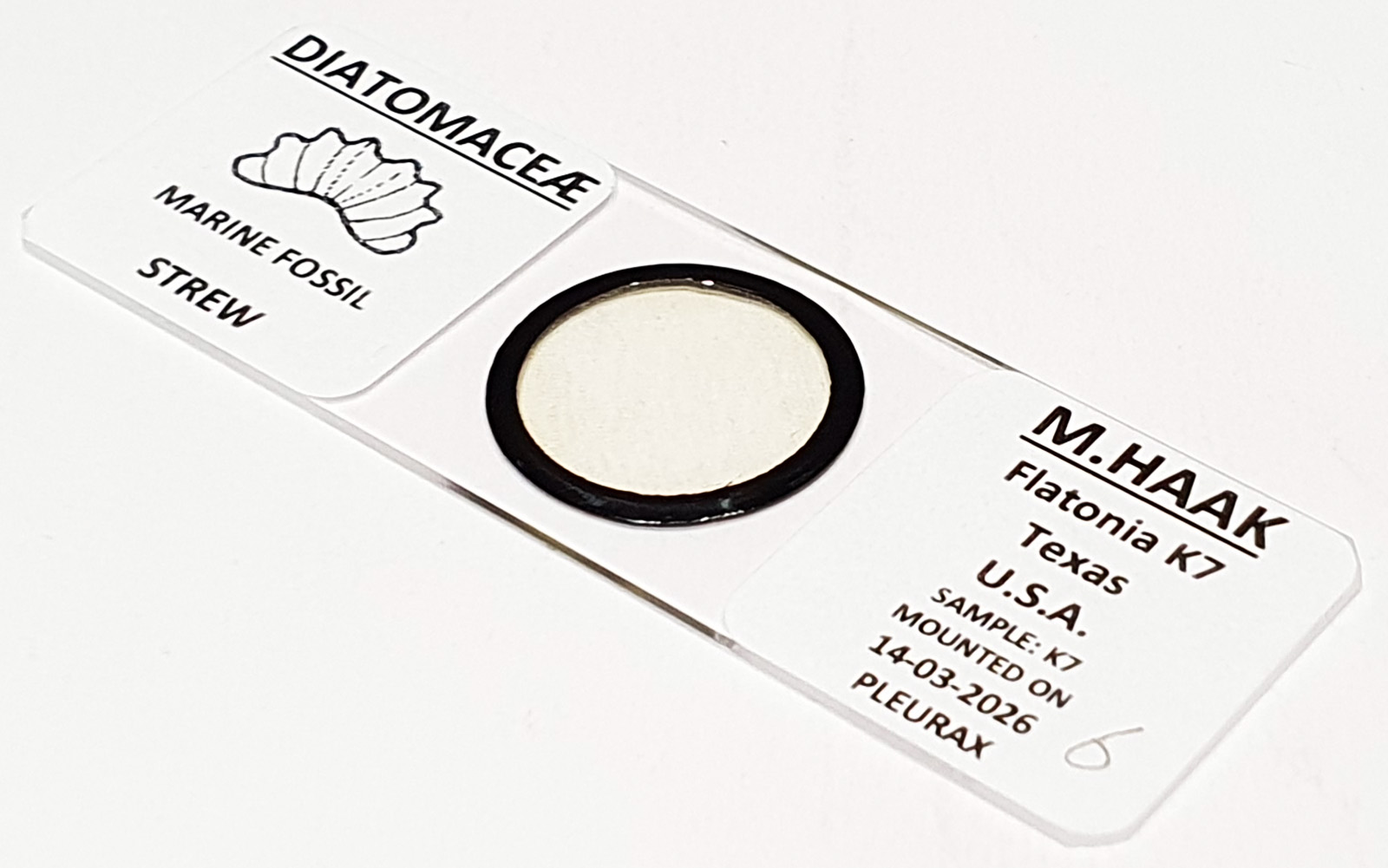
This is a fabulous strew from the site Flatonia K7 in Texas, USA. A little reported site which warrants much more work, as there are some amazing diatoms there. Marine fossil material. Prepared by Michel Haak, mounted in Pleurax, and dated March 2026. Olympus BHB microscope using 450nm LED light. The image below shows how the strew looks.
There were a couple of examples of ‘initial cells’ from an Actinoptychus on the slide, such as the one shown below.
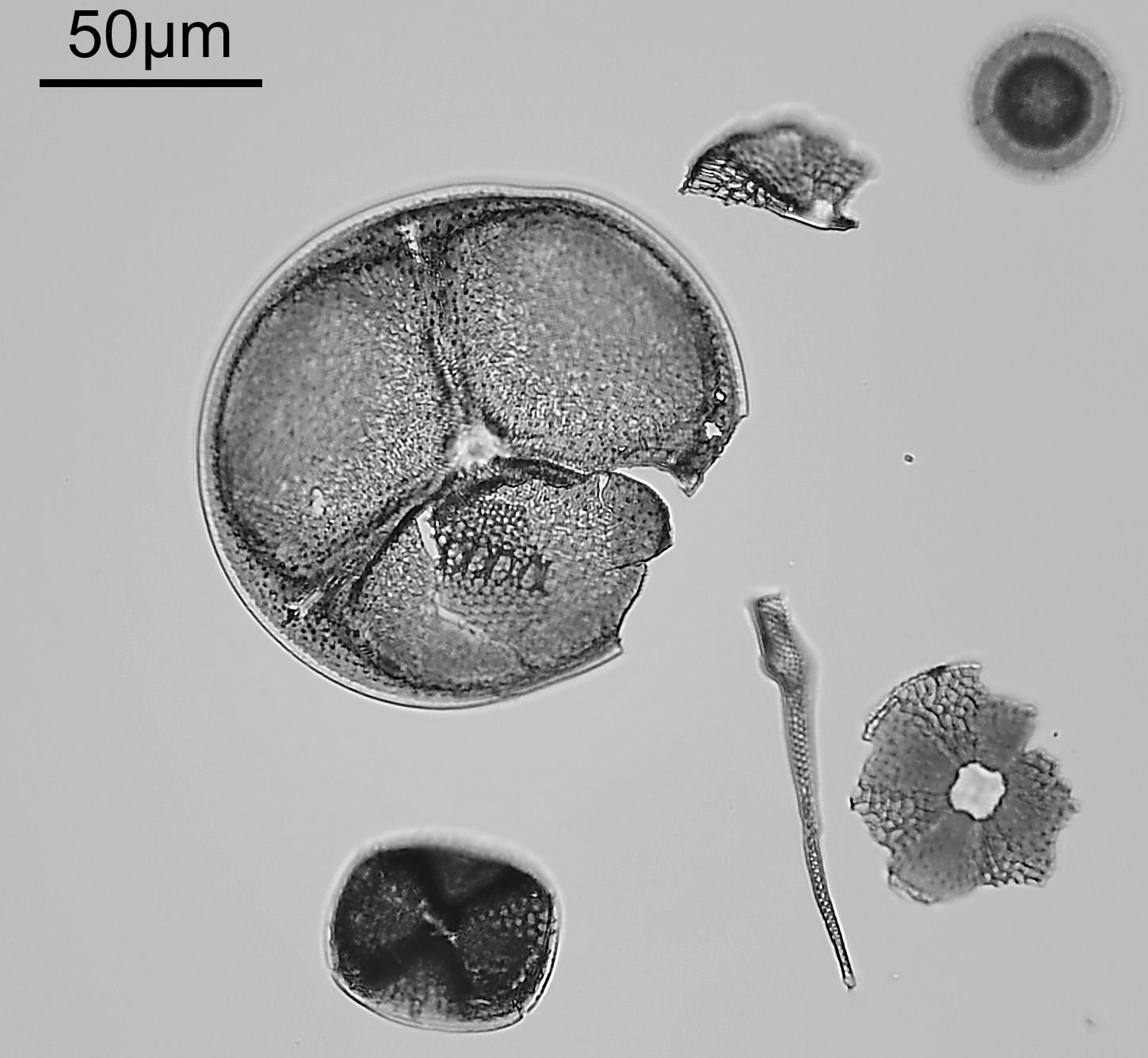
There’s a bit more about these initial cells here. As well as the low magnification images I also did a few at higher magnification using the 63x Leitz Pl Apo 1.4 objective, oil immersion. Olympus Aplanat Achromat condenser, oil immersion, oblique lighting. 2.5x Nikon CF PL photoeyepiece. Monochrome converted Nikon d850 camera. Image stacks prepared in Zerene (Pmax). I did slightly less sharpening than usual with these, which I am putting down the excellent slide preparation and Pleurax. With some of these diatoms I am not even sure of the Genus, let alone the Species, so information is a little sparse. However it give an idea of the amazing diversity that is present.
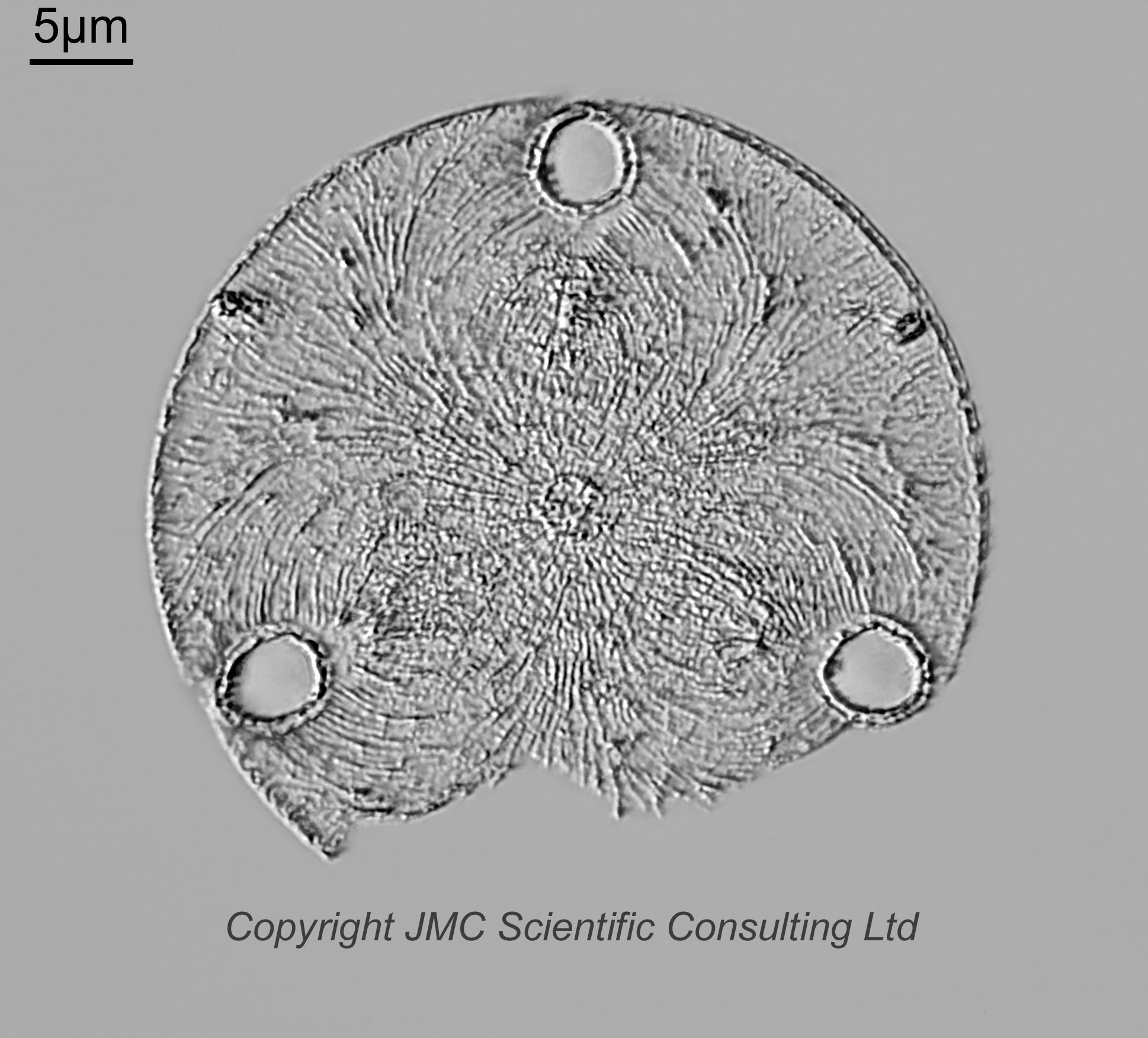
This is an Auliscus or Pseudauliscus sp., with 3 ocelli. Very small and faint. after finding it, I then lost it for 15 minutes, as when out of focus it looks just like a girdle band.
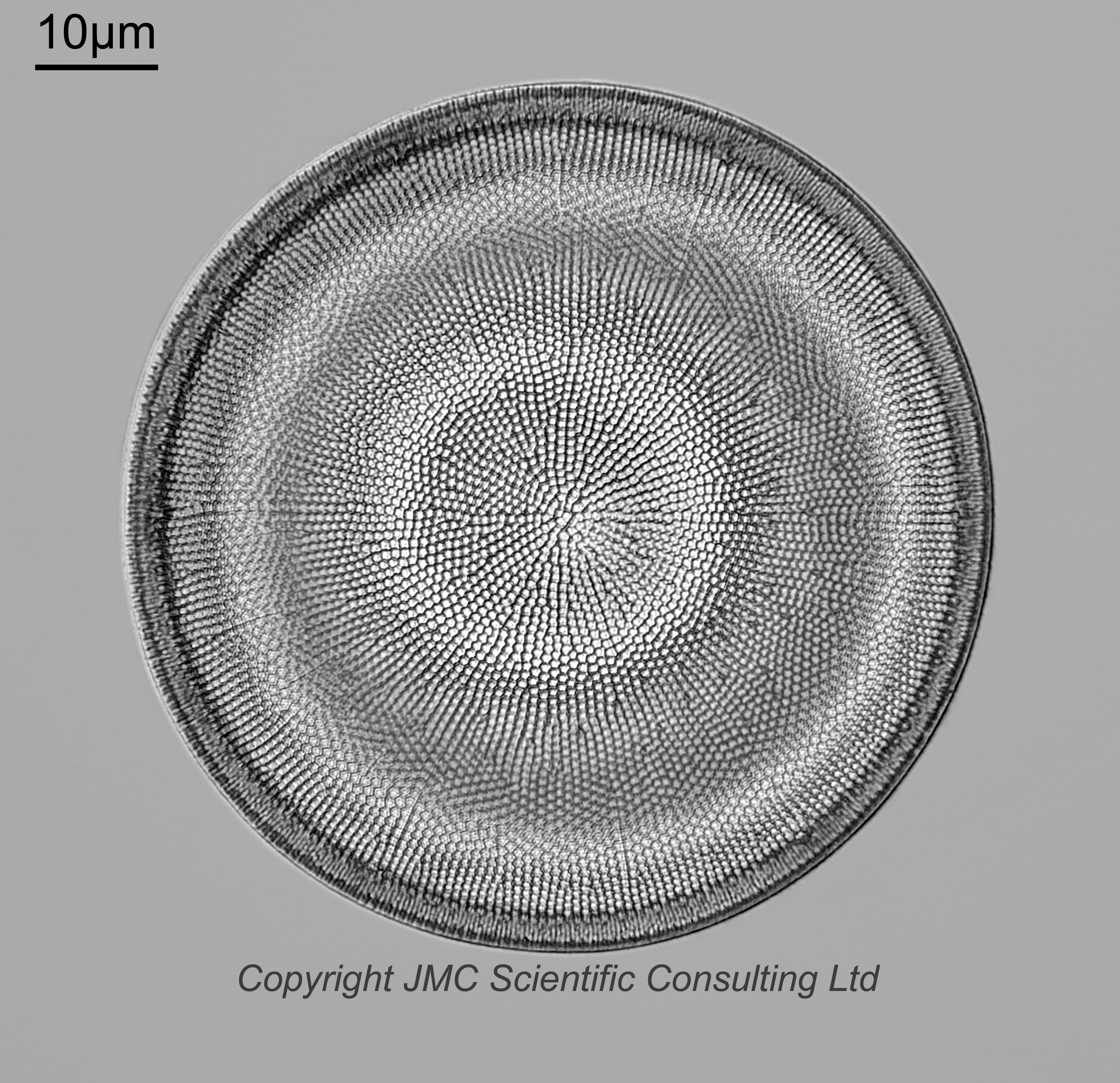
This one I am not sure about. It has a wavy cross section (i.e. not flat).
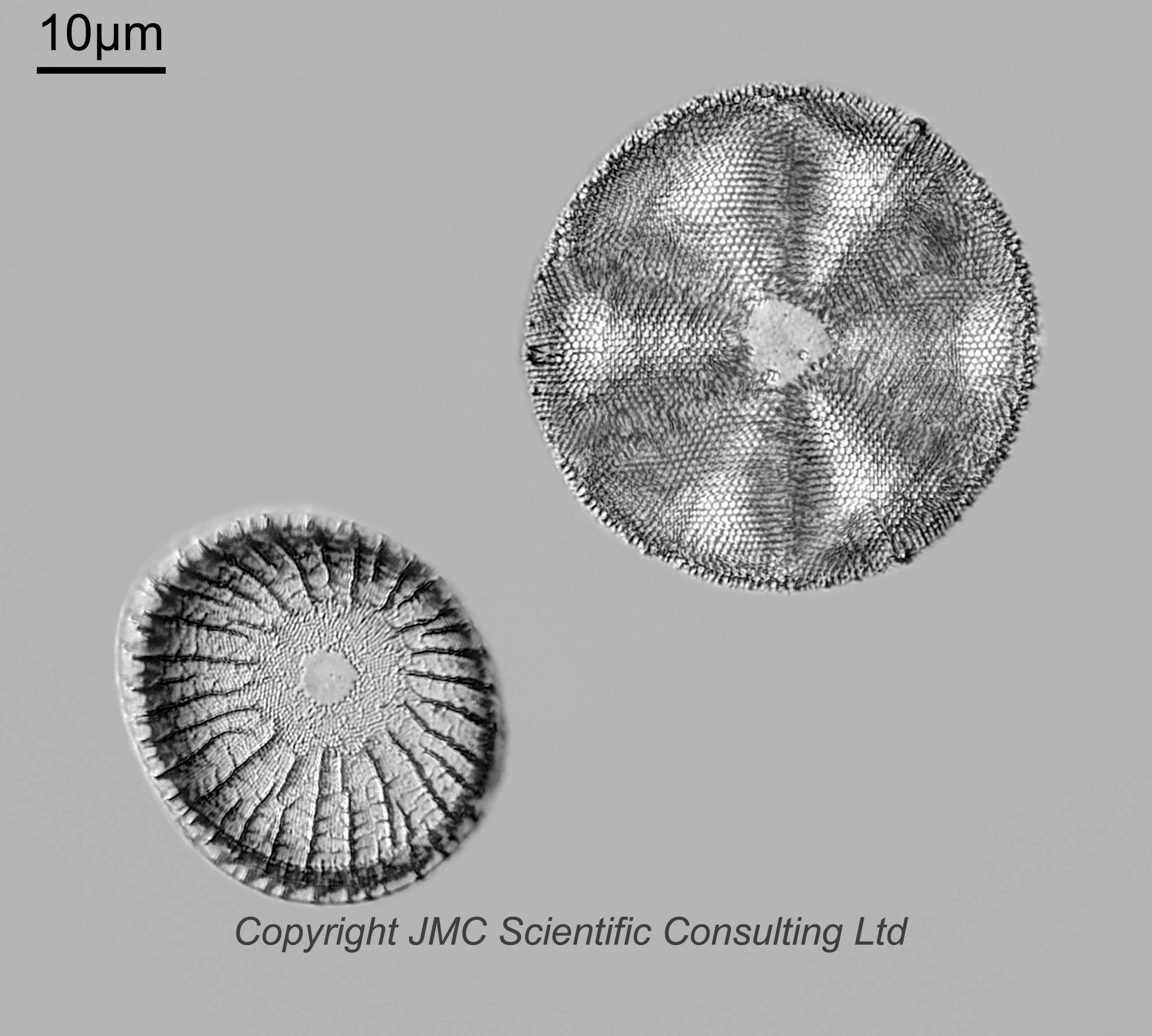
An Actinoptychus sp. in the upper right. Lower left I am not sure. I have seen the description ‘remains of a thecate ameoba’ online, but I am not sure. There are a few of these on the strew.
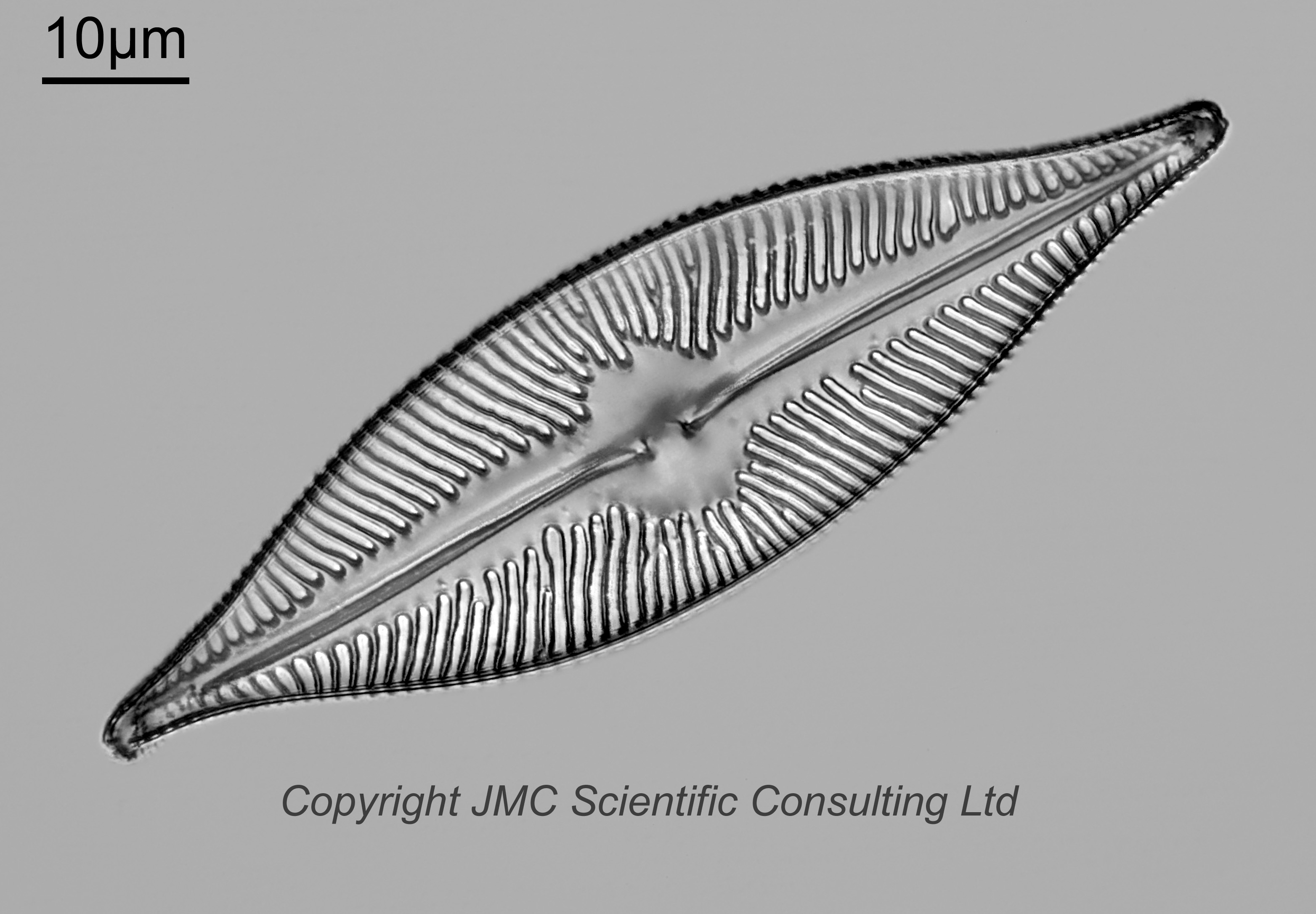
What looks to be a pennate diatom of some type. This is an underside view, with the rim upwards towards the coverslip.
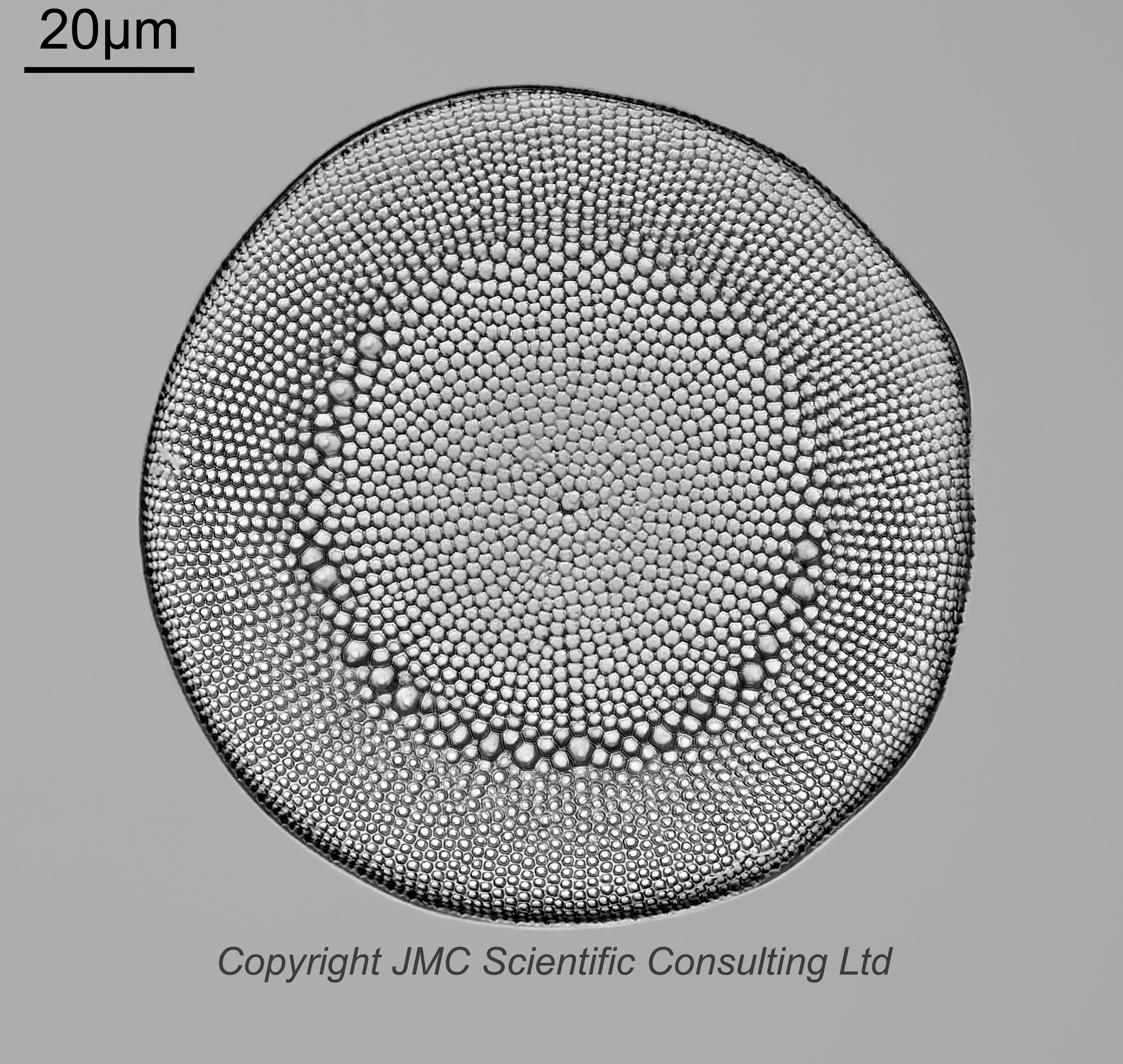
There are a lot of these on the slide. It has features that remind me of Brightwellia (such as Brightwellia coronata), however not as well defined. I have also seen Coscinodiscus bulliens associated with it, but it doesn’t look right to me for that. Maybe some type of ‘proto-Brightwellia sp.’? High point about 10% inside from the edge. Drops quickly outside this, and also gradually towards the middle. Middle about the same height as the edge of the rim.
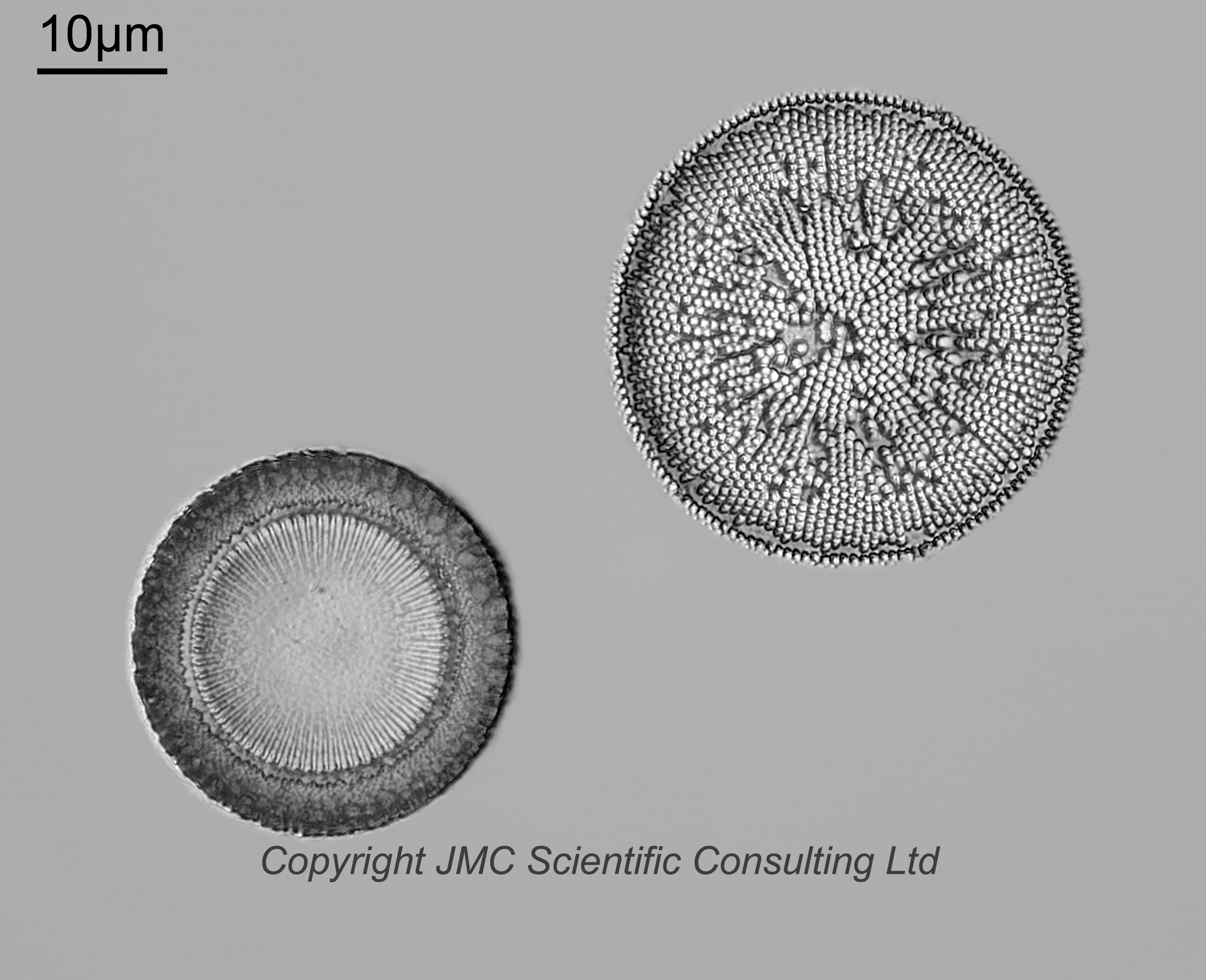
The only one I am sure of. Lower left, Paralia flatoniana Winter & Yancey 2022. Published in: Winter, D. & Yancey, T. (2022). Paralia flatoniana sp. nov., a new species from the late Eocene of Texas with discussion on ecology and initial valves. Diatom Research 37(4): 329-349. Pages 332, 339, Figures 3–31. Upper right looks to be a Cestodiscus sp. of some type.
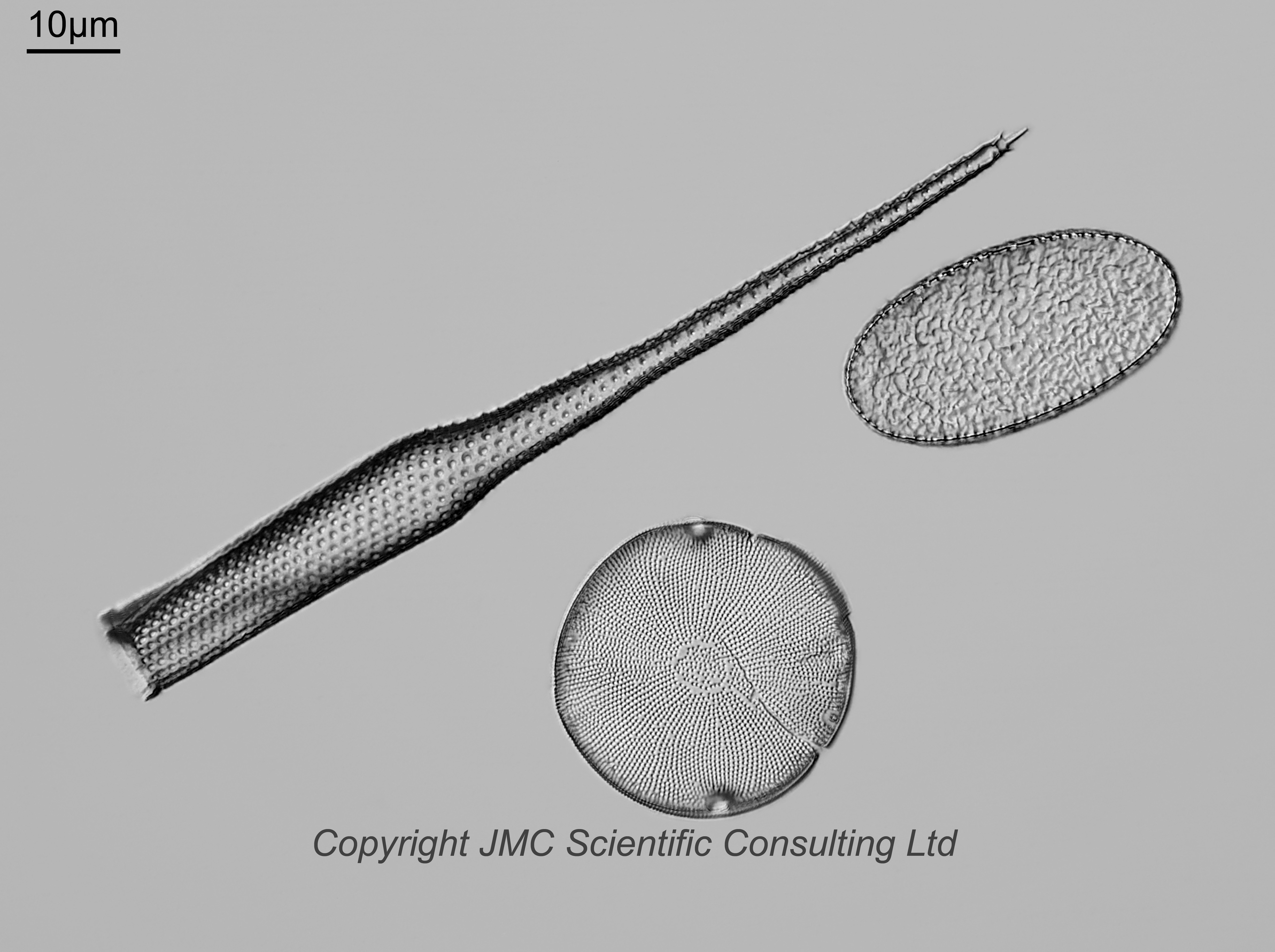
These three were clustered together so it made sense to image them all at the same time. Upper one is a Pyxilla sp.. The right hand one, not sure, but maybe a Xanthiopyxis of some type. The bottom one in the middle is really interesting. This is an underside view, with the rim upwards towards the coverslip. There are rimoportulae on the rim roughly perpendicular to the axis of what look to be 2 ocelli. I had assumed Auliscus of some type, but I am less convinced by that now the more I think about it.
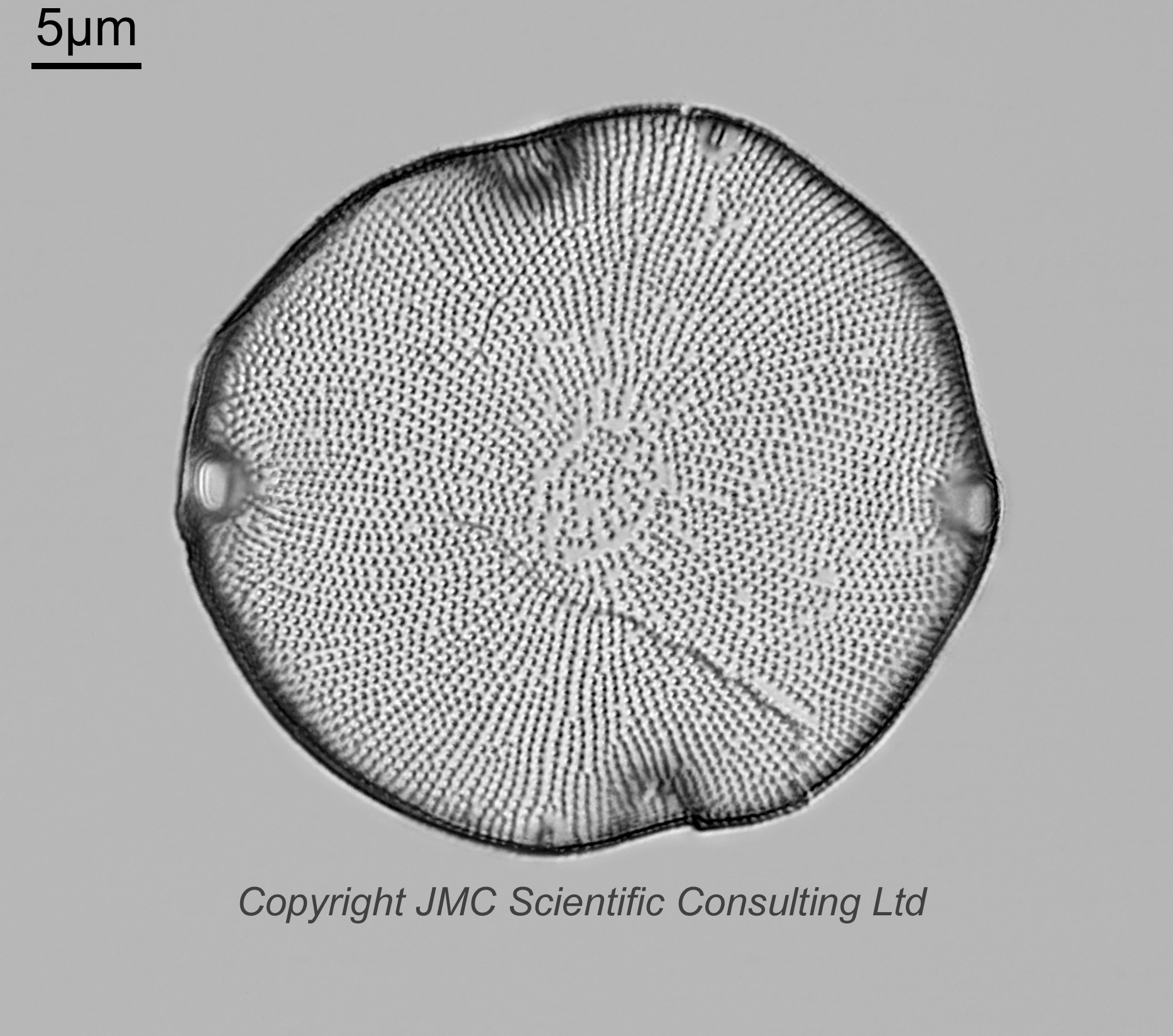
Another of the mystery diatoms. Again, an underside view. Looks to be 2 ocelli along the horizontal axis. Then roughly perpendicular are two rimoportulae, and also two ‘dents’ in the shape.
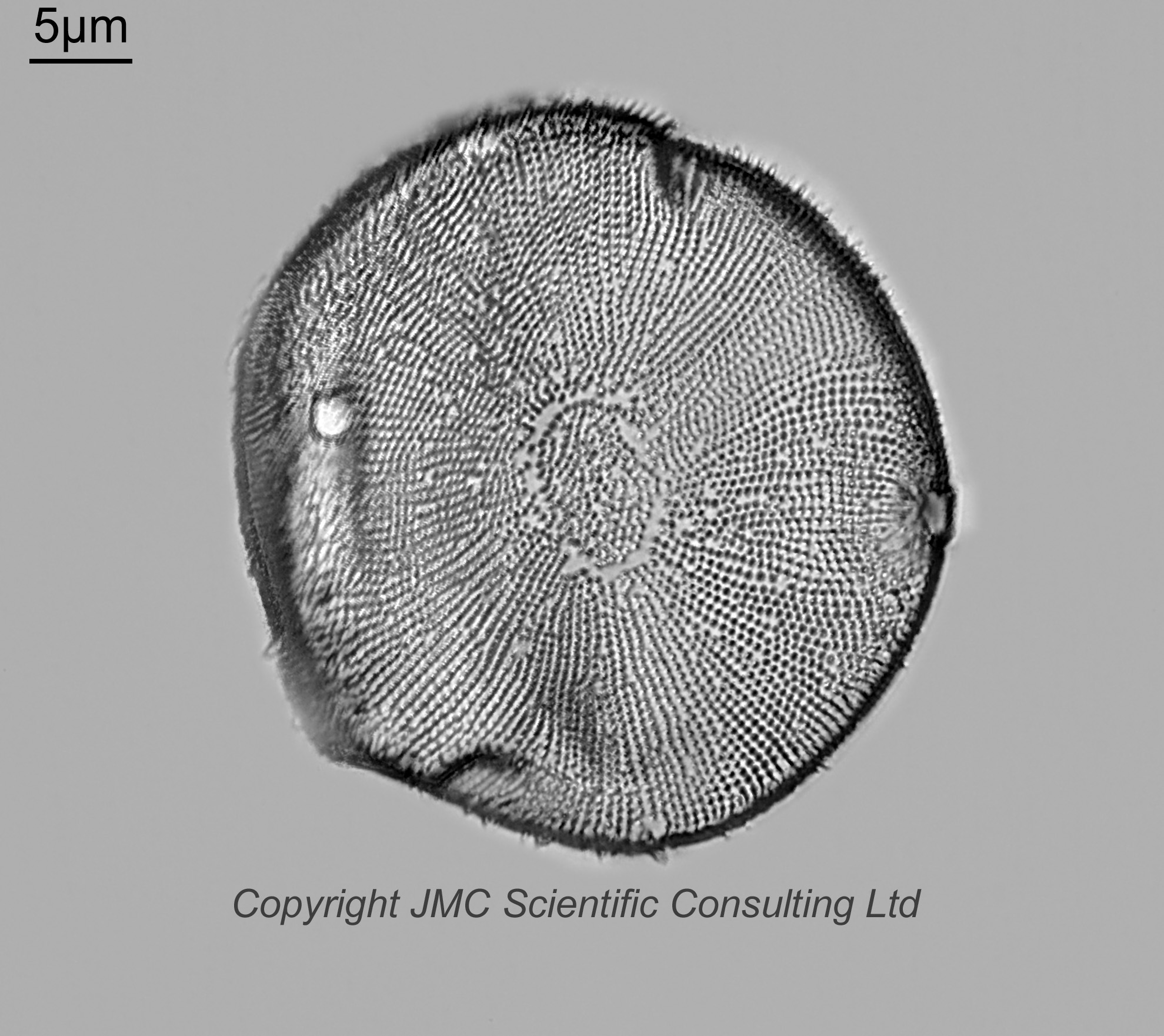
I did find one of these the right way up, but for some reason I had trouble with the stack and the final image isn’t as good as I would like. It was dipping down quite sharply towards the right hand side, which didn’t help. Shows the unusual ‘dents’ again though, and the rimoportulae.
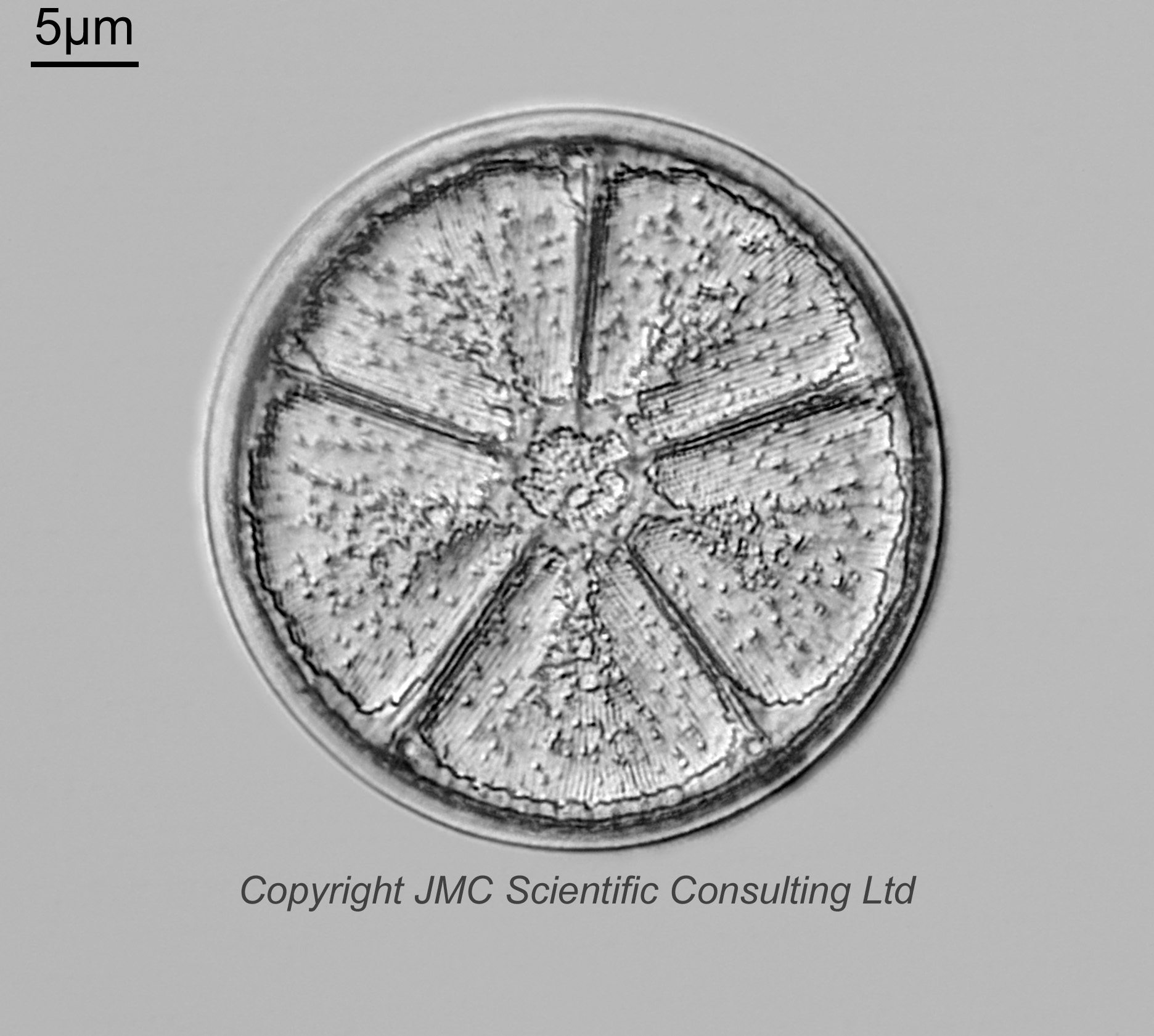
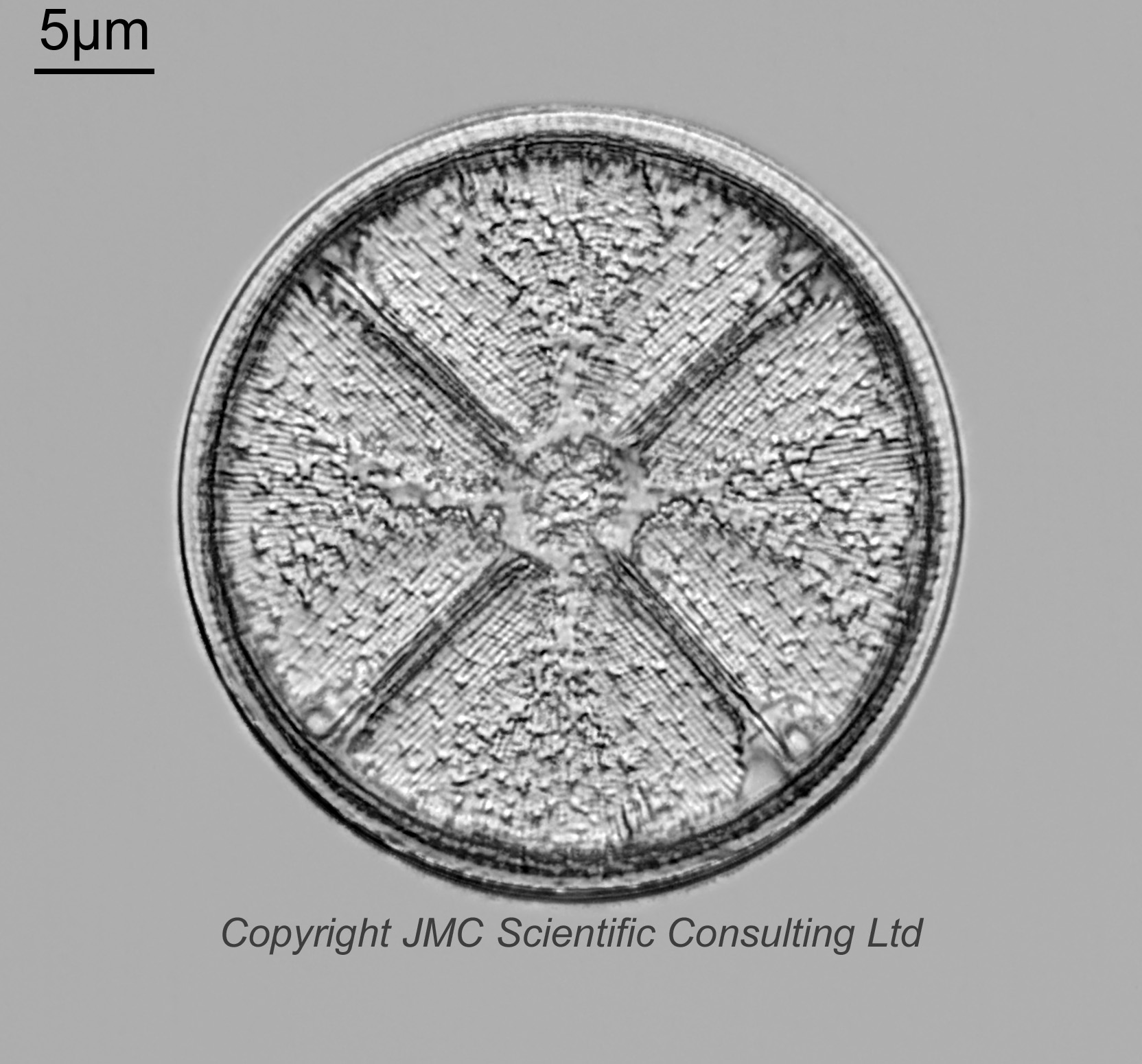
There were a few of these on the strew, in 4 and 5 sector versions. I think they could be Actinodictyon weissflogii. Actinodictyon weissflogii Pantocsek 1892. Published in: Pantocsek, J. (1892). Beiträge zur Kenntnis der Fossilen Bacillarien Ungarns. Teil III: Süsswasser Bacillarien. Anhang-analysen 15 neuer Depots von Bulgarien, Japan, Mahern, Russland und Ungarn. pp. pls 1-42. Nagytapolcsány Topo: Buchdrucherei von Julius Platzko. Plate 5, Figure 84. But this is a tentative ID. The 4 sector one is an underside view with the rim upwards towards the coverslip.
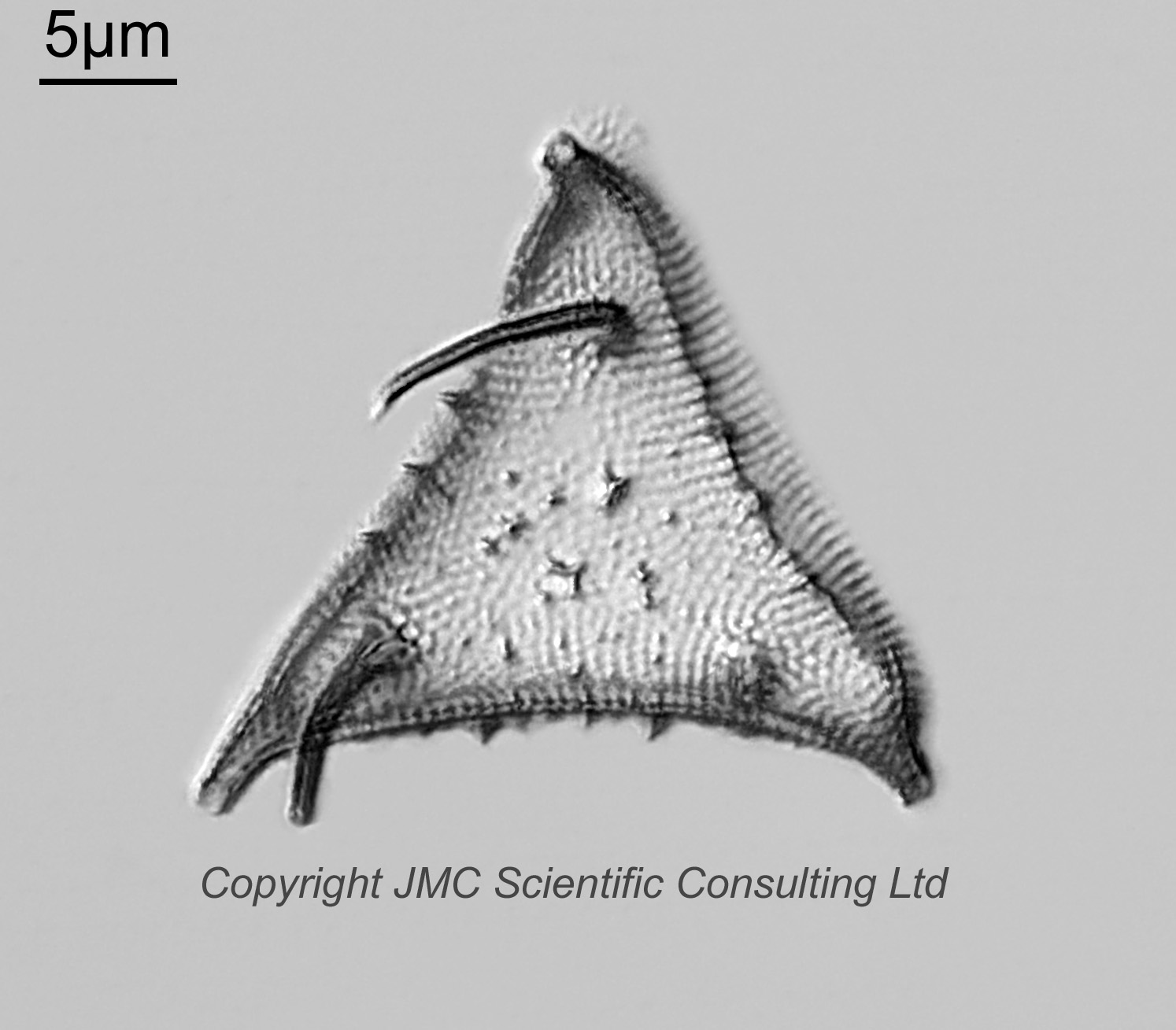
A spiky Triceratium or perhaps Biddulphia of some type. Very small. Two of the three long ‘horns’ were still intact, but one had snapped off.
All in all a very interesting strew, and an areas which needs much more assessment.