Four strew slides by Watson and Sons Ltd. Olympus BHB microscope using 450nm LED light.
First from the Isle of Maccabees (spelt Macabees on the label).
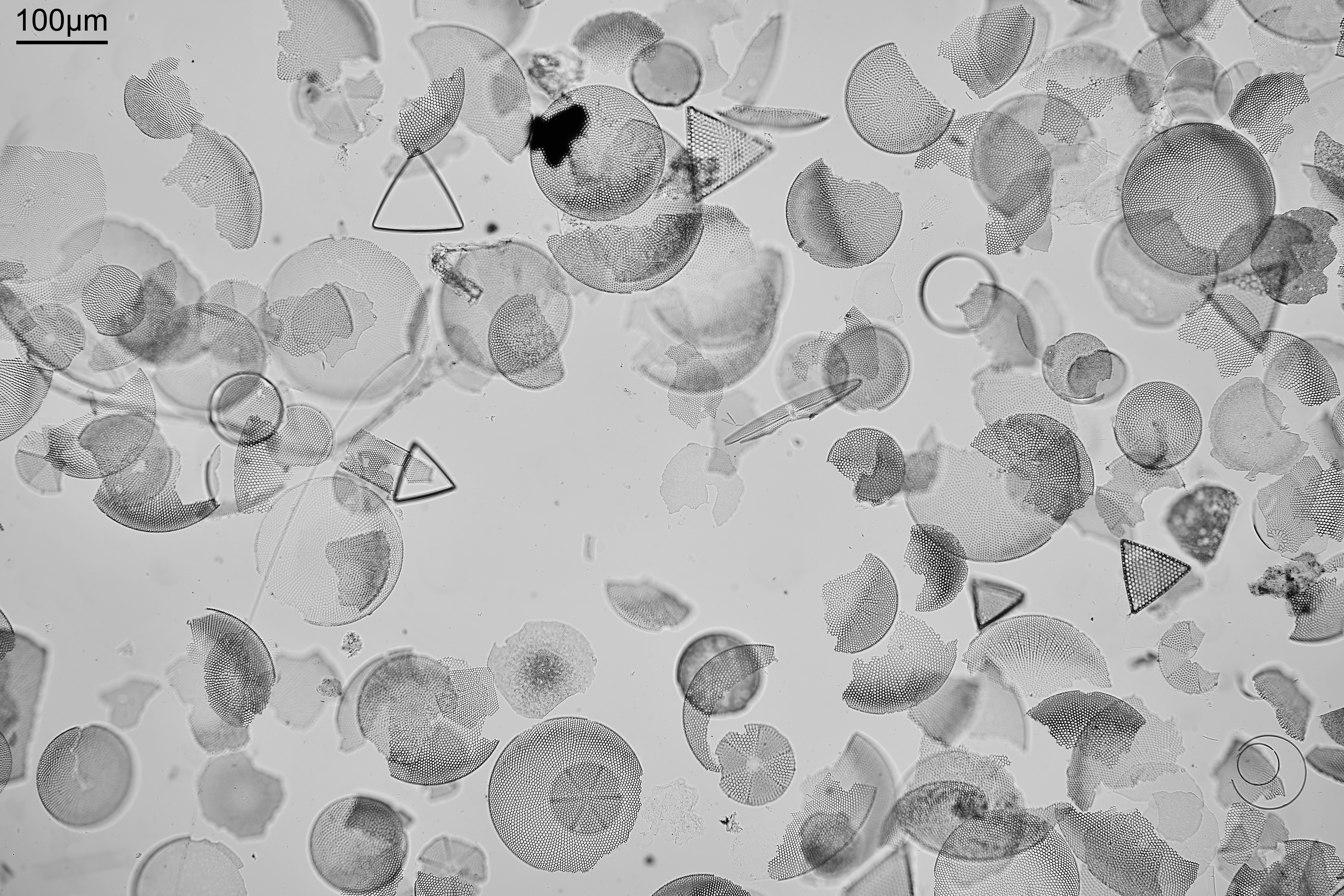
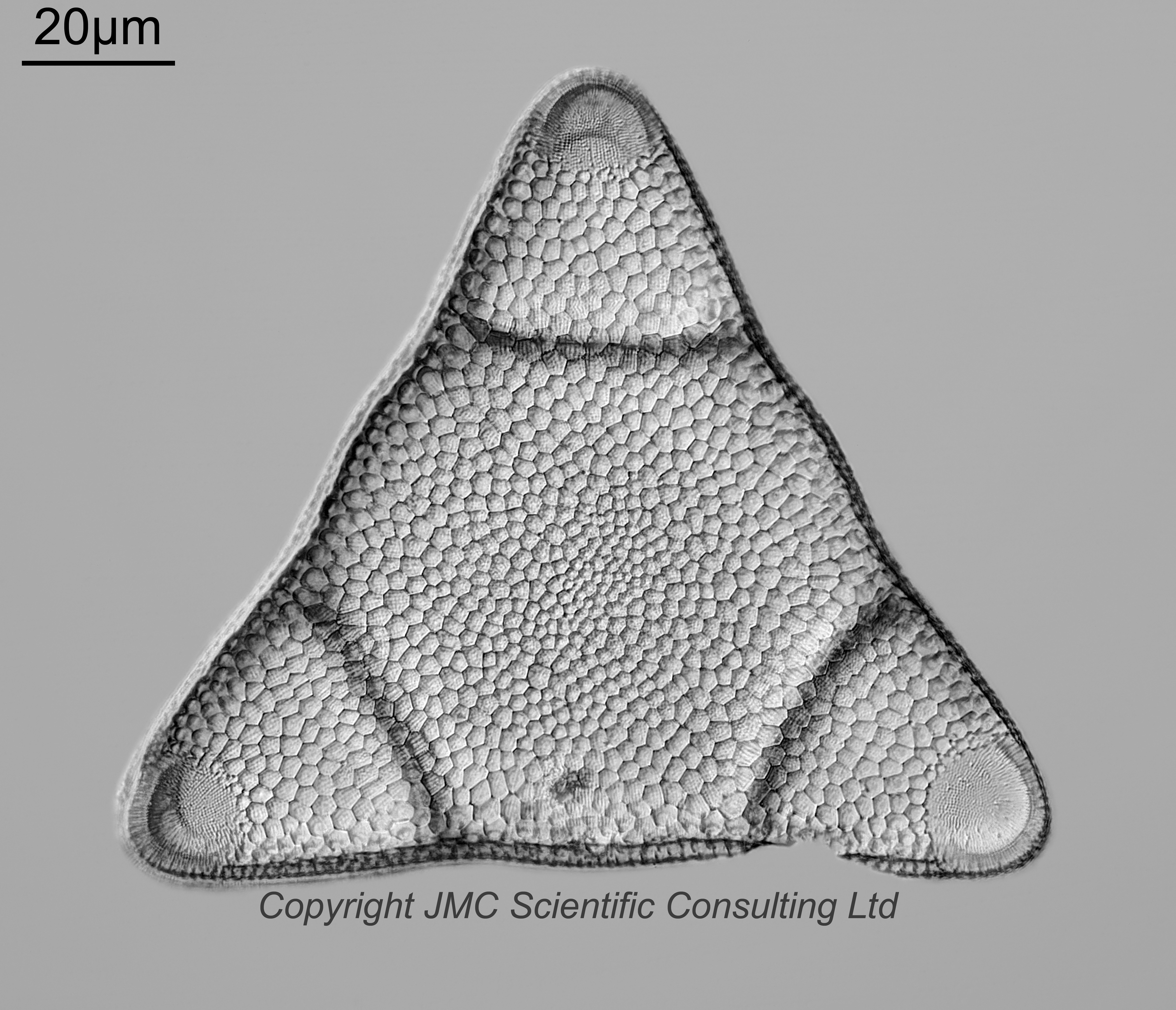
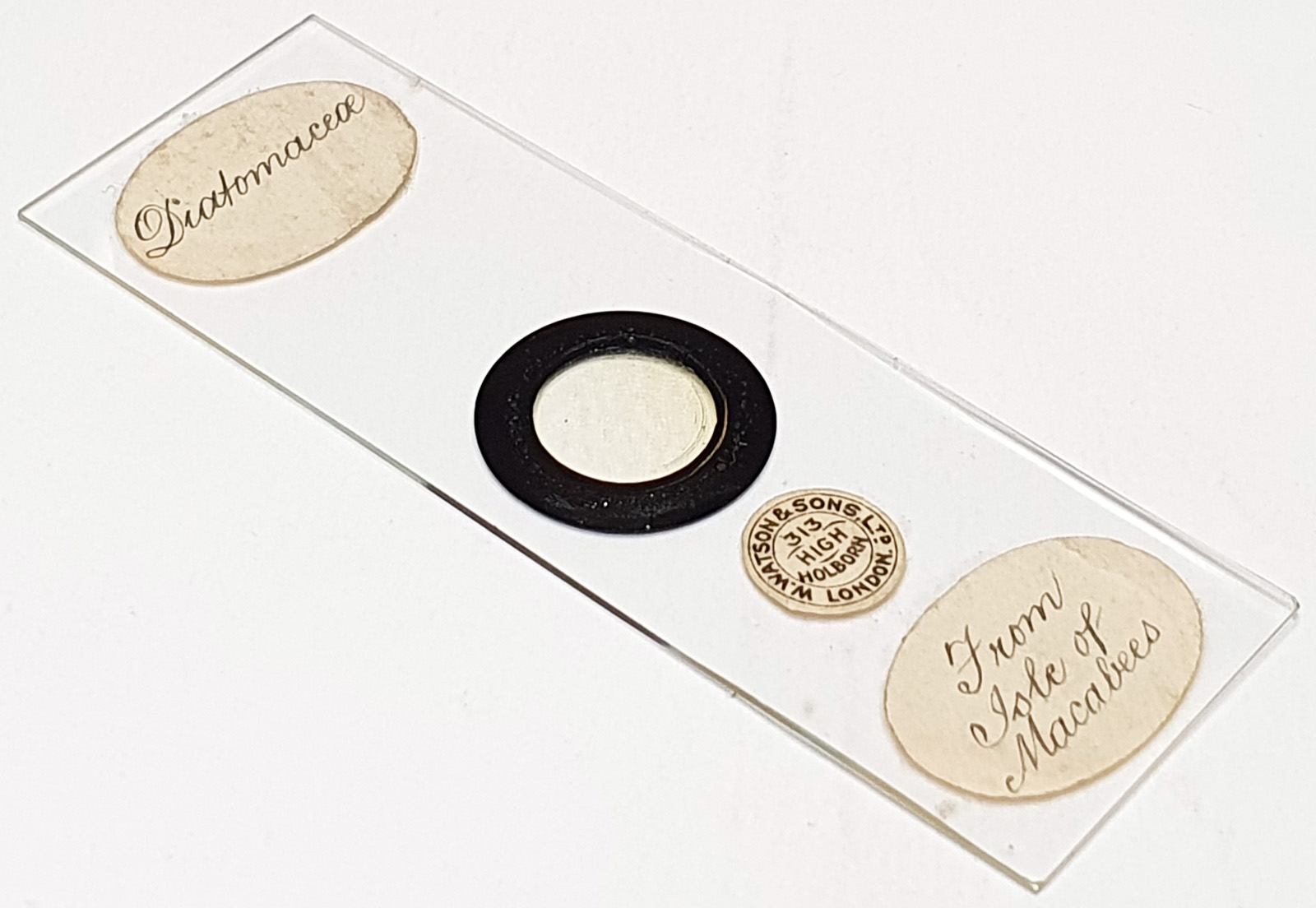
Presumably guano from Ichaboe Island (sometimes misremembered or historically transcribed as “Maccabees”), a small island off the coast of Namibia that was famed for its 19th-century guano boom. Nice range of species including Pseudauliscus peruvianus. I selected one diatom which I think is Triceratium uncinatum for imaging using the 63x Leitz Pl Apo 1.4 objective, oil immersion. Olympus Aplanat Achromat condenser, oil immersion, oblique lighting. 2.5x Nikon CF PL photoeyepiece. Monochrome converted Nikon d850 camera. 54 images stacked in Zerene (Pmax).
As stated above, I think this may be Triceratium uncinatum. This is shown in Schmidt’s Atlas, Plate 94, Fig 4. The description for this states, “Westküste v. Centralamerica. vielleicht, wie Grunow vermuthet, eine Hydrosera.” which translates (roughly) as “West coast of Central America. Perhaps as Grunow suspected a Hydrosera.”. I too initially thought Hydrosera when I saw this, so perhaps it is rather than a true Triceratium. I will leave it with a question mark for now though.
Second, a strew from Sing Sing, Hudson River.
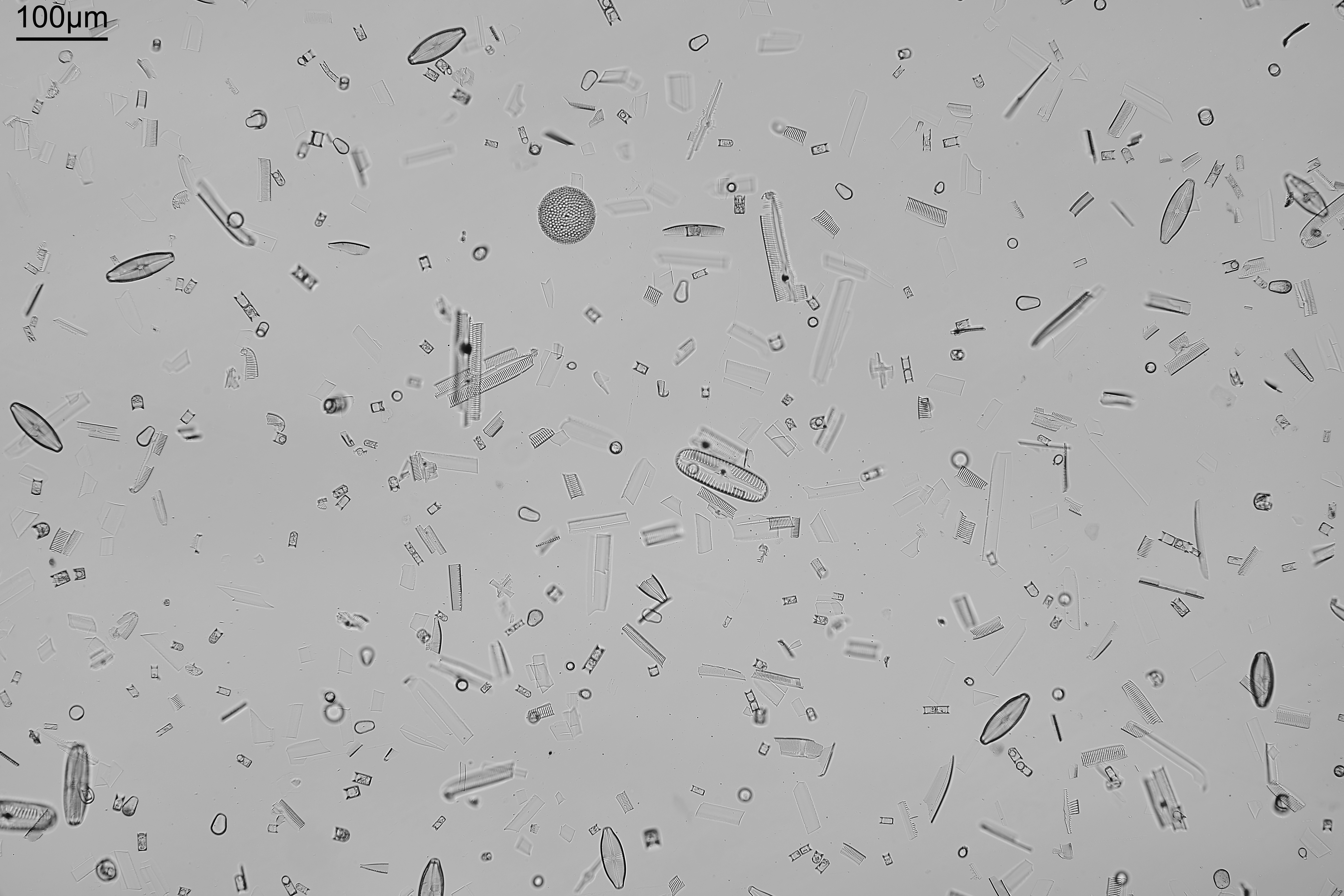
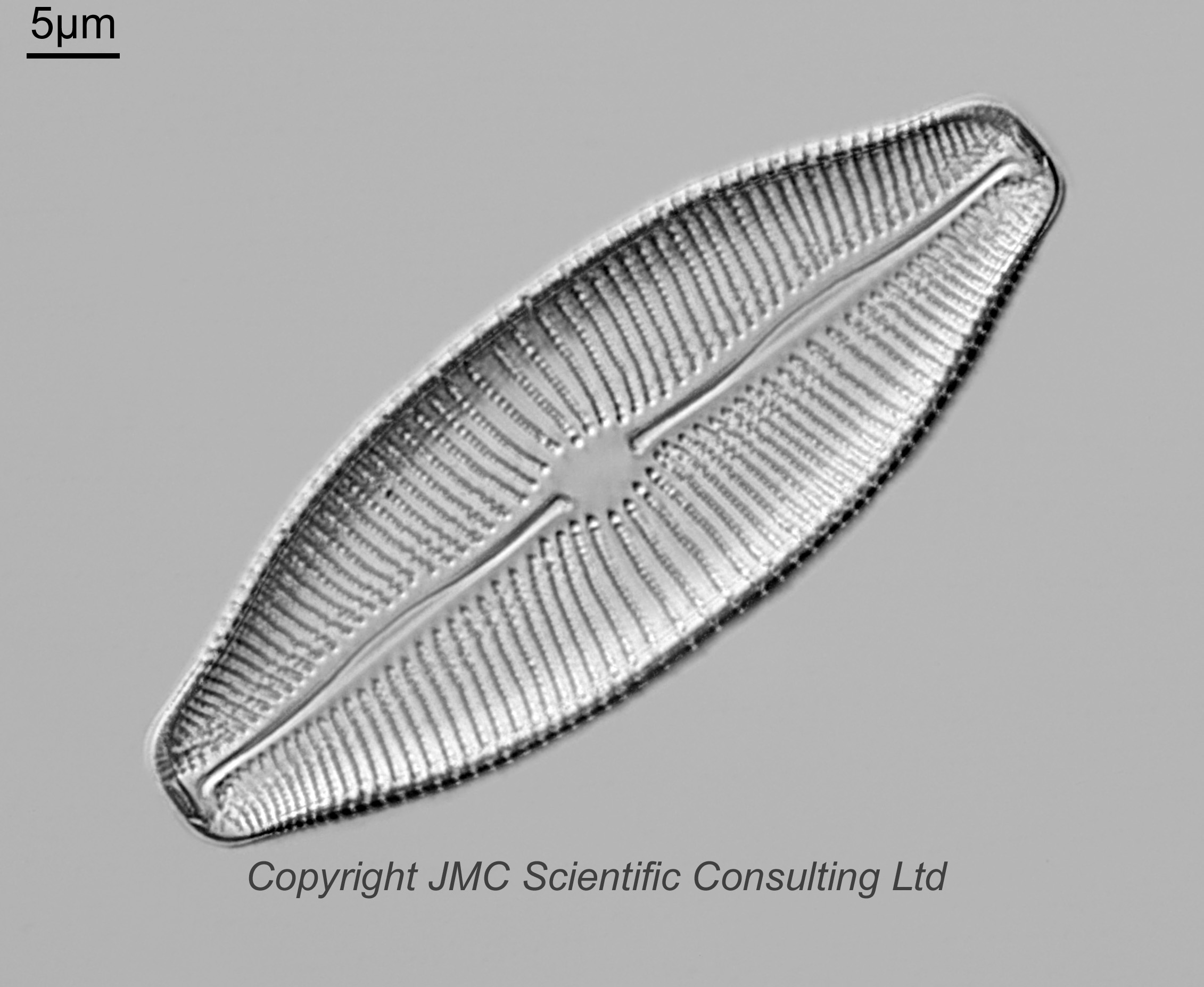
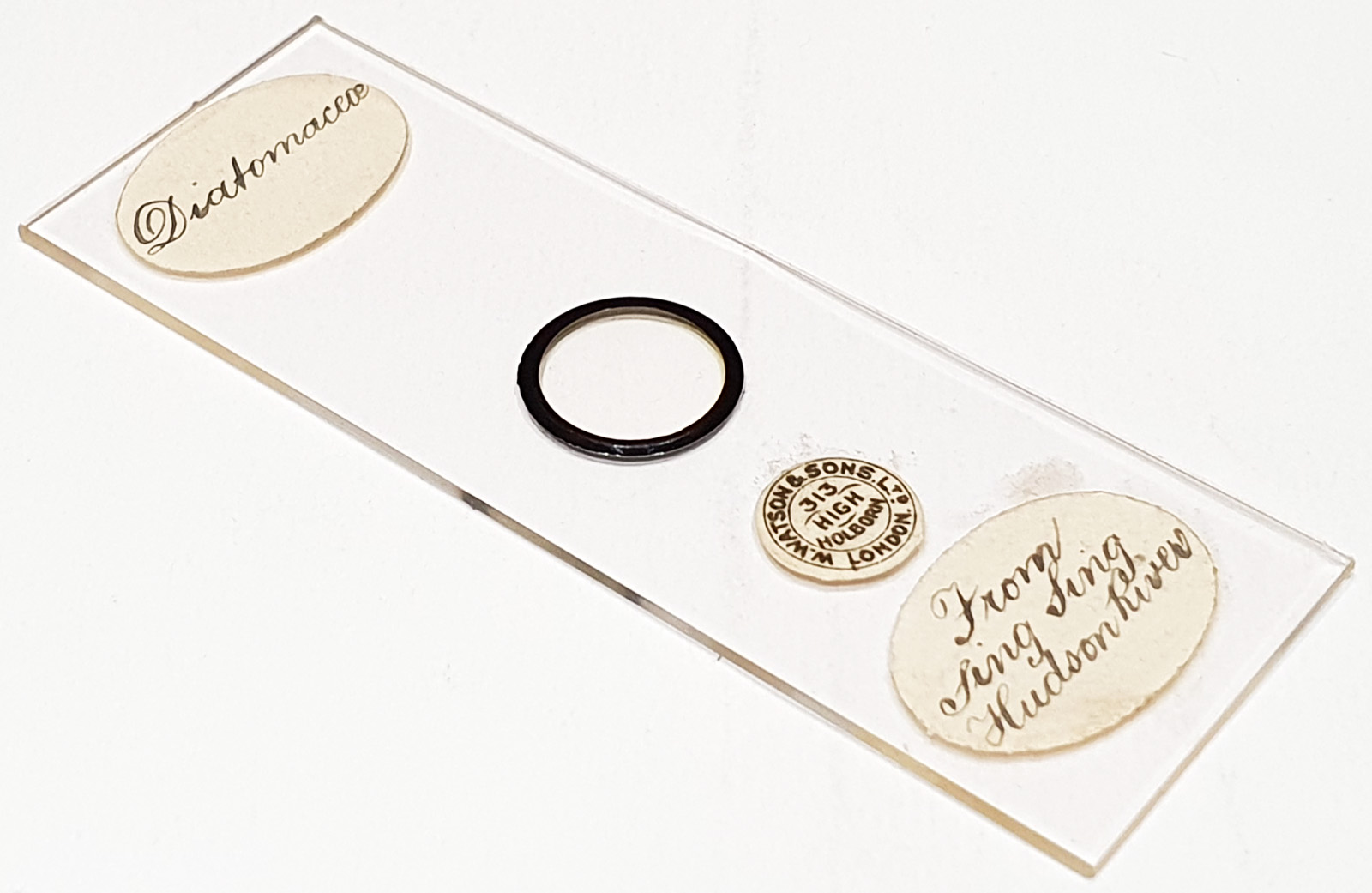
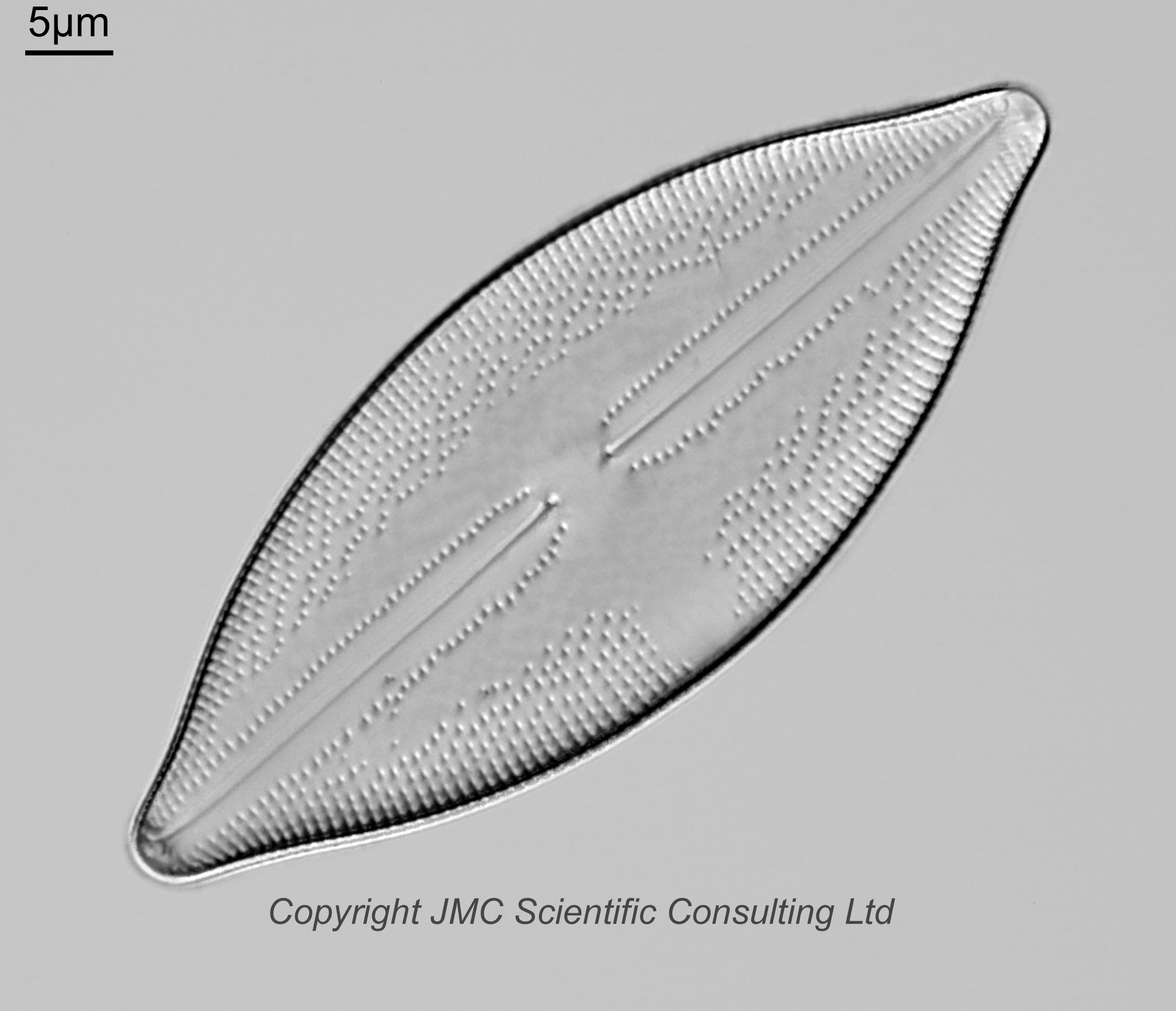
I think this is recent freshwater material. I selected one diatom which I think is Rexlowea navicularis for imaging using the 63x Leitz Pl Apo 1.4 objective, oil immersion. Olympus Aplanat Achromat condenser, oil immersion, oblique lighting. 2.5x Nikon CF PL photoeyepiece. Monochrome converted Nikon d850 camera. 24 images stacked in Zerene (Pmax).
Rexlowea navicularis (Ehrenberg) Kociolek & E.W.Thomas 2010. Published in: Kociolek, J.P. & Thomas, E.W. (2010). Taxonomy and ultrastructure of five naviculoid diatoms (class Bacillariophyceae) from the Rocky Mountains of Colorado (USA), with the description of a new genus and four new species. Nova Hedwigia 90(1/2): 195-214, 62 figs. Page 211. Homotypic synonyms; Amphiprora navicularis Ehrenberg 1843, Navicula navicularis (Ehrenberg) Edwards 1906, Placoneis navicularis (Ehrenberg) E.J.Cox 2003. Fairly sure with this ID.
Next, is from Franzensbad, Bohemia (spelt Franzenbad on the label).
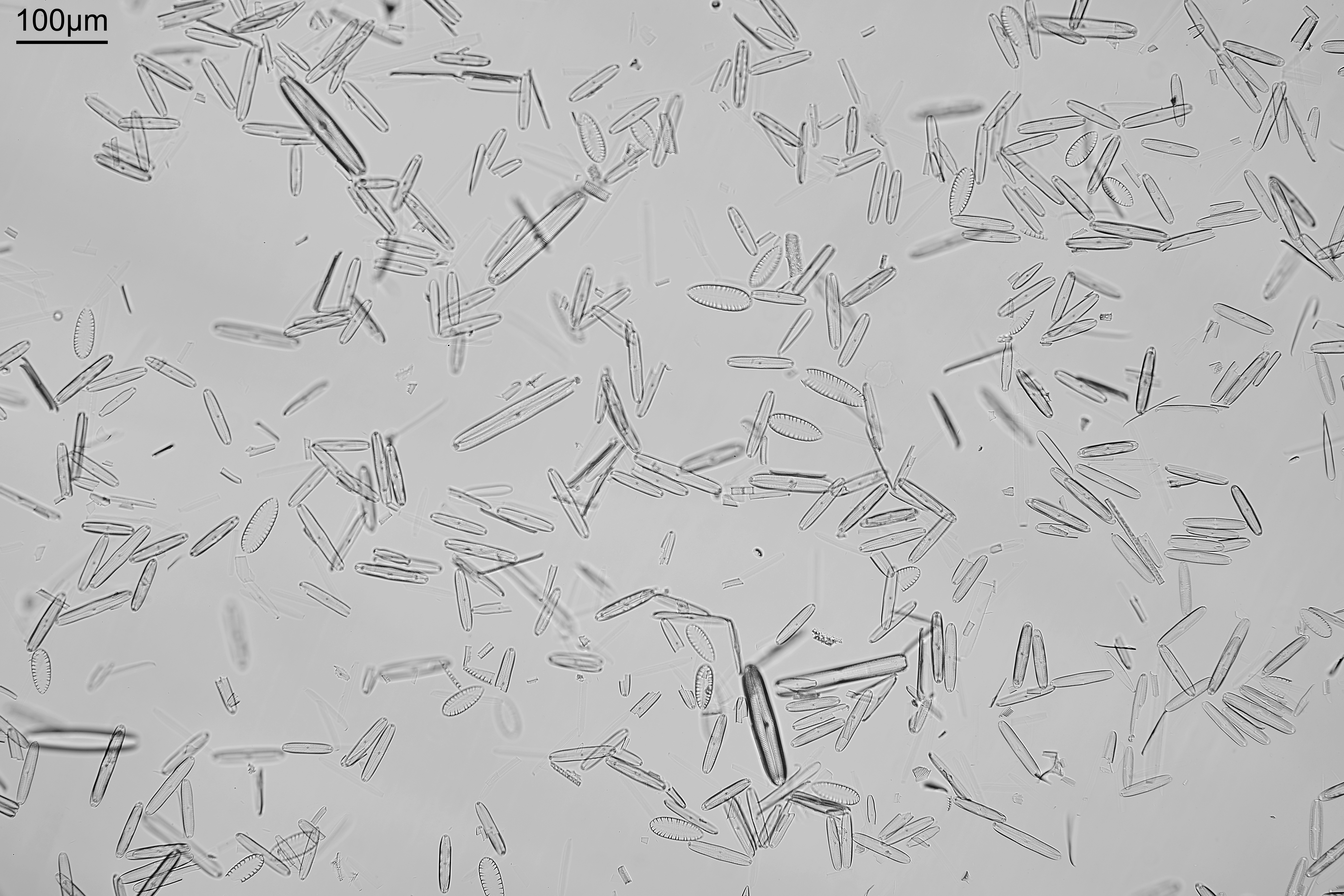
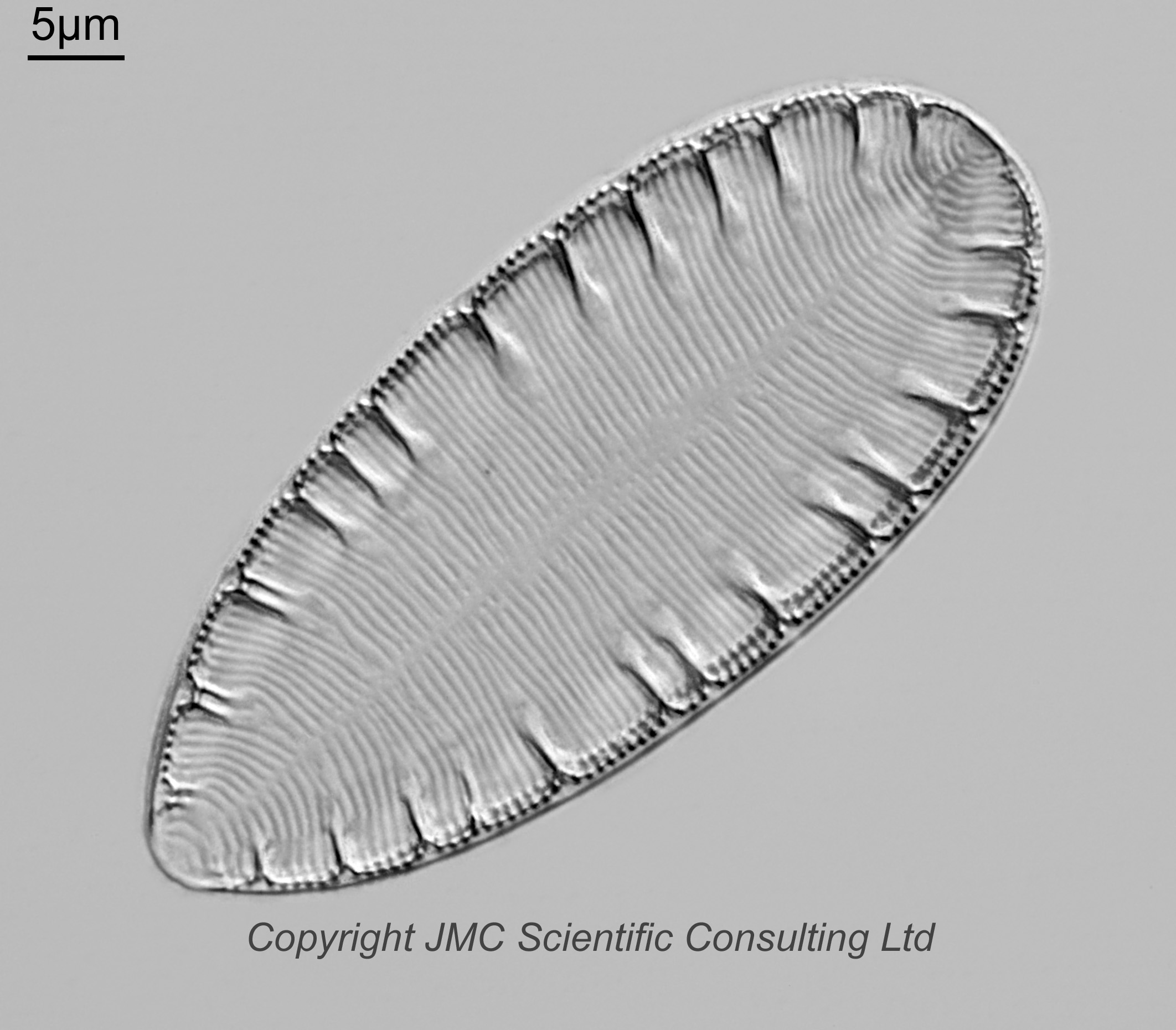
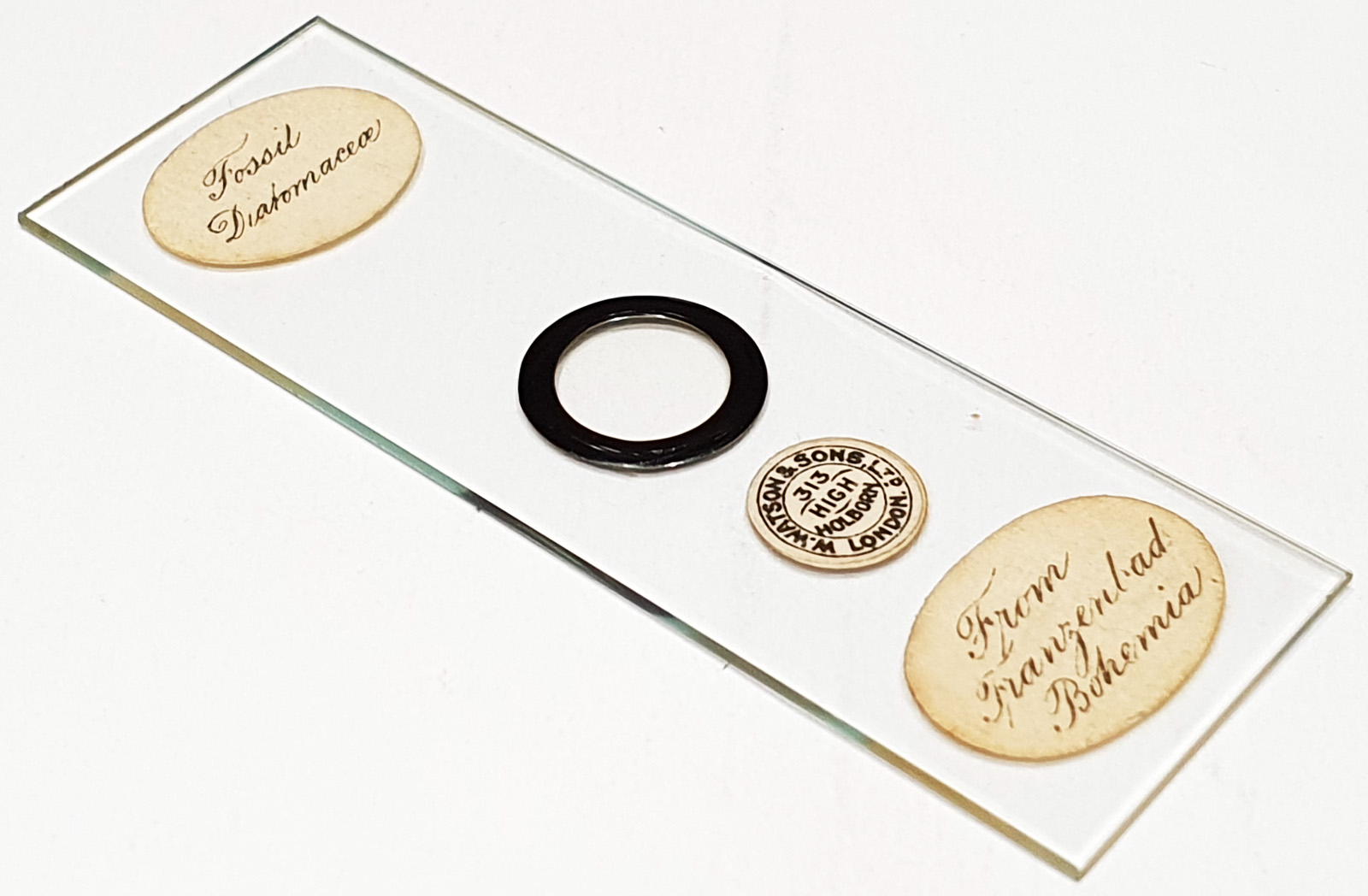
This is fossil material. I selected a couple of diatoms for imaging using the 63x Leitz Pl Apo 1.4 objective, oil immersion. Olympus Aplanat Achromat condenser, oil immersion, oblique lighting. 2.5x Nikon CF PL photoeyepiece. Monochrome converted Nikon d850 camera. Images stacked in Zerene (Pmax).
The first is a Surirella sp. Maybe Surirella lacrimula, although I am certainly not sure on that.
The other is an Anomoeoneis sp. Anomoeoneis sphaerophora varieties known for Franzensbad, and this looks to be a good match for that however I will leave it with a question mark for now.
Finally a departure from diatoms. A strew of Foraminifera from the Adriatic Sea.
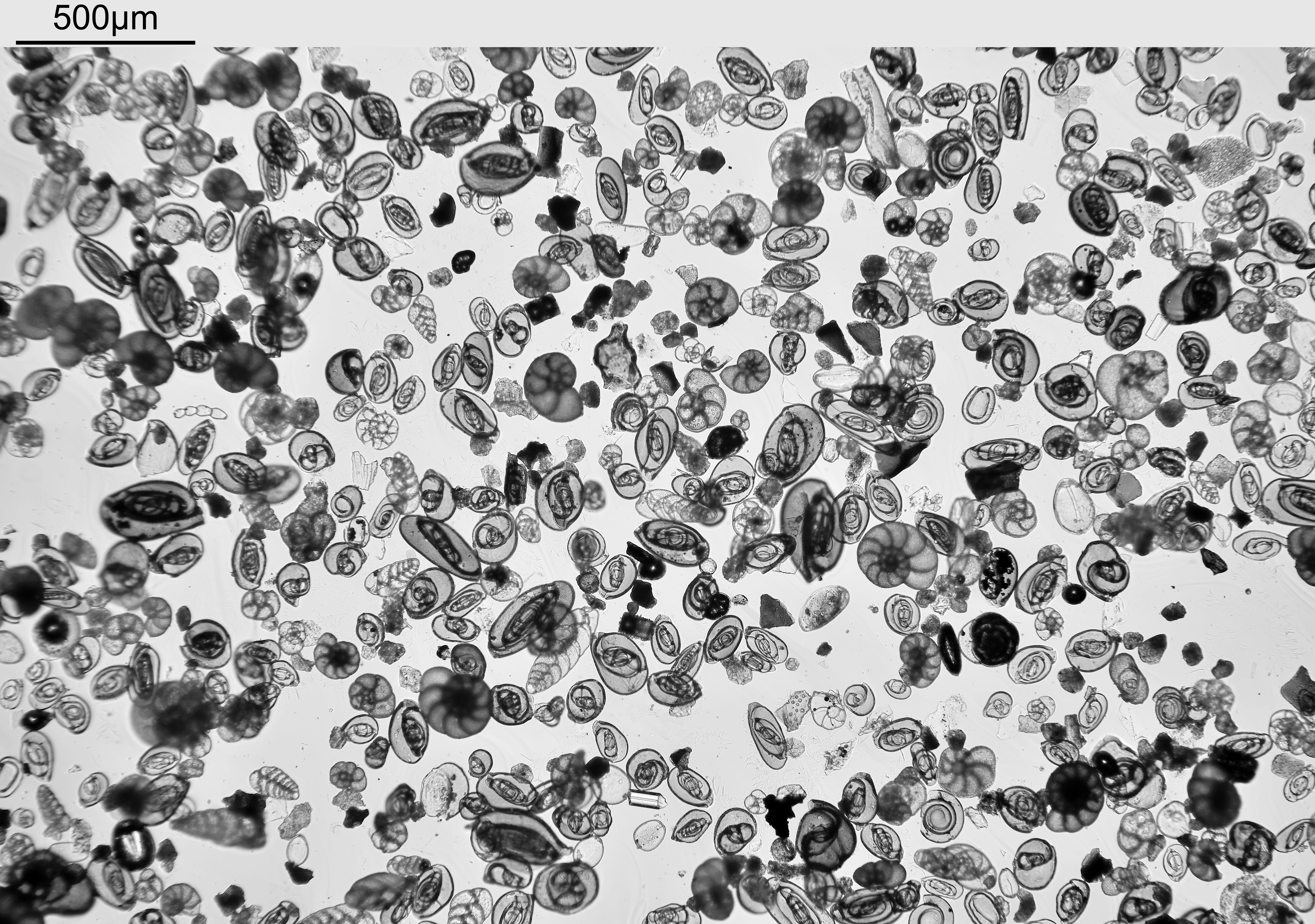
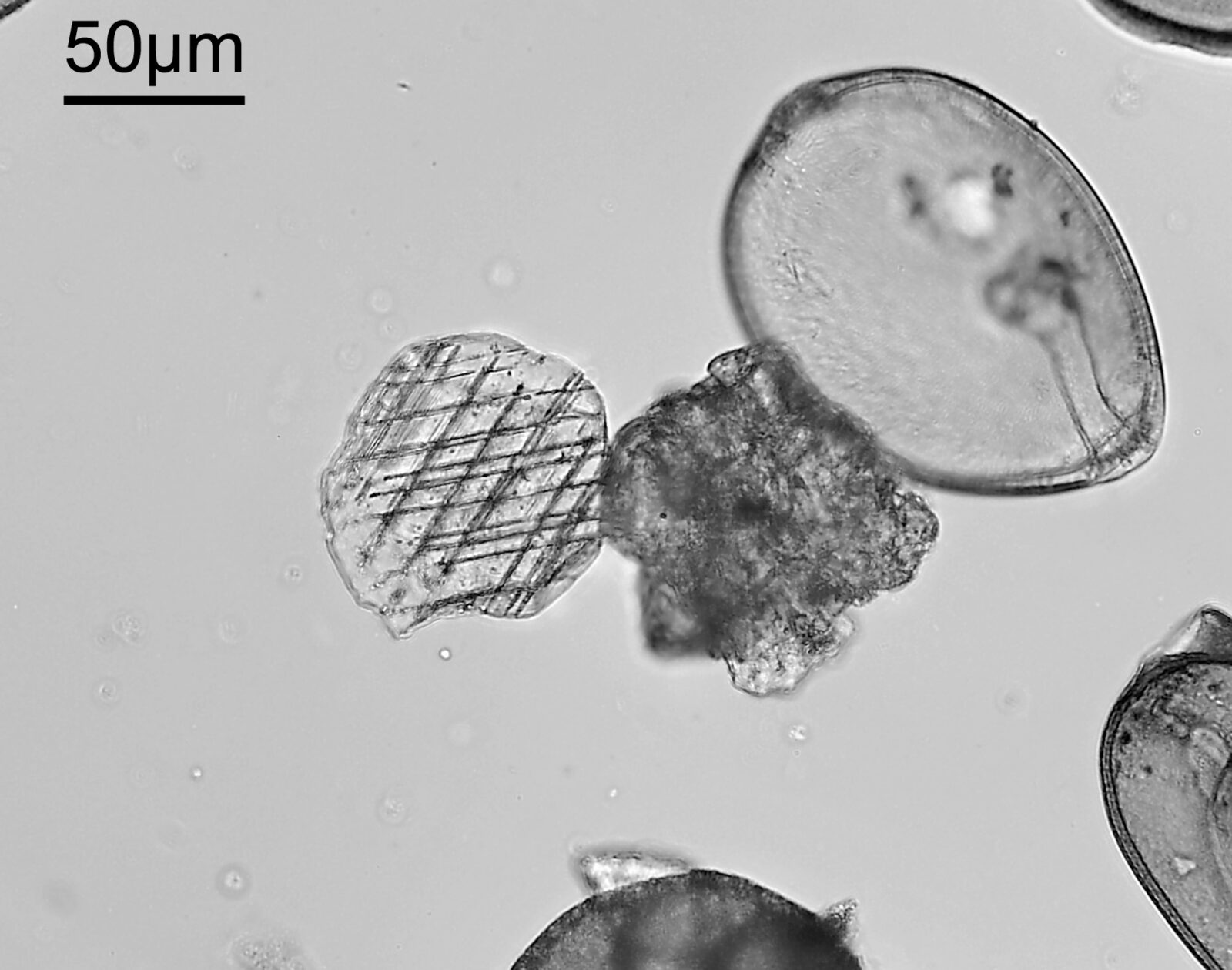
Quite a range of different looking species present. I also found a calcite crystal which shows the characteristic rhombic cleavage pattern (thank you to a geologist friend of mine for identifying this one).