This is a bit of special page for me, and a slightly bitter sweet one. I had hoped to write a paper on this material, but at the moment I do not have the time, and it could do with more analysis of the material.

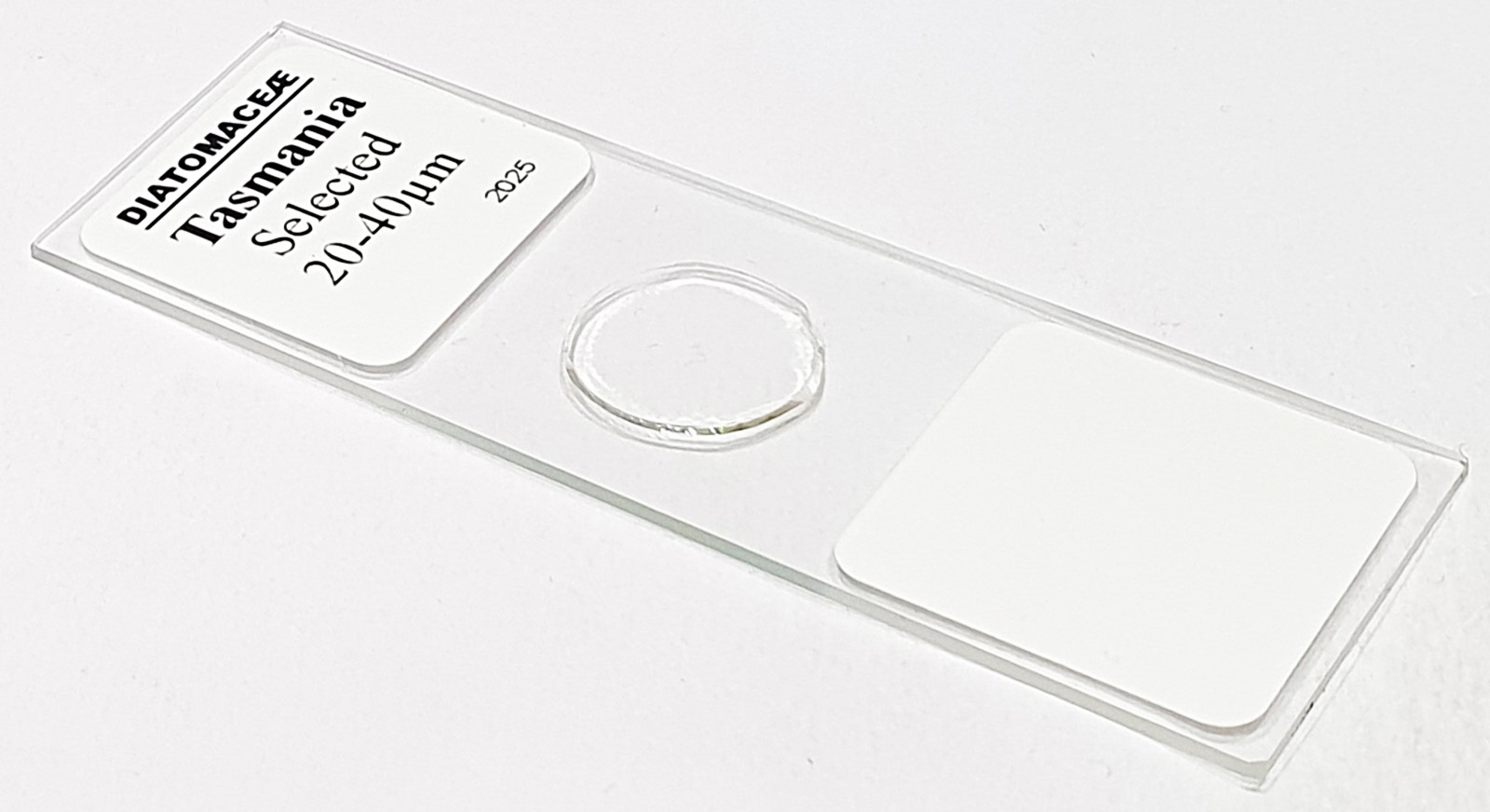
Tasmania has a wider varied and rich geology, but diatomite is quite rare there, with only a couple of small locations known. It is not commercially viable to mine, and very little is known about it. In 2025, I was fortunate enough to be given a small sample of diatomite from a site near Andover, and when I came back to the UK, one of my friends was kind enough to process the material for me, and produce me some strew slides and one arrangement of species he found while processing it.
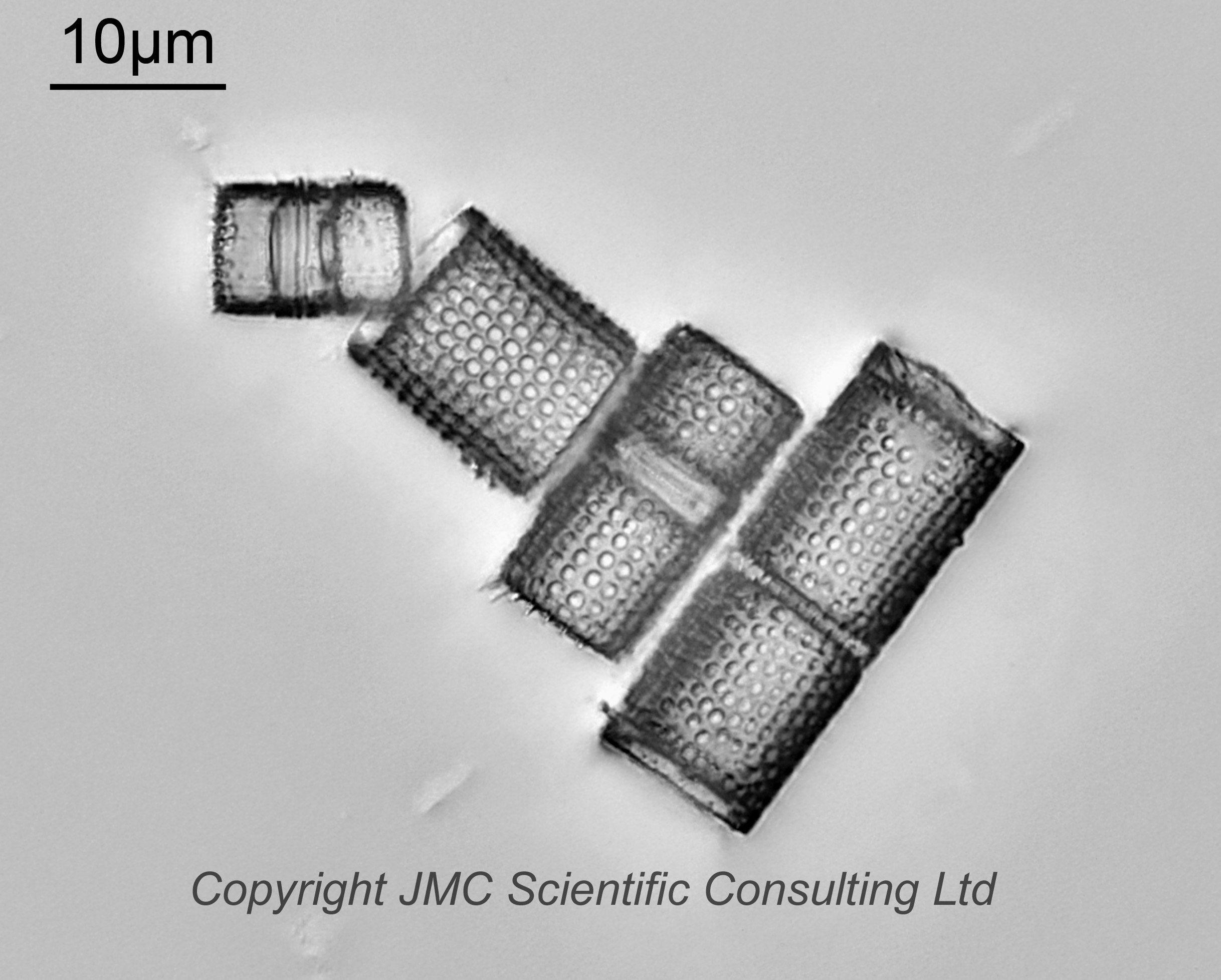
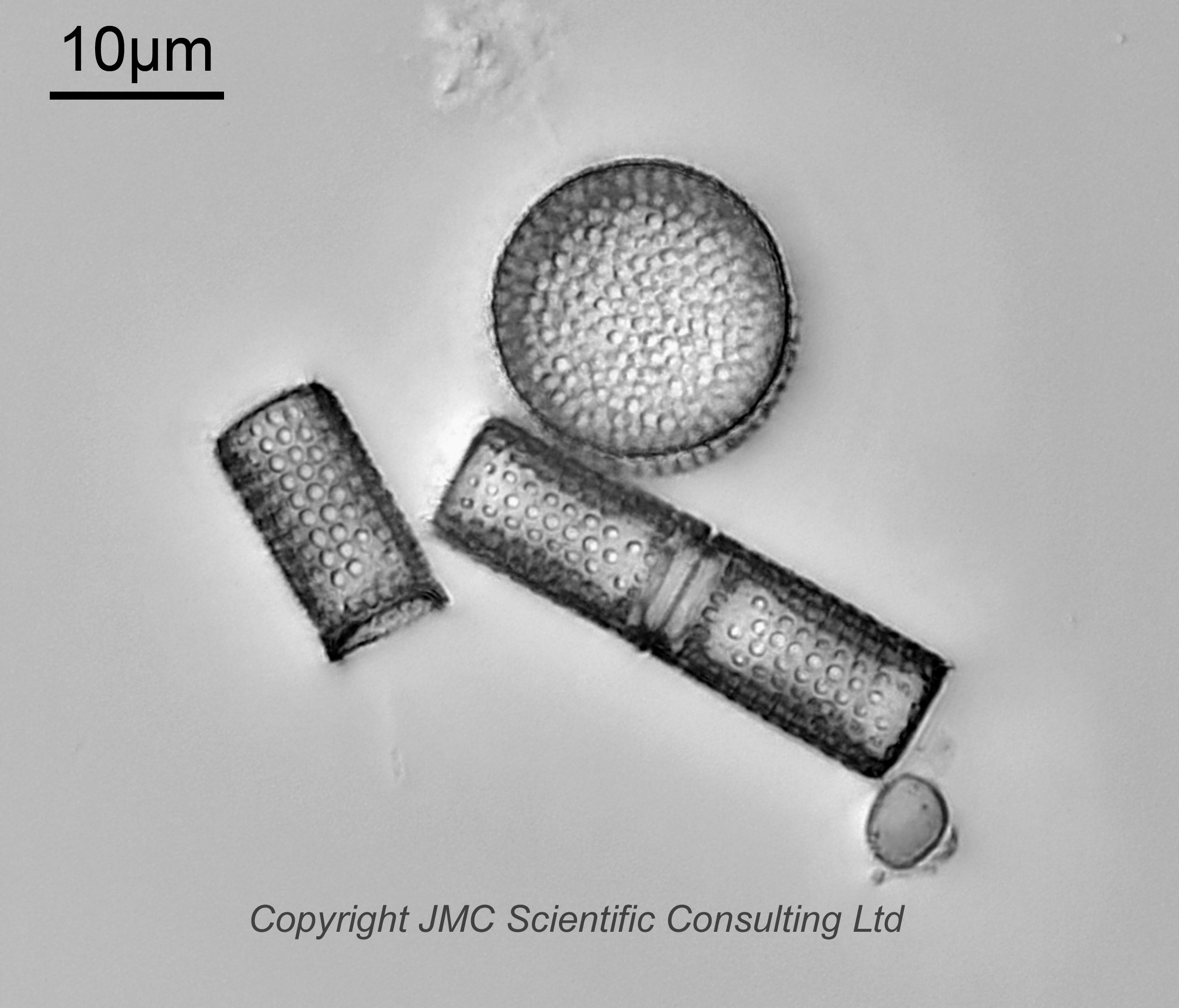
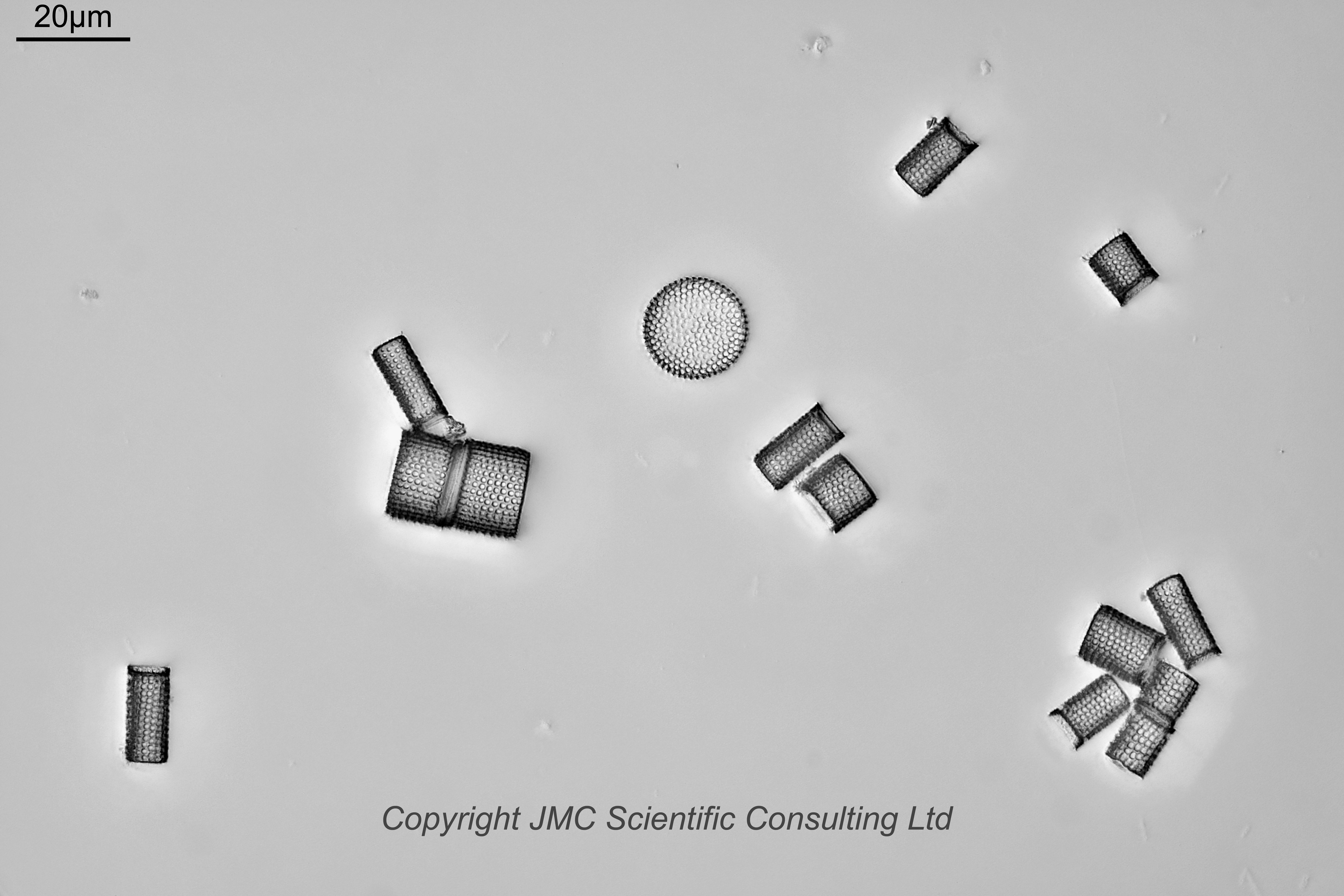
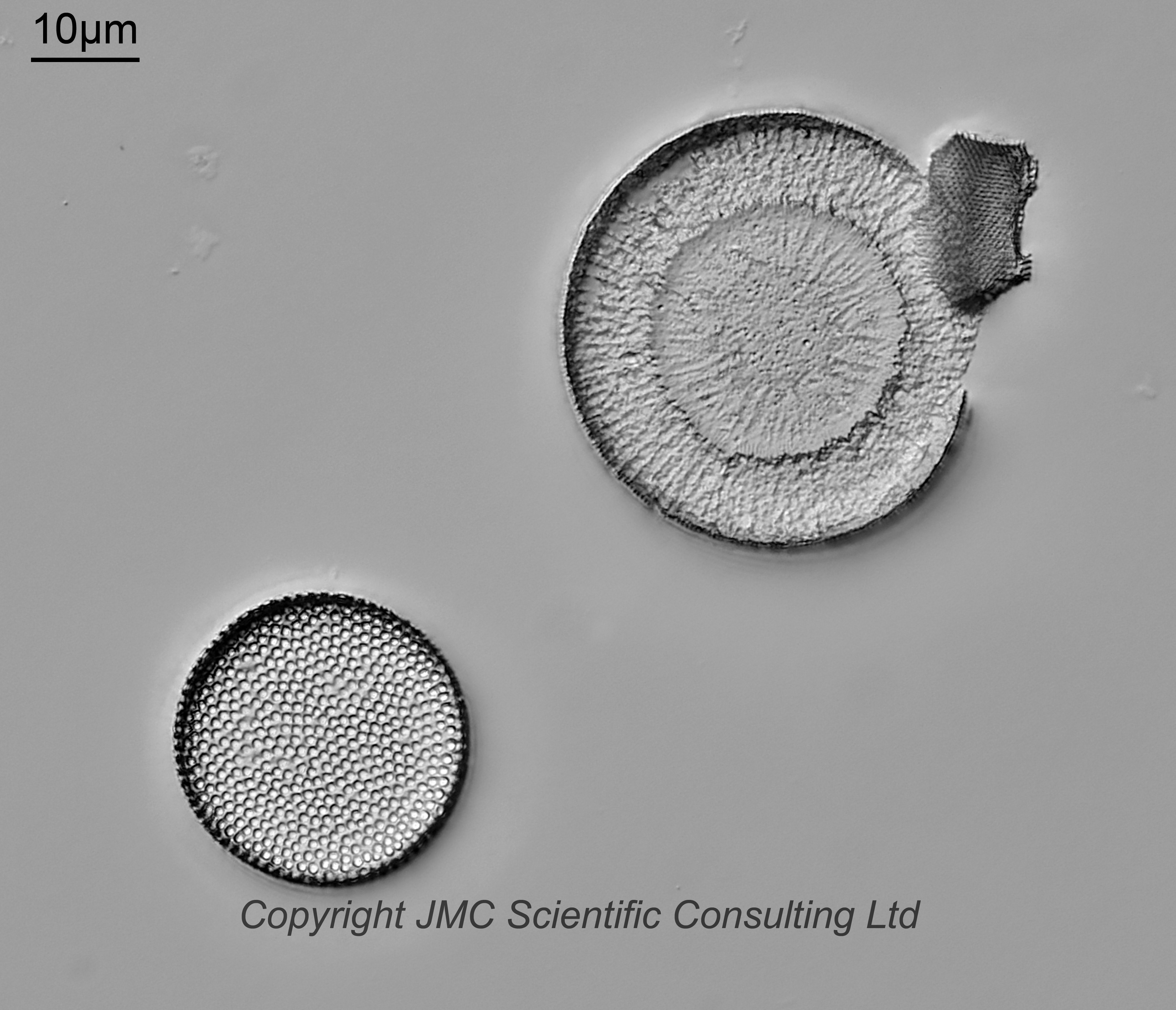
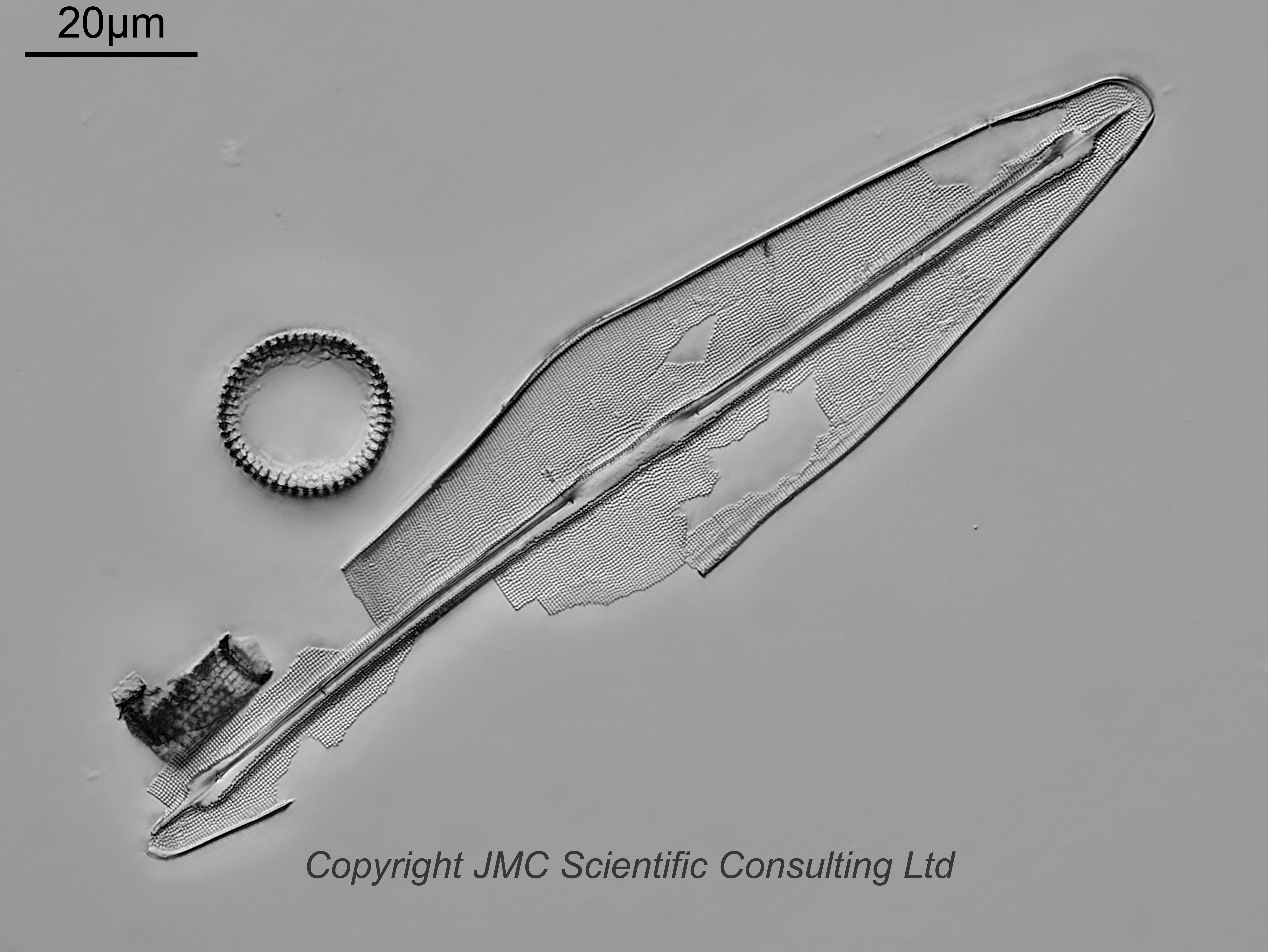
The main component (>99%) of the diatomite is Aulacoseira (what looks to be A. canadensis). This was originally reported as Melosira granulata, and it does indeed look similar. There are a few other genus present – Gomphonema, Cymbella, Melosira, Amphora, Pinnularia, Aulacoseira, Triceratium, Encyonema amongst others. The site is reported to be fossil freshwater.
Olympus BHB microscope using 450nm LED light. 63x Leitz Pl Apo 1.4 objective, oil immersion. Olympus Aplanat Achromat condenser, oil immersion, oblique lighting. 2.5x Nikon CF PL photoeyepiece. Monochrome converted Nikon d850 camera. Image stacked in Zerene (Pmax). The arrangement was made from 9 stacks using the 63x objective. I have reduced that in size for sharing here, as the original was over 240 megapixels in size.
I had hoped to write a paper on this material, but time was just not available for me to do that. By sharing it here, I want to get this material out there in the public domain so that an interested diatom researcher can see it and hopefully trigger some new work.
I’d like to thank a few people here. Firstly, Ralph Bottrill (Minerals Resources Tasmania and University of Tasmania) for providing me with a sample of the diatomite. Secondly, Prof Pat Kociolek, University of Colorado, Boulder for helping with identification of the diatoms. Finally, my diatomite processor and slide maker, who wishes to remain anonymous, but without whom I wouldn’t have any slides to share. Thank you all, for your help with this. I hope it goes on to start some really interesting work.