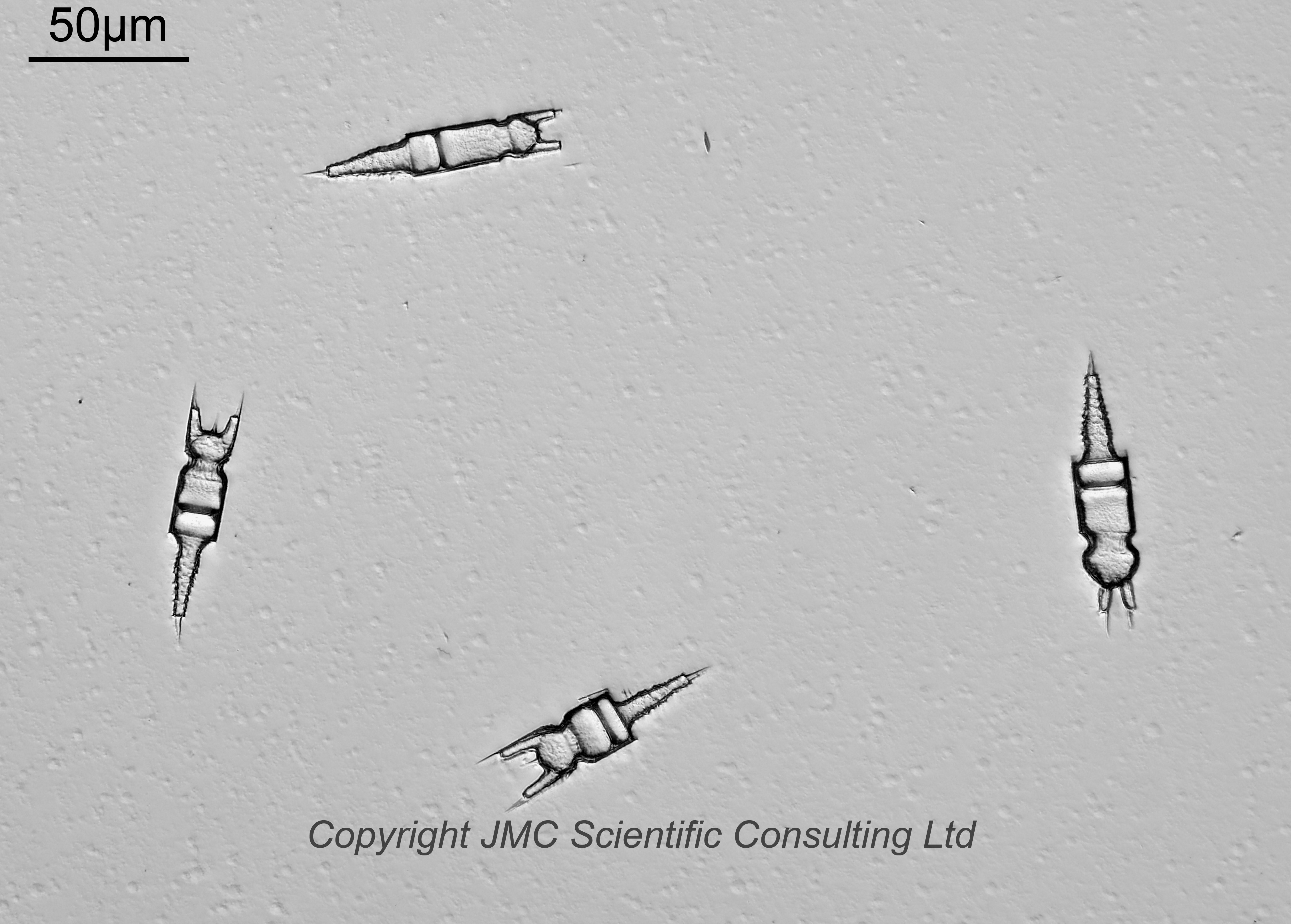
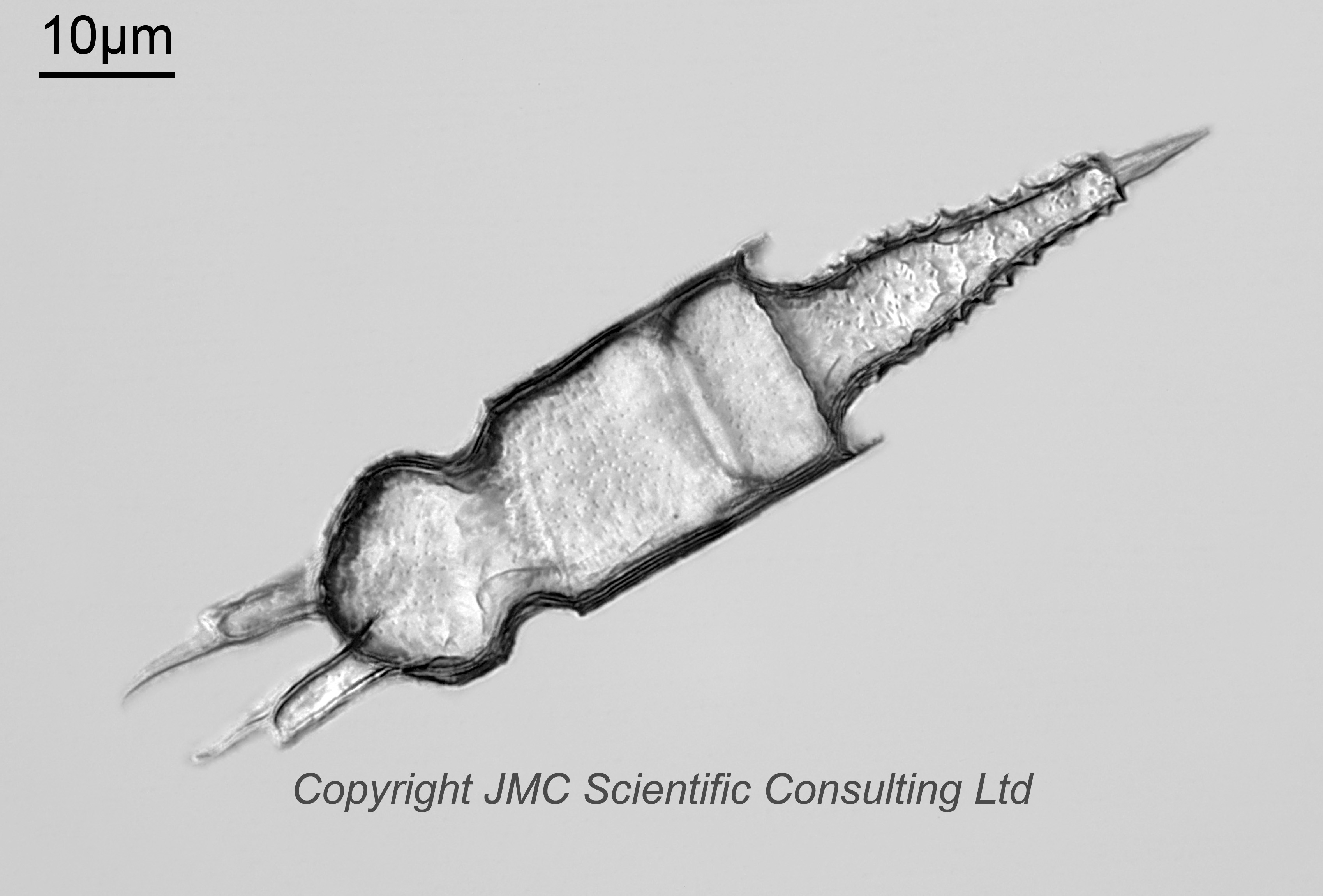
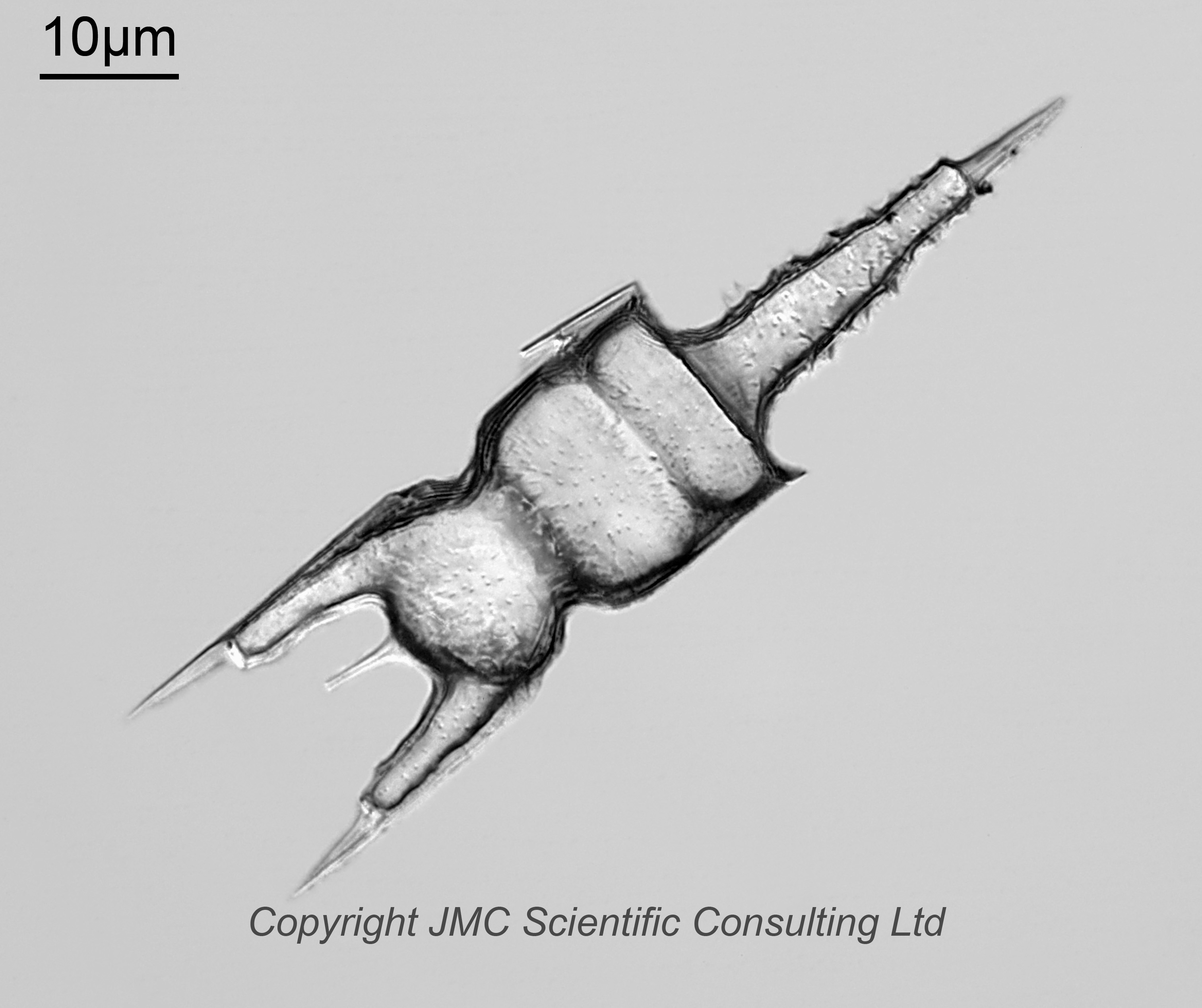
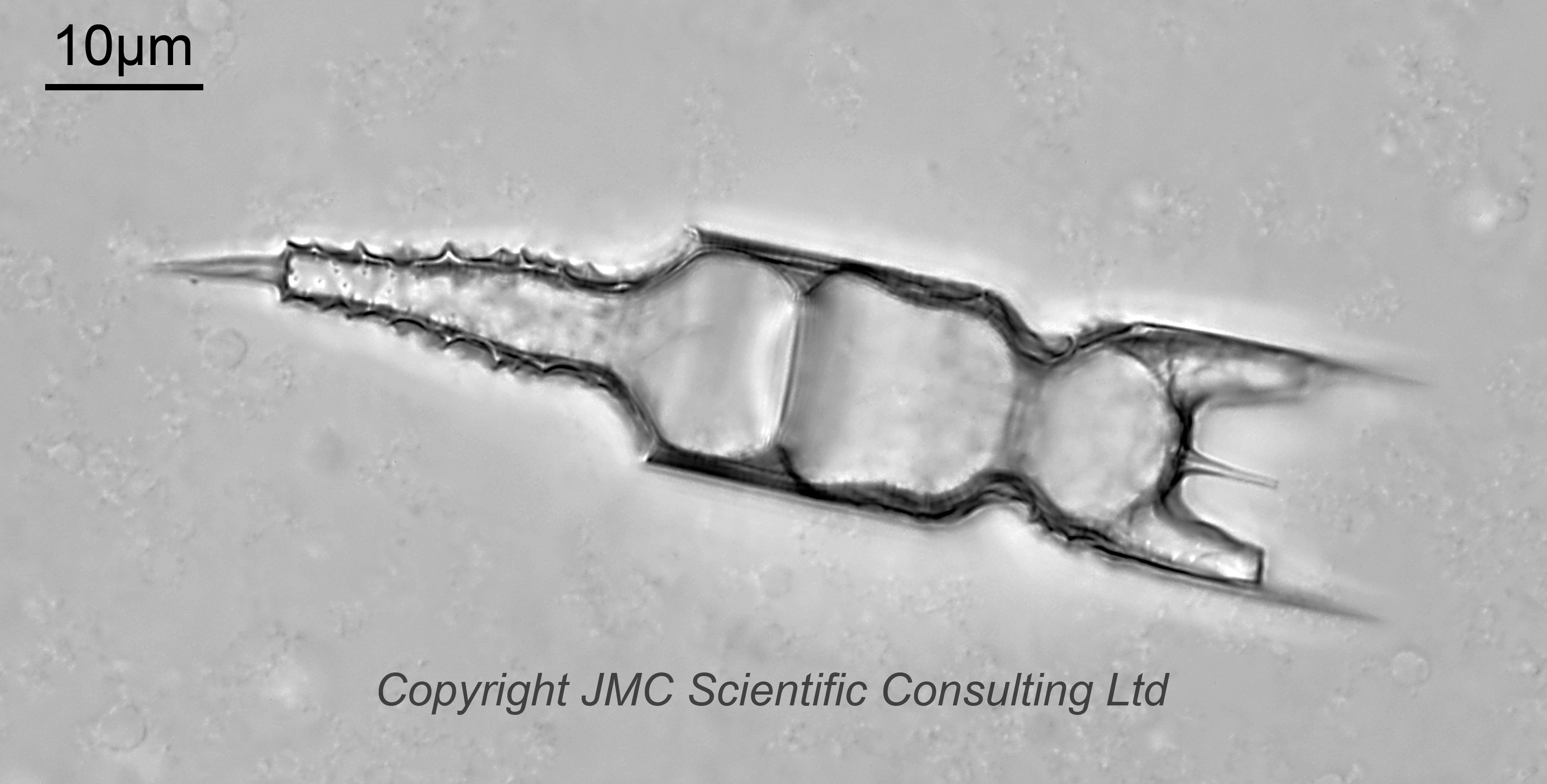
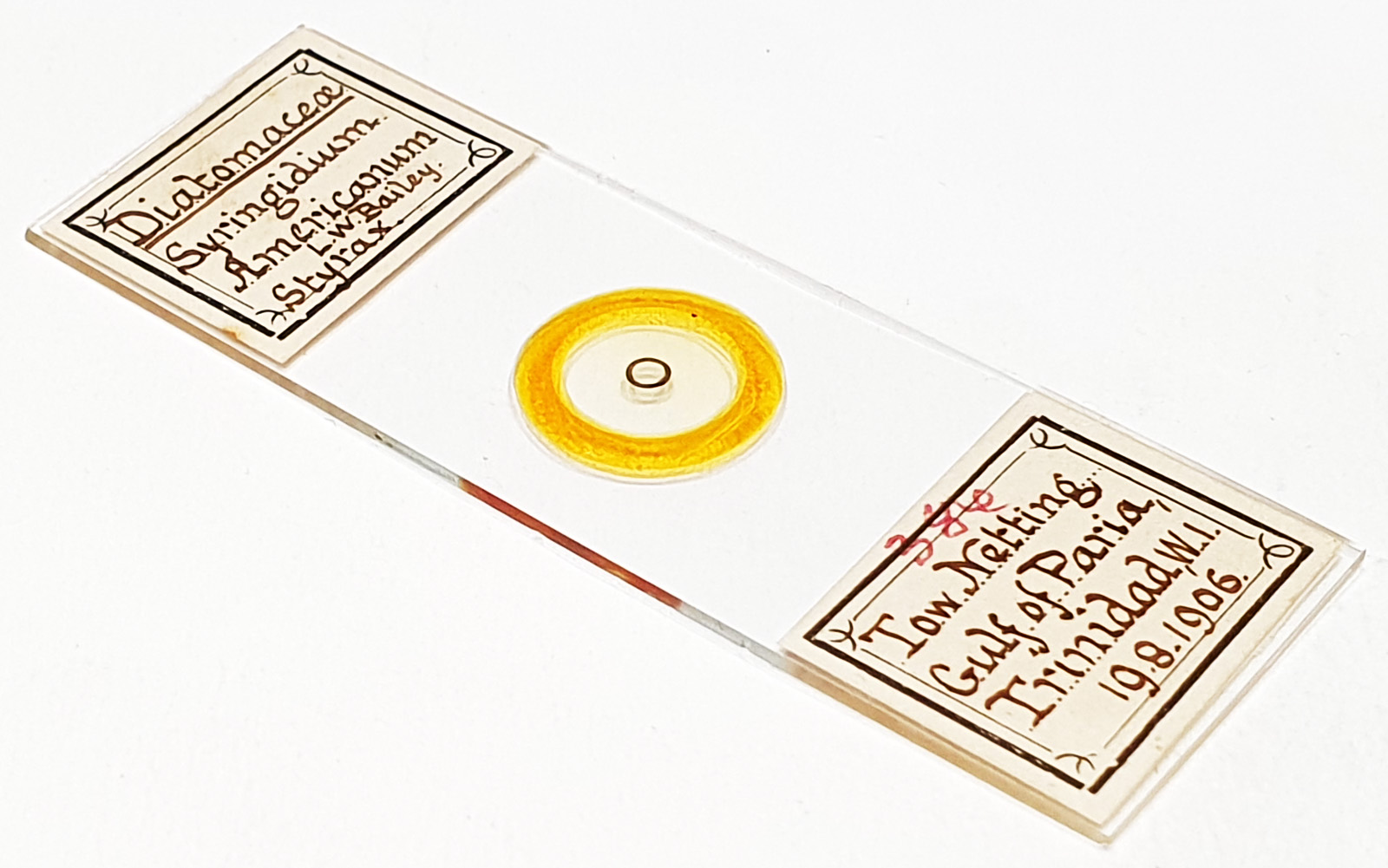
An arrangement of four Syringidium americanum from tow netting, Gulf of Paria, Trinidad, West Indies. Mounted in Styrax and dated 19.8.1906. Prepared by Henry Morland. Slide from the collection of Howard Lynk. Olympus BHB microscope using 450nm LED light. I selected two for stacking at higher resolution. 63x Leitz Pl Apo 1.4 objective, oil immersion. Olympus Aplanat Achromat condenser, oil immersion, oblique lighting. 2.5x Nikon CF PL photoeyepiece. Monochrome converted Nikon d850 camera. Image stacks prepared in Zerene (Pmax).
Syringidium americanum J.W.Bailey 1861. Published in: Bailey, L.W. (1861). New species of microscopical organisms, chiefly from the River Para. Proceedings of the Boston Society of Natural History 8: 162-169. Page 165, no figure. This name is currently regarded as a synonym of Cerataulina bicornis (Ehrenberg) Hasle. Source of synonymy: Hasle, G.R. & Sims, P.A. (1985). The morphology of the diatom resting spores Syringidium bicorne and Syringidium simplex. British Phycological Journal 20: 219-225, 11 figs.
Quite a striking looking thing, and seems to be a resting spore. Note the hollow spine at the rear in between the two linking spines at the rear (especially visible on the single unstacked frame, but also seen in one of the stacks). Another of my ‘wish list’ diatoms.