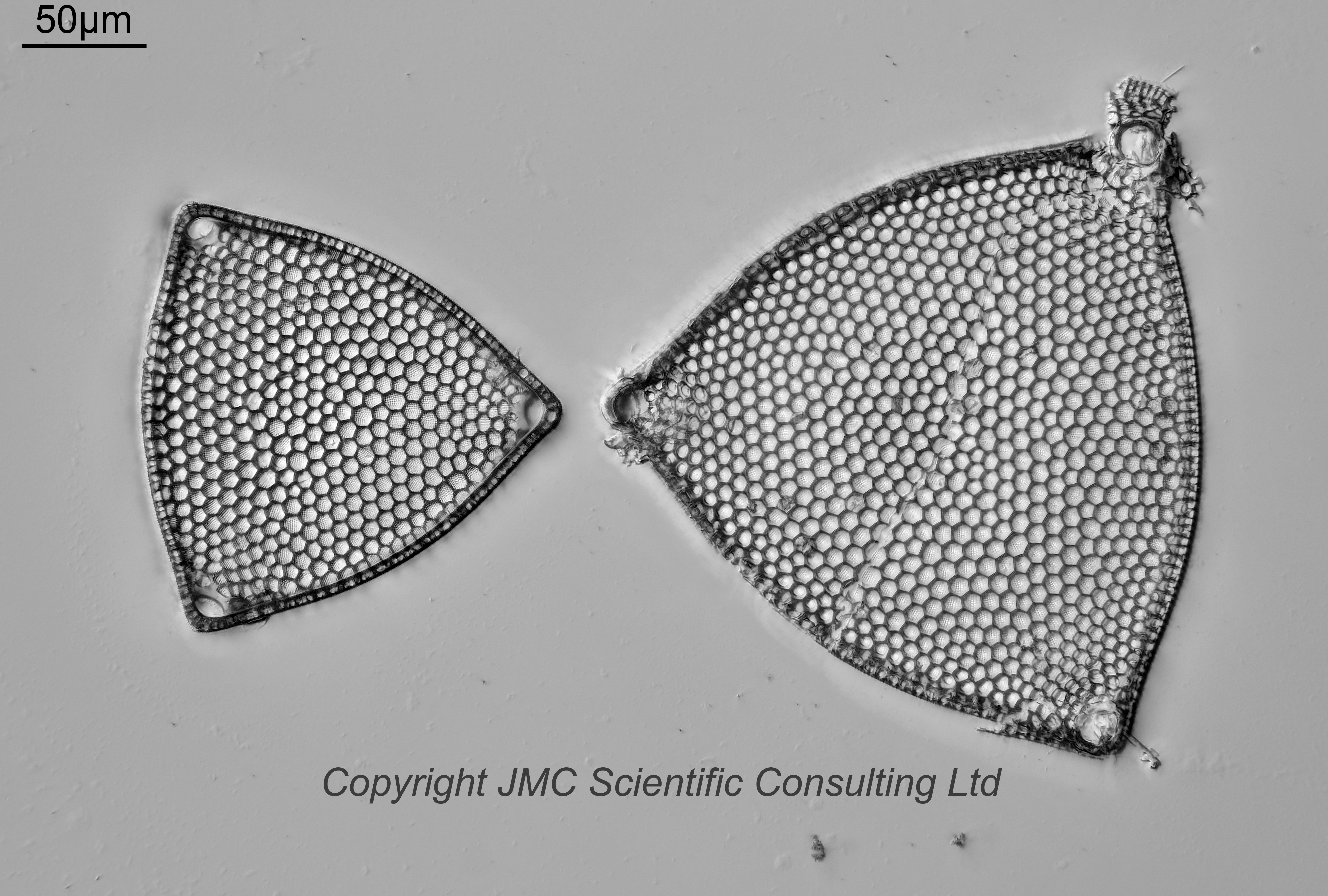
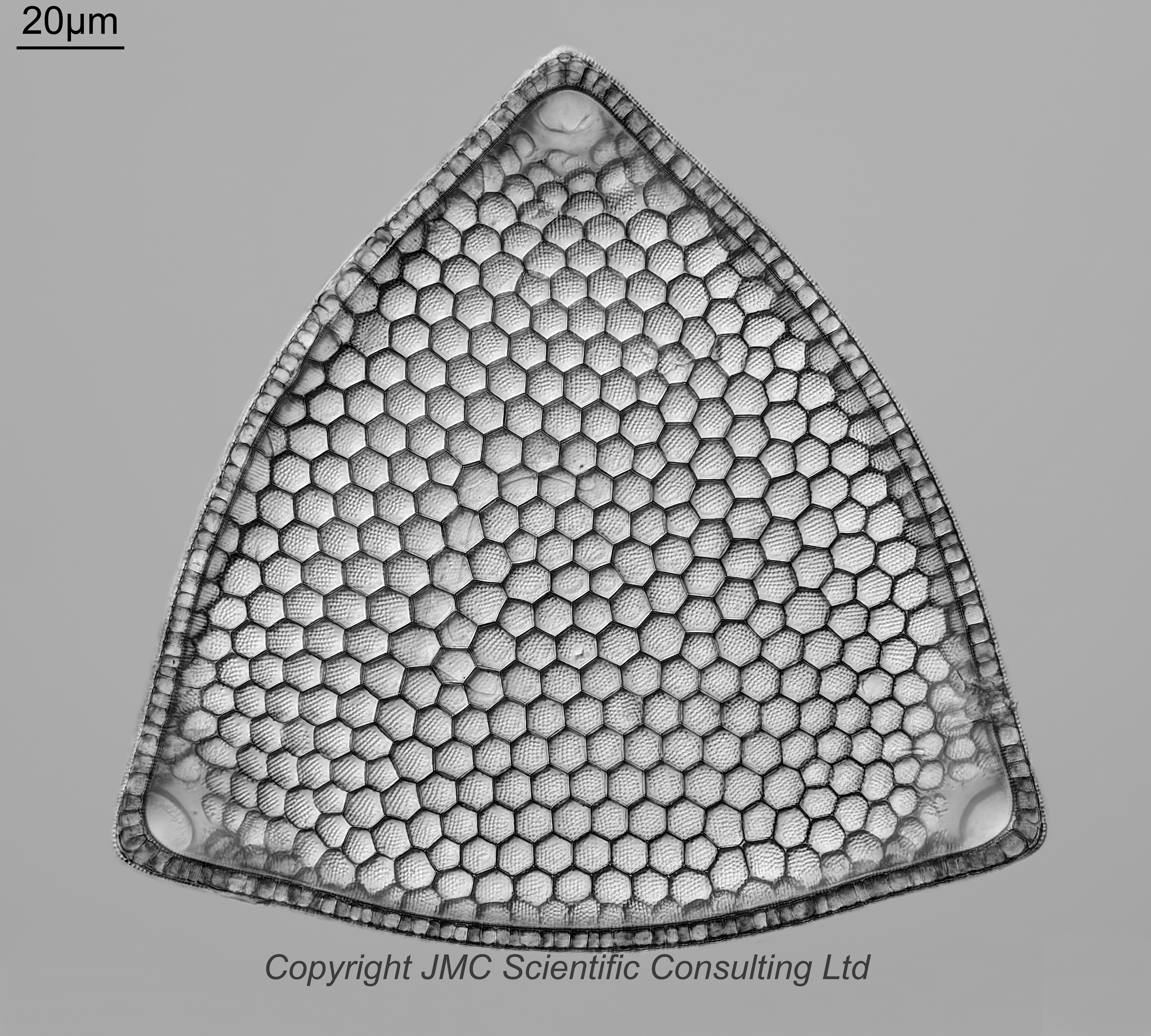
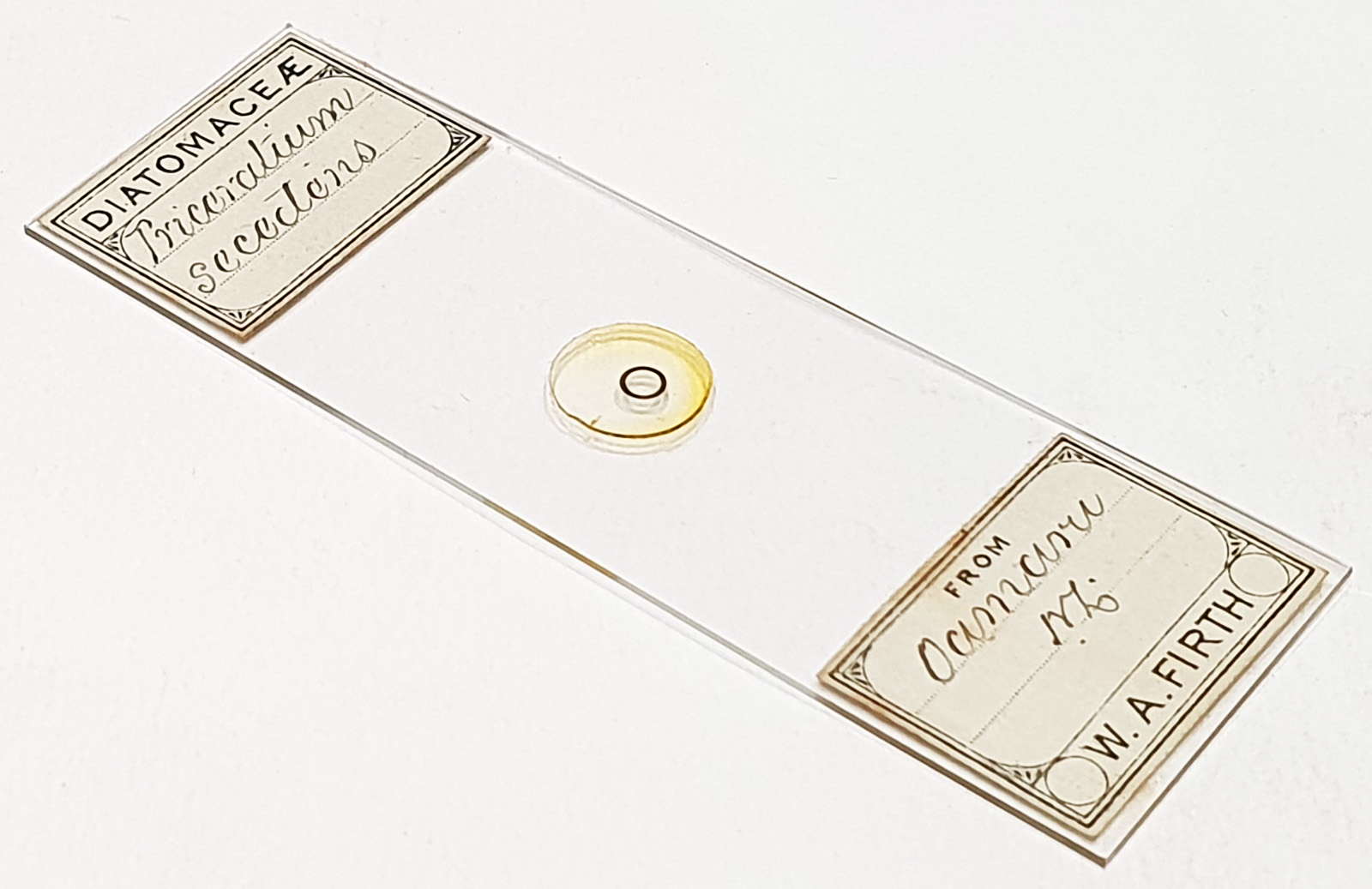
Two examples of Triceratium secedens from Oamaru, New Zealand. Prepared by WA Firth. Olympus BHB microscope using 450nm LED light. The smaller one was also imaged with a 63x Leitz Pl Apo NA 1.4 objective, oil immersion. Olympus Aplanat Achromat condenser, oil immersion, oblique lighting. 2.5x Nikon CF PL photoeyepiece. 11mm removed from the tube to the camera to increase the field of view. Monochrome converted Nikon d850 camera. 71 images stacked in Zerene (Pmax). This one is a view from the underside, with the rim to the coverslip. Full disclosure, I wanted to image this with the 63x objective for the best resolution, however even with 11mm of the tube the camera removed to increase the field of view, the very top of the apex of diatom was clipped off with the rest of the diatom filling the frame. I recreated the missing piece in Photoshop to stop it from having a sharp flat line there. While it is a recreation, I think the part replaced is so small as to not be a problem, and it looks better this way.
Triceratium secedens A.W.F.Schmidt 1888. Published in: Schmidt, A.[W.F.] (1888). Atlas der Diatomaceen-kunde Series III (Heft 31-32). pp. pls. 121-128. Leipzig: Fuess Verlag (R. Reisland). Plate 126, Figure 3. This name is currently regarded as a synonym of Biddulphia secedens (A.W.F.Schmidt) A.Mann. Source of synonymy: Bassler, R.S. (1909). Dendroid graptolites of the Niagaran Dolomites at Hamilton, Ontario. Bulletin of the United States National Museum 65: 1-76, 91 figures, 5 plates.