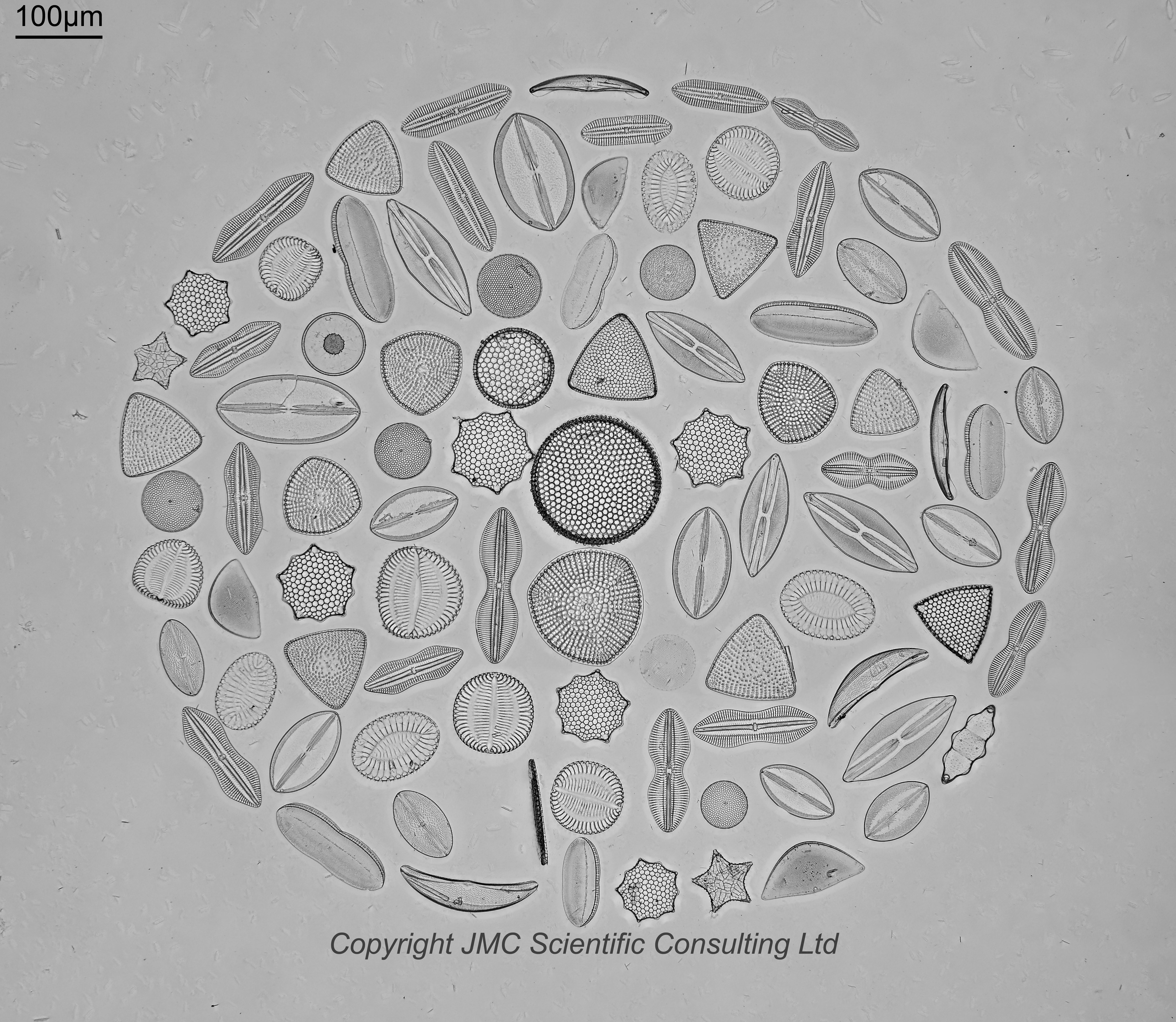
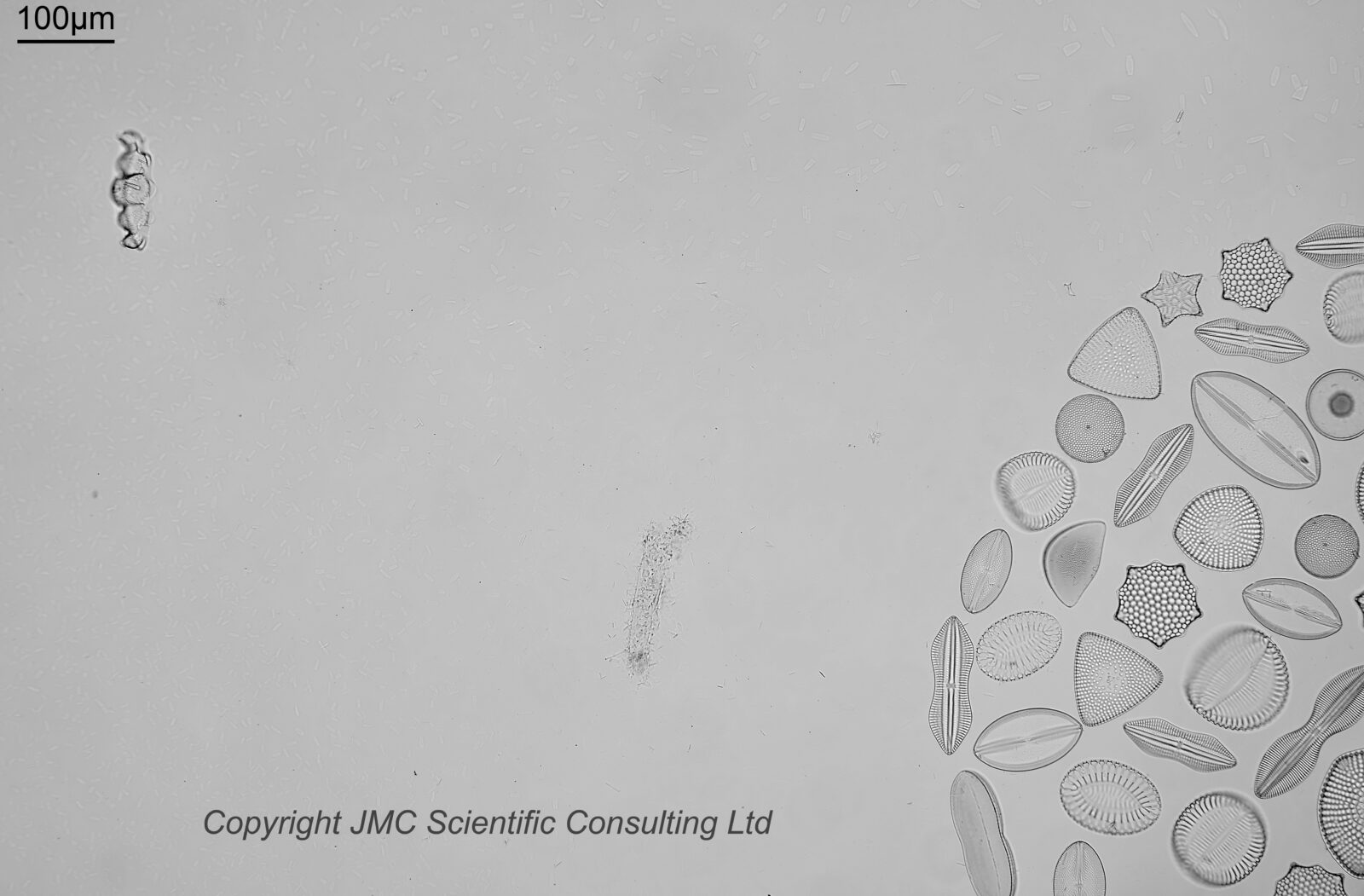
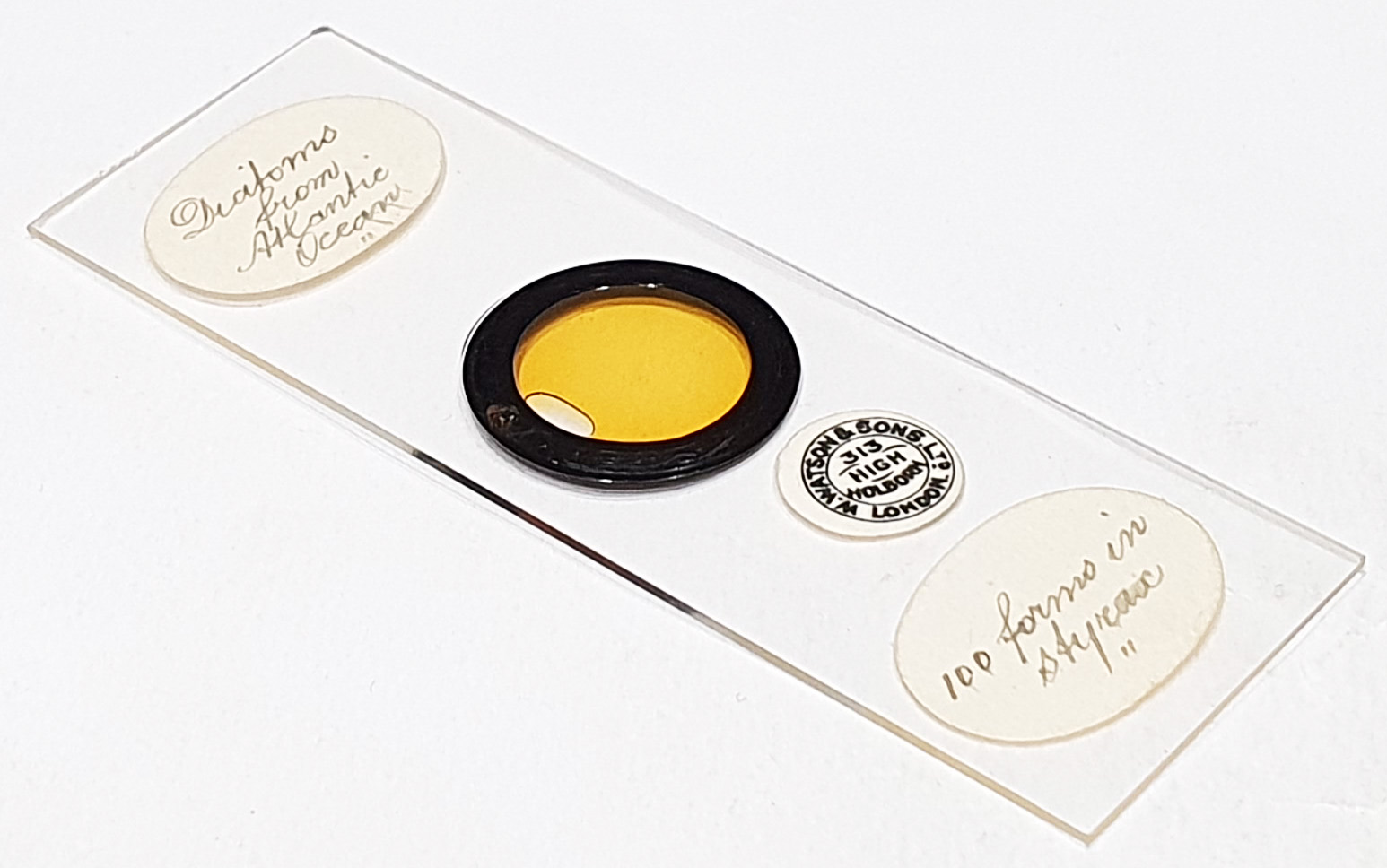
An arrangement of 100 forms from the Atlantic Ocean. Mounted in Styrax. Prepared by Watson and Sons Ltd. The arrangement looks intact, but there is 1 diatom to the upper left. Also, one towards the bottom of the arrangement has turned on its side. Mountant is yellowed, and has visible crystals throughout. Olympus BHB microscope using 450nm LED light. I selected a few diatoms for imaging at higher resolution. 63x Leitz Pl Apo 1.4 objective, oil immersion. Olympus Aplanat Achromat condenser, oil immersion, oblique lighting. 2.5x Nikon CF PL photoeyepiece. Monochrome converted Nikon d850 camera. Image stacks prepared in Zerene (Pmax).
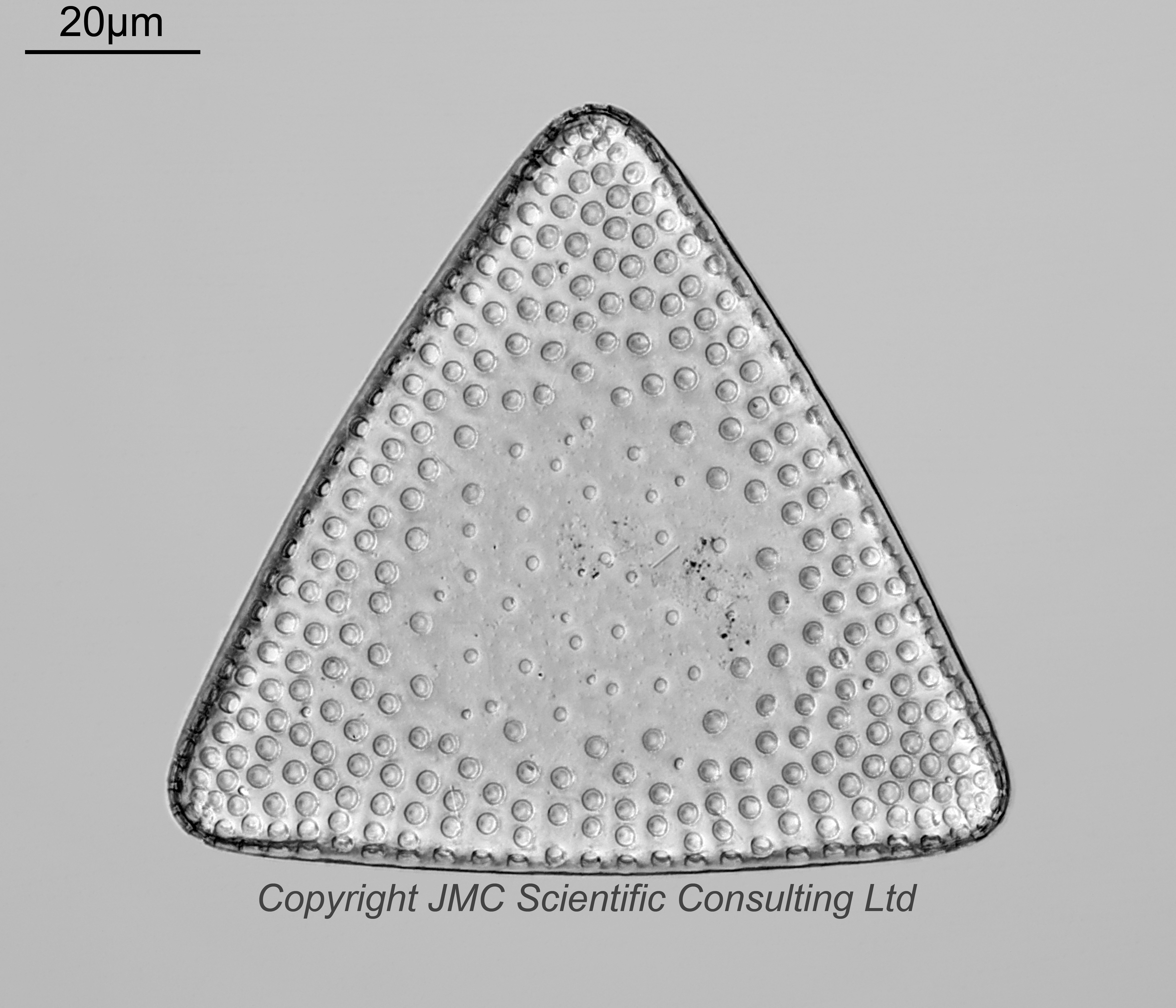
Stictodiscus sp. I originally thought this might be Triceratium parallelum forma trigona but it really doesn’t look right for that.
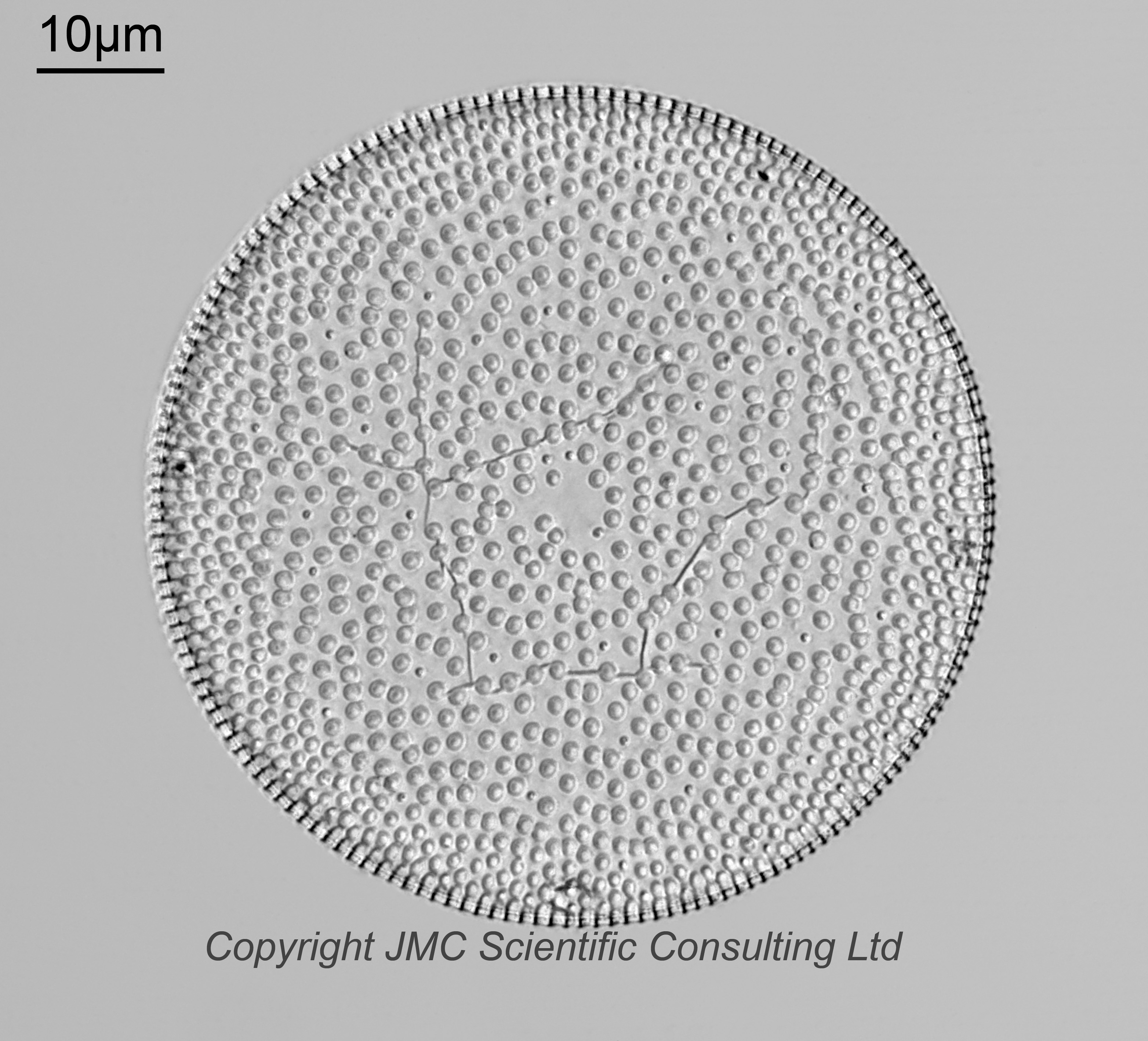
Azpeitia sp. Extremely tentative even for the Genus. Doesn’t look like a Coscinodiscus to me hence thinking maybe Azpeitia.
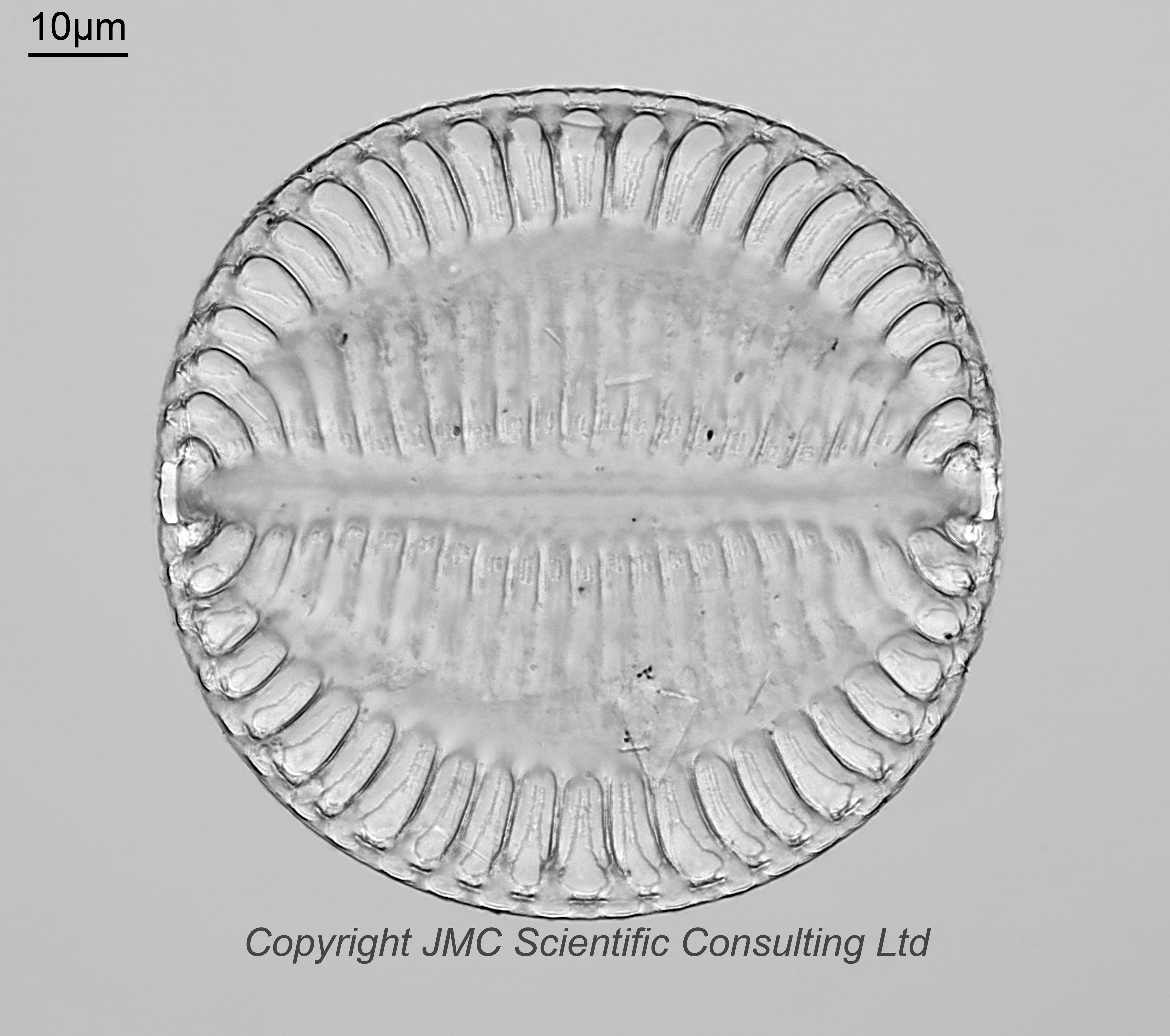
Campylodiscus schmidtii. Looks like Campylodiscus schmidtii from Deby’s Campylodiscus book from 1891 (Plate 1, Figure 11). Also C. schmidtii Schmidt’s Atlas (Plate 53, Figure 10) looks to be a good match as well.
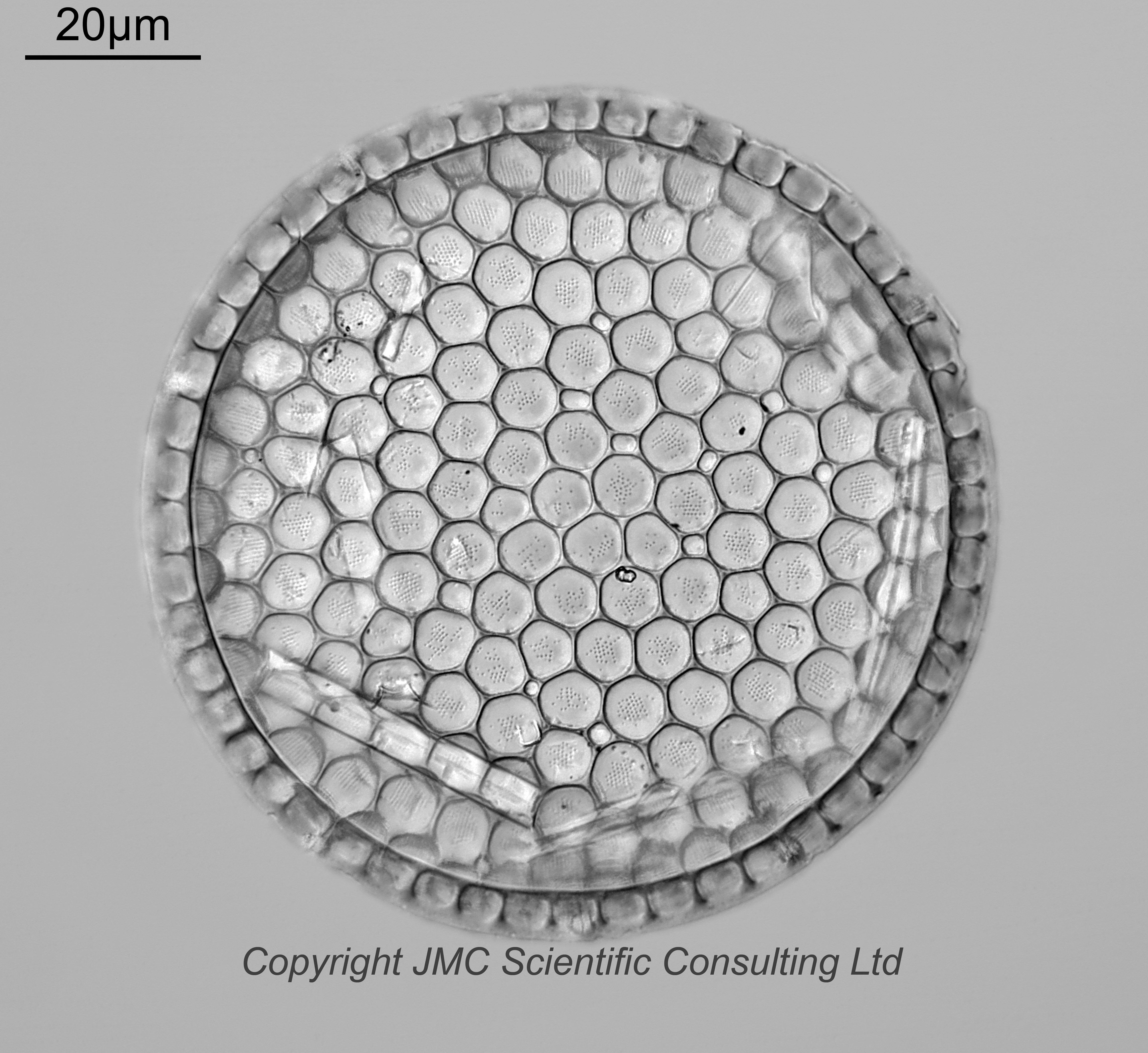
Endictya sp. Underside view, with the rim to the coverslip. I originally thought this might be a Shionodiscus sp. Maybe Shionodiscus oestrupii (Ostenfeld) A.J.Alverson, S.-H.Kang & E.C.Theriot 2006. Published in: Alverson, A.J., Kang, S.-H. & Theriot, E.C. (2006). Cell wall morphology and systematic importance of Thalassiosira ritscheri (Hustedt) Hasle, with a description of Shionodiscus gen. nov. Diatom Research 21(2): 251-262, 14 fig. Page 258. Synonym: Thalassiosira oestrupii (Ostenfeld) Hasle 1972. However I now think it is too big for that and maybe an Endictya sp. Maybe E. margaritifera (Mann 1925 Contributions to the biology of the Philippine Archipelago and adjacent regions, vol. 6 . Papers on Philippine diatoms, annelids, hydroids, echinoids, and mollusks, pt. 1: Marine diatoms of the Philippine Islands, pages 75,76, it is the right ballpark size for this). Nice patterning – looks like a Triceratium in the individual compartments.
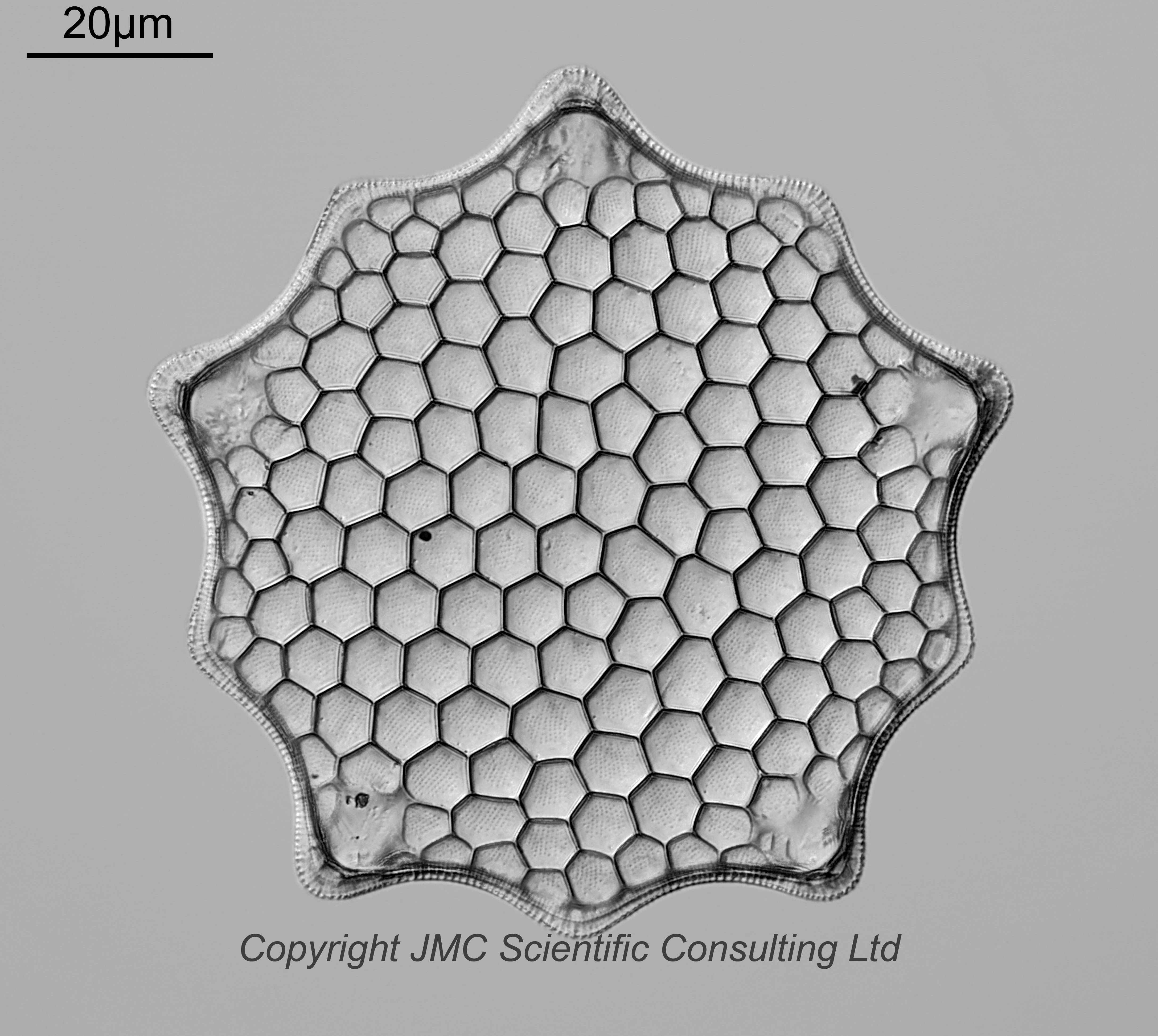
Triceratium campechianum. Another underside view with the rim to the coverslip. Fairly sure on this one although it may well be known by different names. USGS Plate 9 “Marine diatoms from Campeche Bay”, Figure 2-4, Triceratium campechianum Grunow in Cleve 1878, interior valve. See Schmidt’s Atlas (1874-1959, pl. 78, figs. 18-20) as T. decangulatum on a selected slide HC 814, which is probably an invalid name. There is a considerable difference in valve morphology between the original figure of Triceratium campechianum Grunow in Cleve (1878, pl. 5, fig. 28) and those in Schmidt’s Atlas (1874-1959). Schmidt’s drawings agree exactly with the specimens pictured here. This name is currently regarded as a synonym of Biddulphia campeachiana (Grunow) C.S.Boyer.
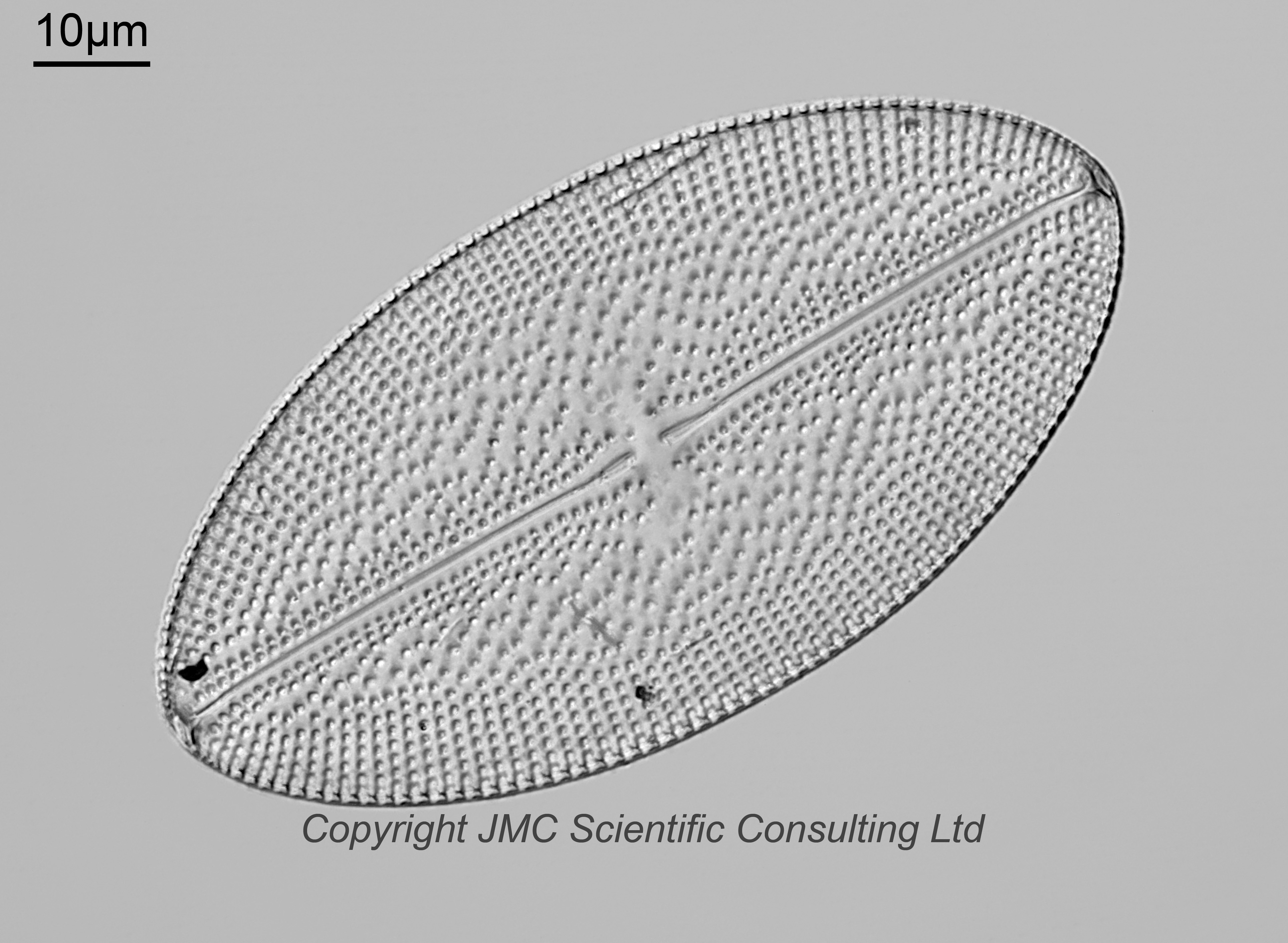
Lyrella praetexta. Fairly sure with this one, although it may be a variant. Also known as Navicula praetexta.