Two strew slides from Benllech Bay, Anglesey (spelt Anglesea on the slides). Good range of species present. Prepared by Richard Gosden. Olympus BHB microscope using 450nm LED light. First is mounted in Naphrax.
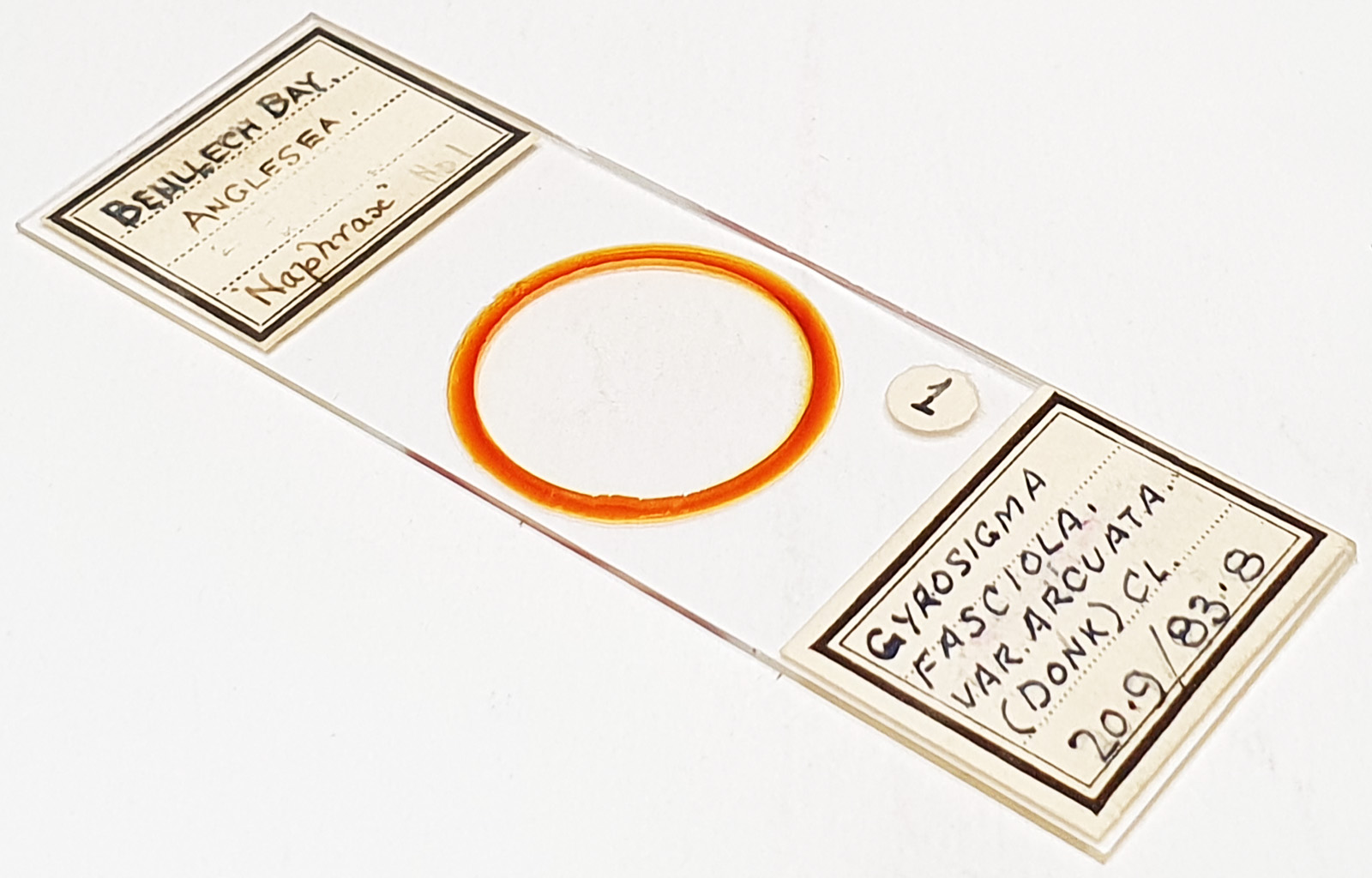
Slide has ‘Gyrosigma fasciola var. arcuata‘ written on it, but I didn’t see any (that were obvious anyway). As well as the wider field of view of the strew I imaged a few using the 63x Leitz Pl Apo 1.4 objective, oil immersion. Olympus Aplanat Achromat condenser, oil immersion, oblique lighting. 2.5x Nikon CF PL photoeyepiece. Monochrome converted Nikon d850 camera. Images stacked in Zerene (Pmax).
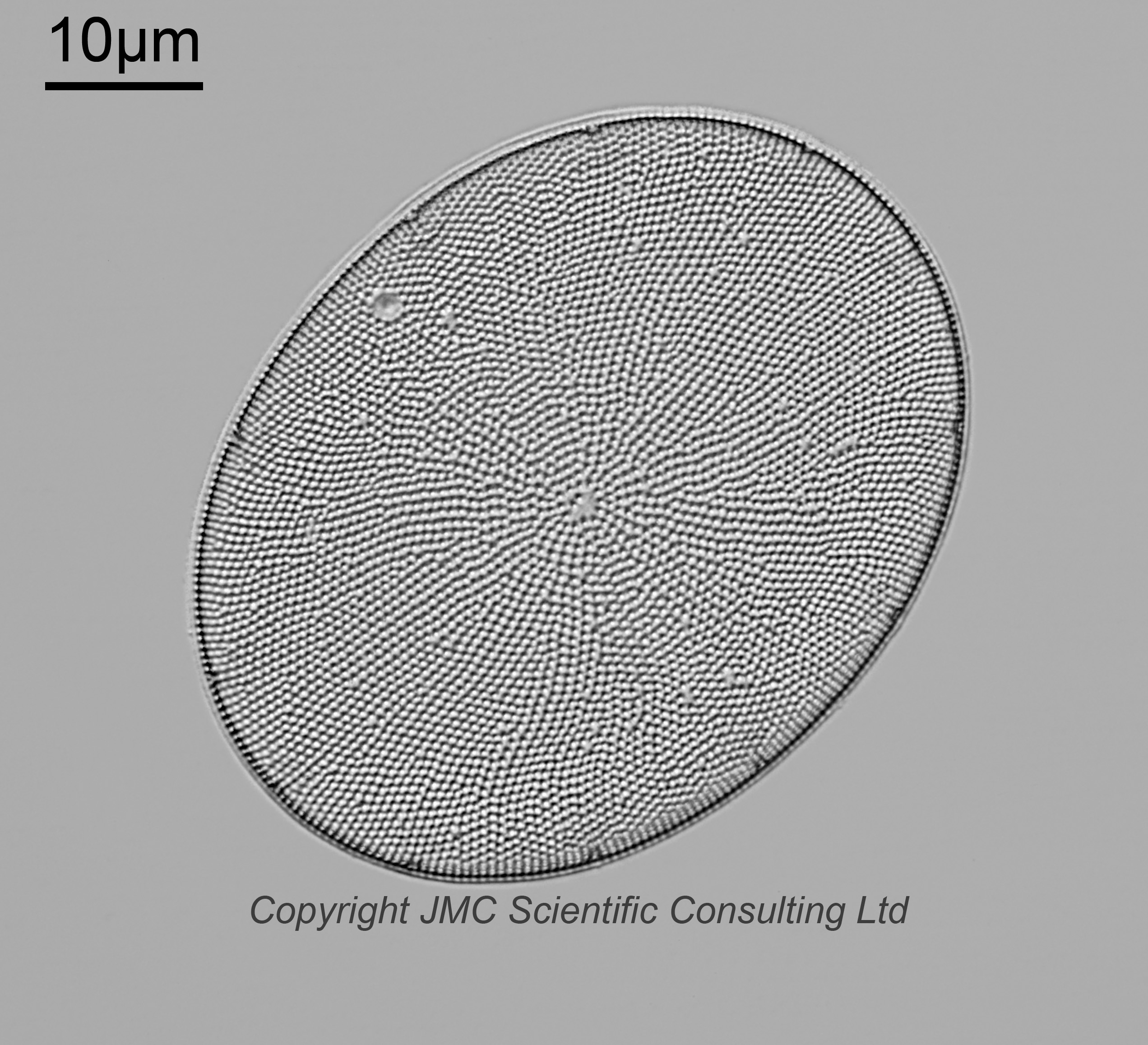
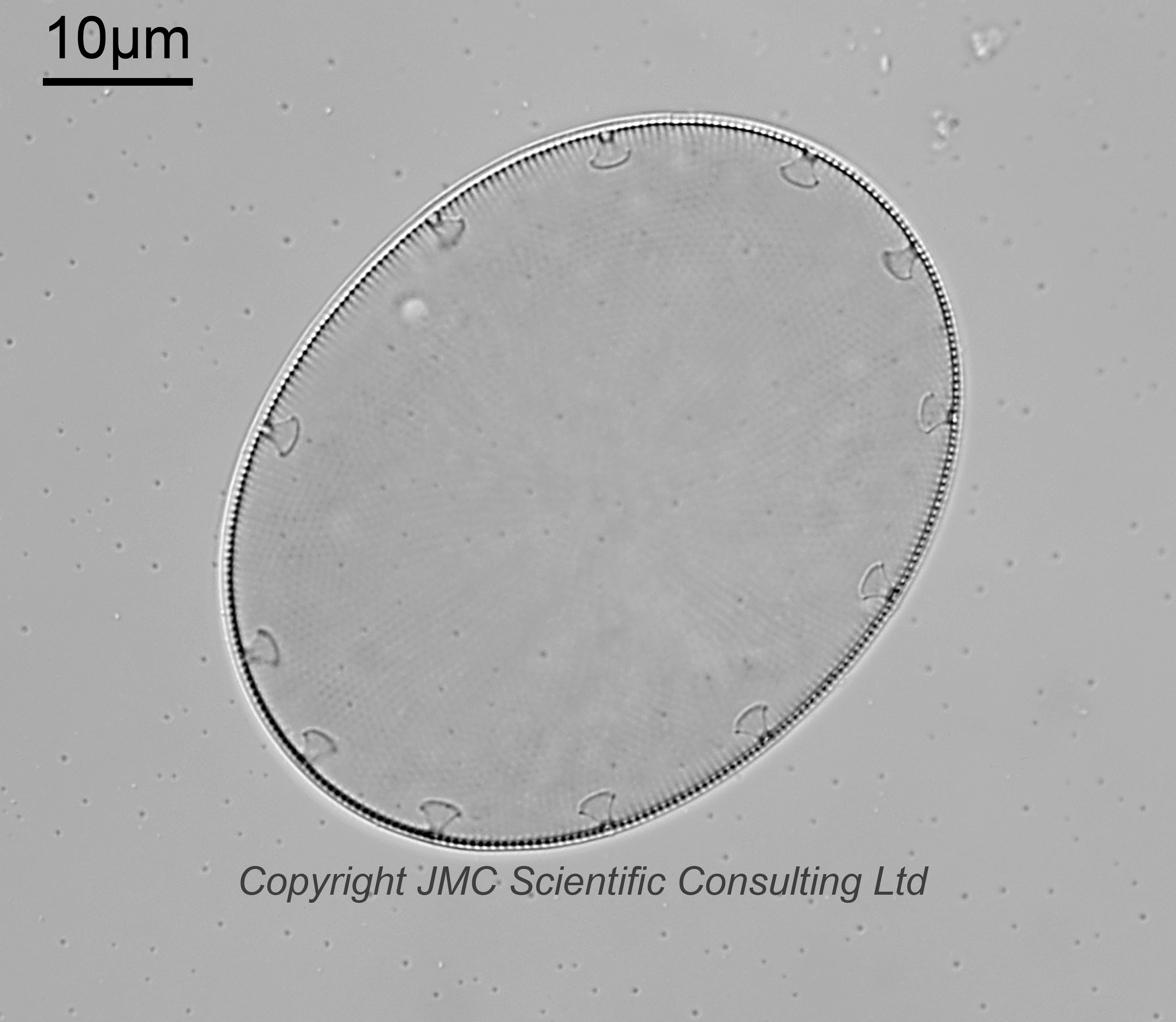
Eupodiscus roperi. Underside view, rim upwards towards the coverslip. Eupodiscus roperi Brébisson 1870 (as ‘Roperii‘). Published in: Brébisson, A. de (1870). Notes on some French Diatomaceae, presented to the Club. Journal of the Quekett Microscopical Club 2: 37-43, pl. I: figs 1-8. Page 41. This name is currently regarded as a synonym of Actinocyclus roperi (Brébisson) Grunow ex Van Heurck. You can see the characteristic Actinocyclus ‘hole’ just inside the rim at about the 10 o’clock position. Labiate processes lost in the stack but visible in the original frames. Some ‘dots’ visible across the mountant.
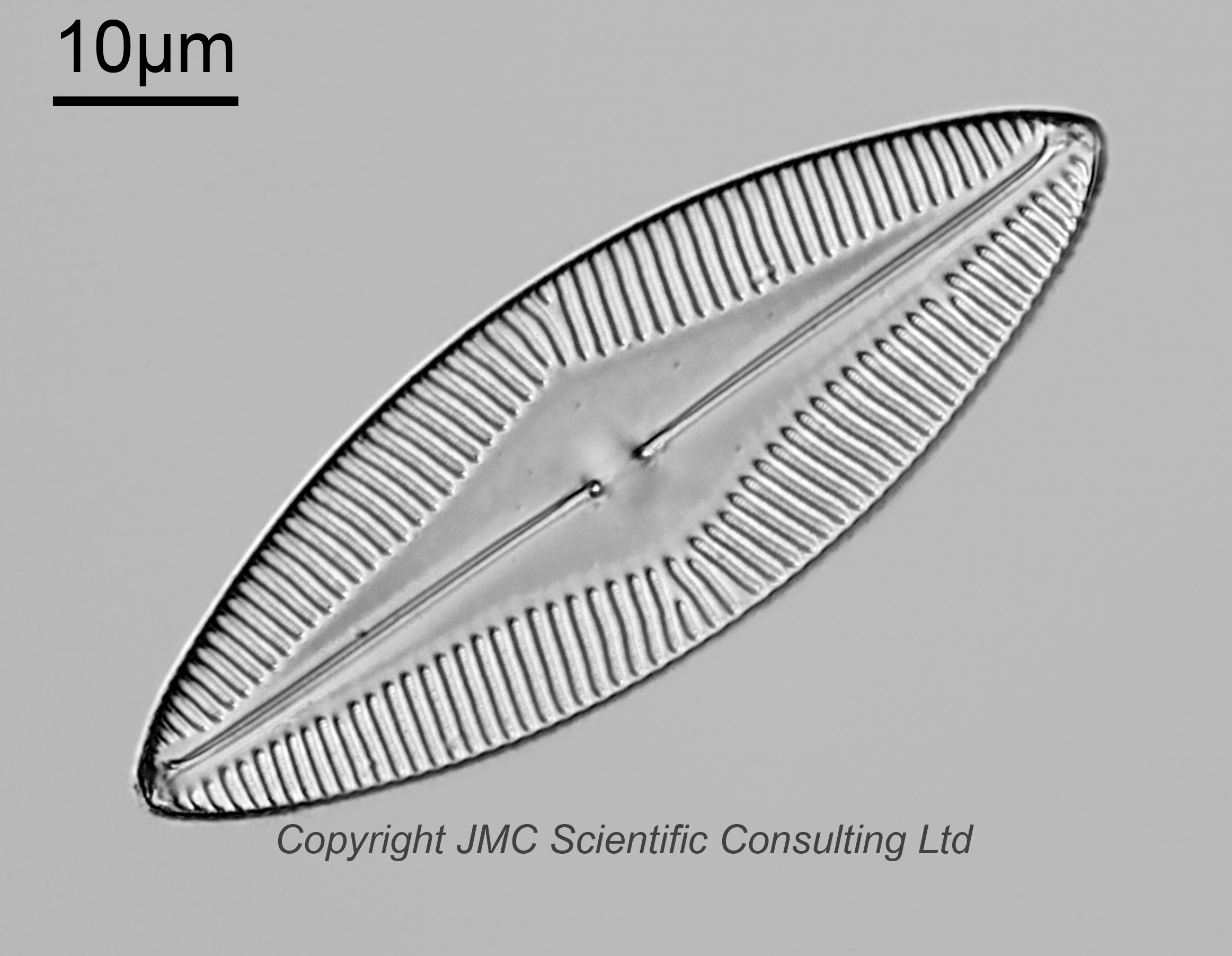
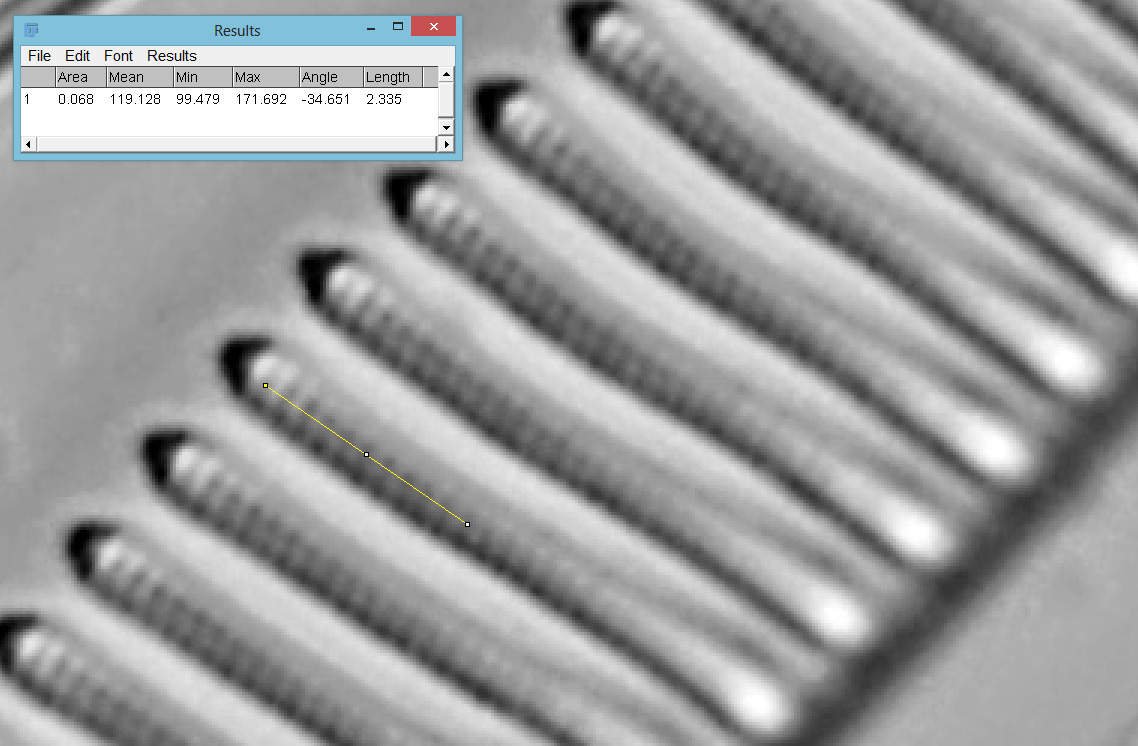
Looks like Navicula palpebralis although I am leaving it with a questions mark for now. Slightly less sharpening for main image (5 unsharp mask) otherwise too contrasty. Navicula palpebralis Brébisson published in: Smith, W. (1853). A synopsis of the British Diatomaceae; with remarks on their structure, function and distribution; and instructions for collecting and preserving specimens. The plates by Tuffen West. In two volumes. Vol. I. pp. [i]-xxxiii, 1-89, pls I-XXXI. London: John van Voorst, Paternoster Row. Page 50 for the description, and Plate 31, Figure 273 for an image. Areolae lost somewhat in the stack, but visible in the initial frames. 234nm areolae spacing measured in ImageJ from one of the frames.
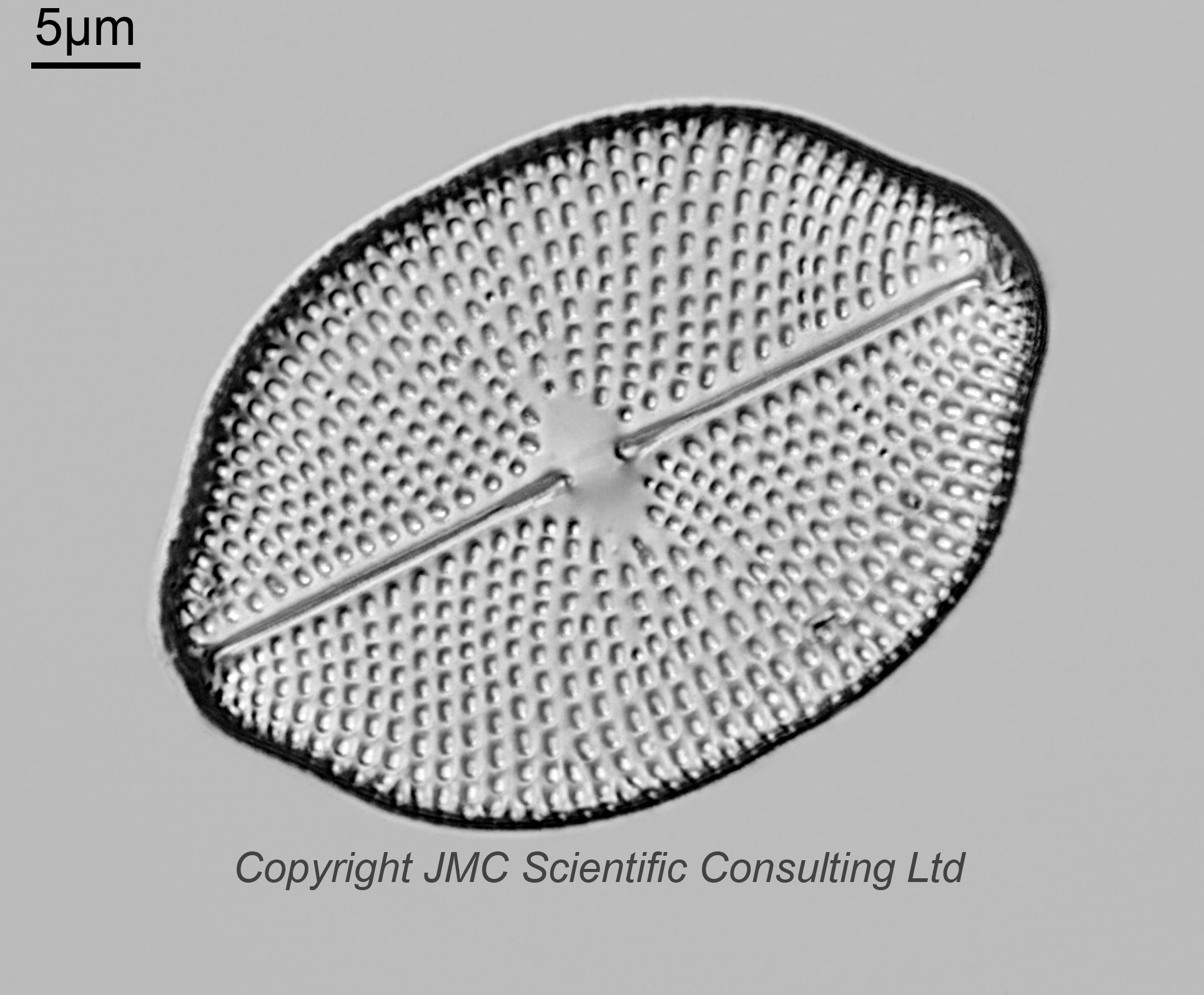
Overarching name Navicula granulata Brébisson, nom. illeg., 1858. Published in: Donkin, A.S. (1858). On the marine Diatomaceae of Northumberland with a description of eighteen new Species. Transactions of the Microscopical Society of London, Series 2 6: 12-34, pl. III. Page 17, Plate III [3], Figure 19. This name is currently regarded as a synonym of Petroneis monilifera (Cleve) Stickle & D.G.Mann, 1990. Published in: Round, F.E., Crawford, R.M. & Mann, D.G. (1990). The diatoms. Biology and morphology of the genera. pp. [i-ix], 1-747. Cambridge: Cambridge University Press. Page 674. This is a probably….. See: Jones, H. M., Simpson, G. E., Stickle, A. J., & Mann, D. G. (2005). Life history and systematics of Petroneis (Bacillariophyta), with special reference to British waters. European Journal of Phycology, 40(1), 61–87. https://doi.org/10.1080/09670260400024675
See discussion here for more on the name – https://diatomimaging.com/navicula-granulata-unknown-maker/
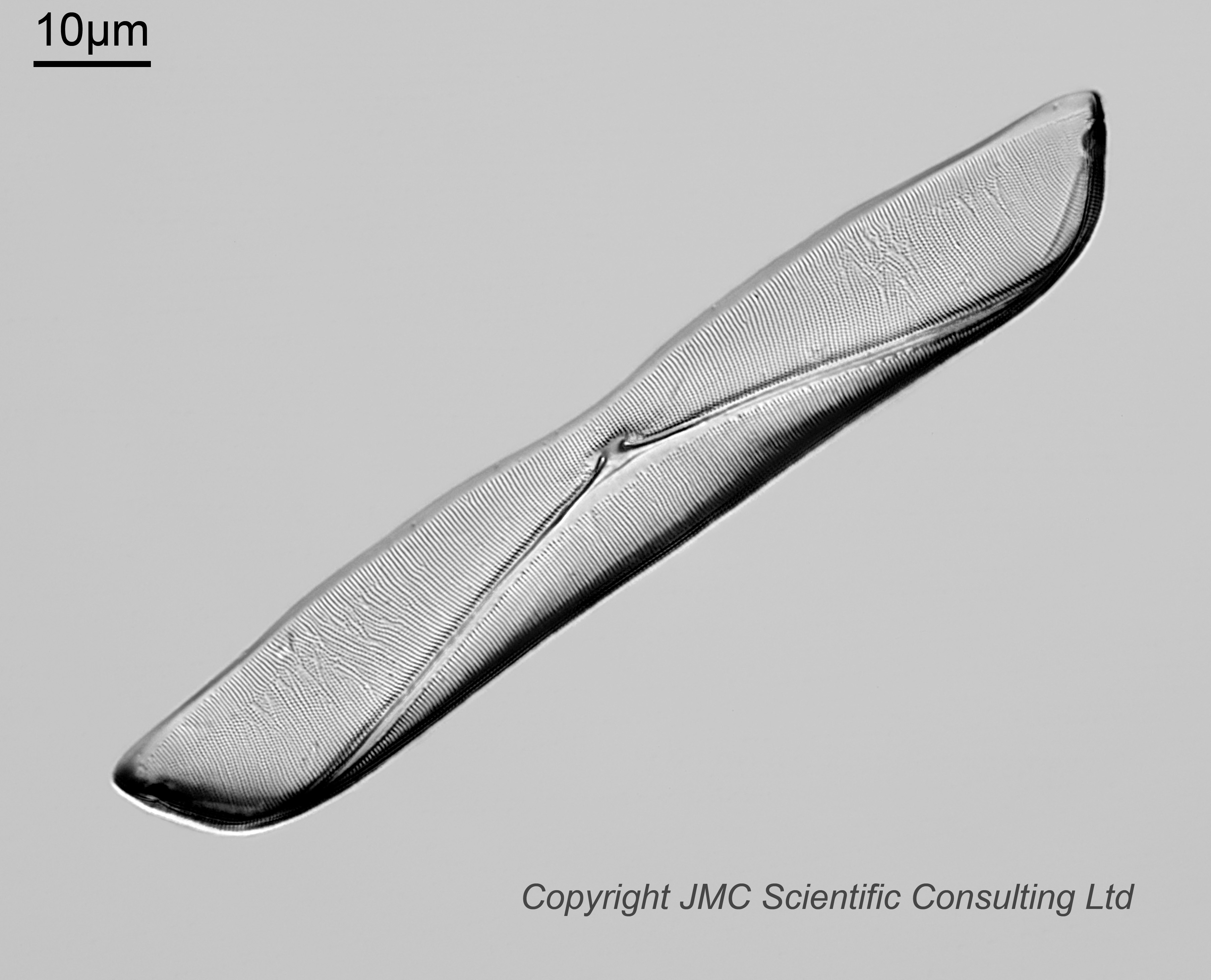
Amphora arenaria Donkin, 1858. Published in: Donkin, A.S. (1858). On the marine Diatomaceae of Northumberland with a description of eighteen new Species. Transactions of the Microscopical Society of London, Series 2 6: 12-34, pl. III. Page 31, Plate 3, Figure 16. Fairly sure with this one. Some amazing patterning on it.
The second strew is mounted using Hyrax.
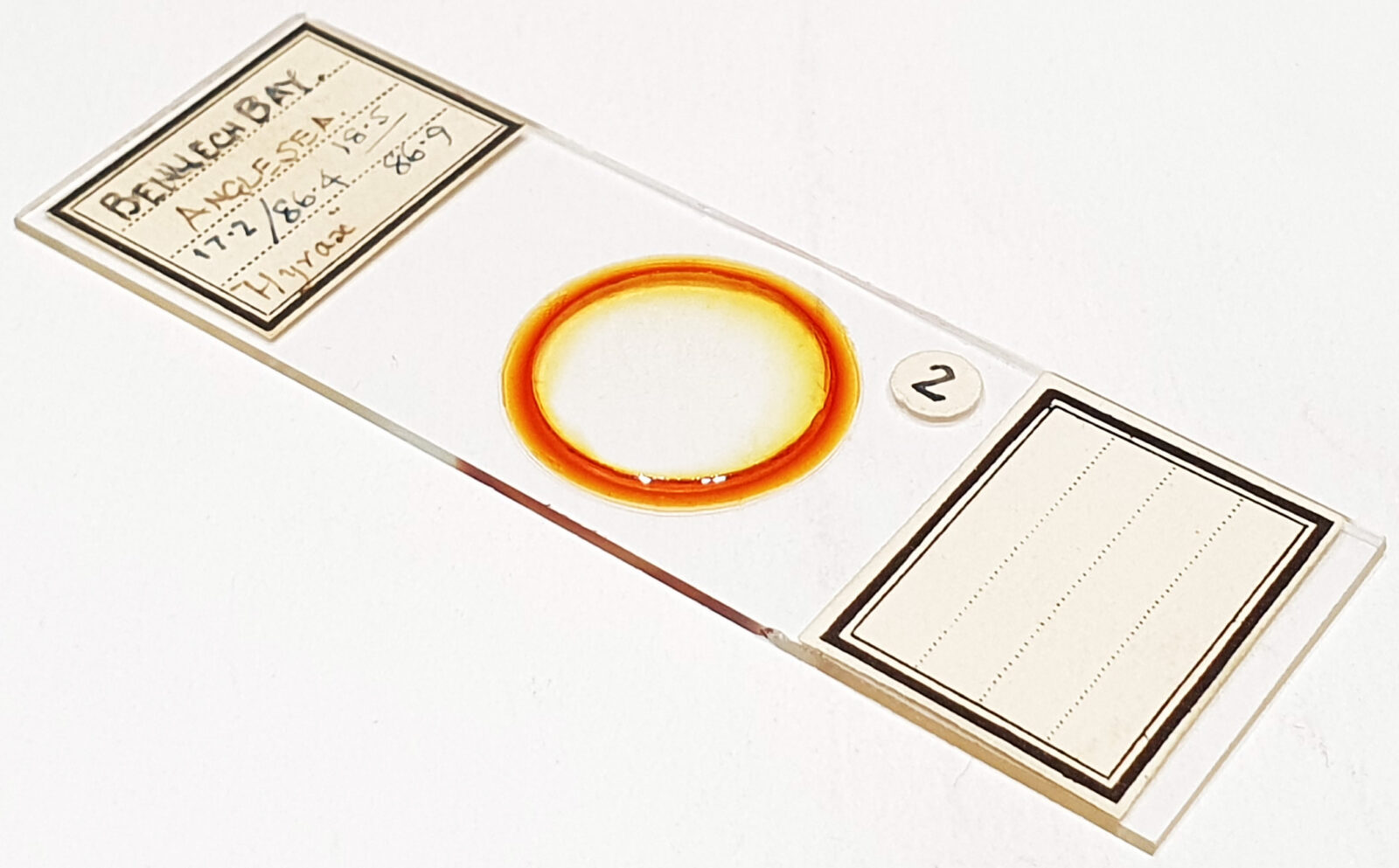
Some yellowing of the mountant near the rim of the coverslip.
Overall, some great diatoms to image.