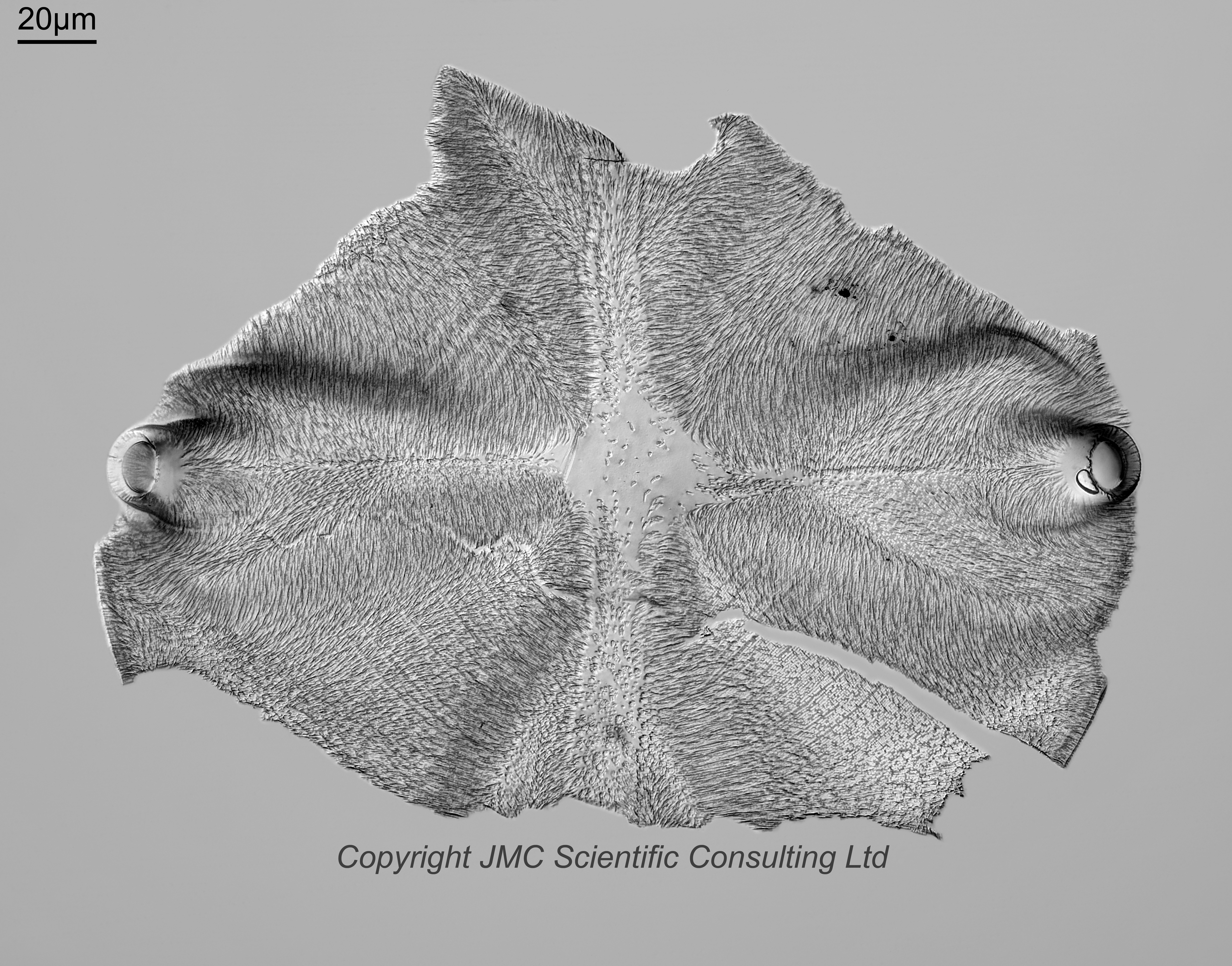
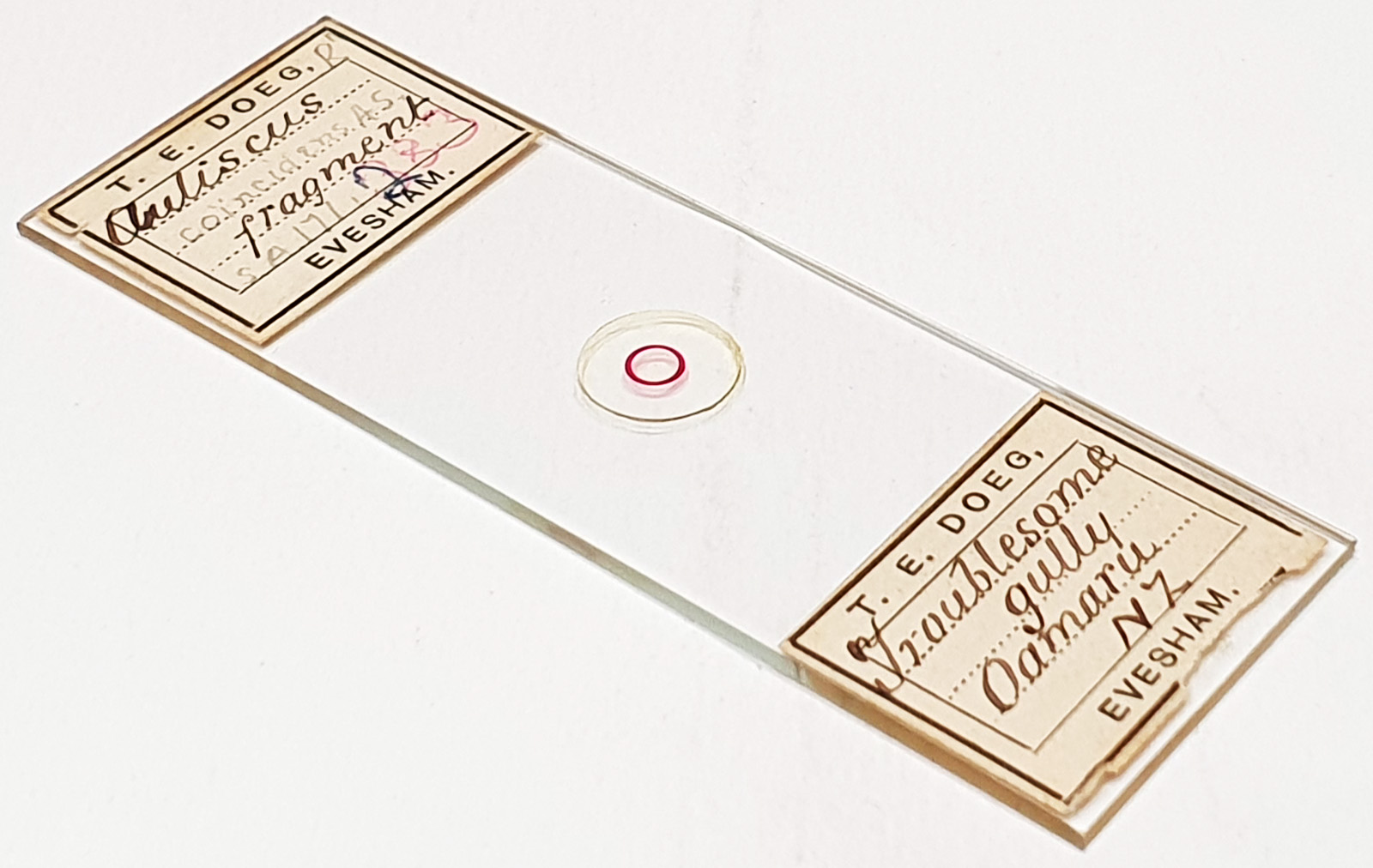
A partial example of Auliscus coincidens from Troublesome Gully, Oamaru, New Zealand. Single example on the slide. Label says ‘SA 171’, more in this in a minute. Prepared by Thomas Edward Doeg. Olympus BHB microscope using 450nm LED light. 40x Leitz Pl Apo 1.00 objective, oil immersion. Olympus Aplanat Achromat condenser, oil immersion, oblique lighting. 2.5x Nikon CF PL photoeyepiece. Monochrome converted Nikon d850 camera. 130 images stacked in Zerene. Estimated length (long axis) 267µm, from Image J. A big diatom….
Auliscus coincidens A.W.F.Schmidt, 1892. Published in: Schmidt, A.[W.F.] (1892). Atlas der Diatomaceen-kunde. Series IV: Heft 43/44. pp. pls 169-176. Leipzig: O.R. Reisland. Plate 171, Figure 1 (hence the pencil written note on the label).
Translation from Schmidt’s Atlas:
“Oamaru (Grove), designated as “Auliscus Hardmanianus v. bifurcata“—I cannot concur with this determination. Here, the processes are situated along the midline of the oval, whereas in A. Hardmanianus (89, 4) they are oblique to it; furthermore, the processes of the two forms are as distinct from one another as possible; added to this is the remarkable relief illustrated in my drawing. Auliscus coincidens A. S.—so named because the processes of the two valves are positioned opposite each other, just as in Biddulphia.”